
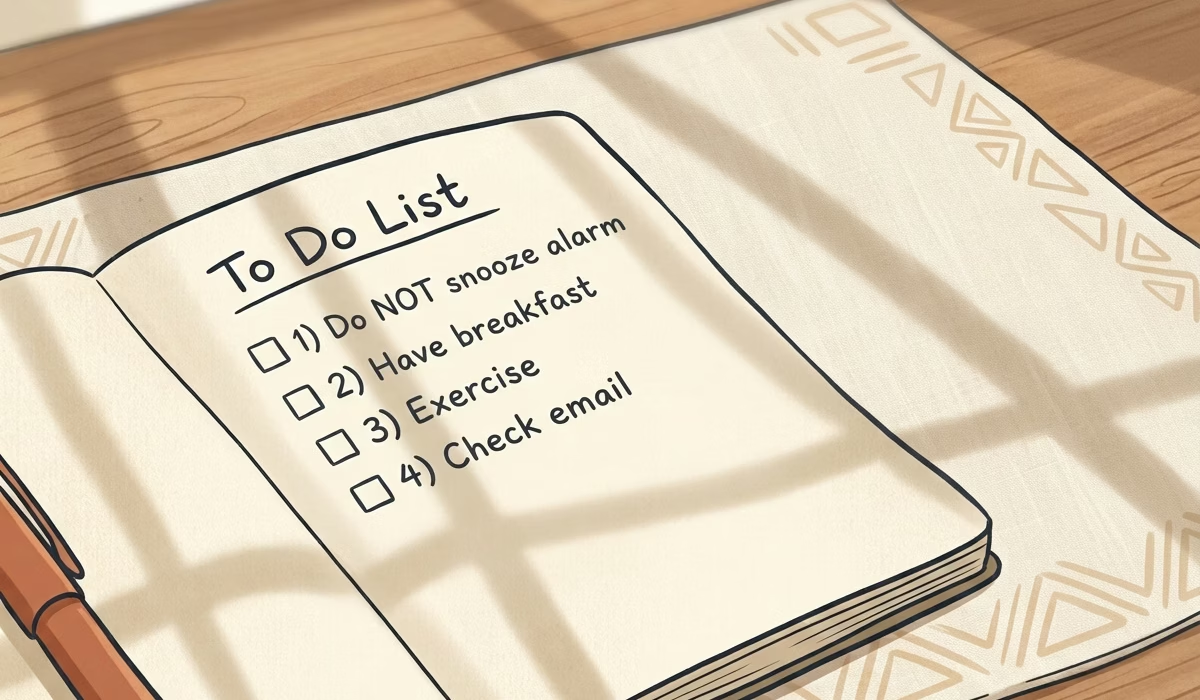
Celebrating small personal wins triggers a dopamine response that boosts mood and builds motivation, per Harvard research. You don’t need an audience, a journal entry or a checkmark is enough to get the neurochemical payoff.
Nobody’s throwing you a parade for the 6 AM alarm you didn’t snooze. No one’s clapping because you cooked instead of ordered, or because you kept your mouth shut in a meeting when you really, really didn’t want to. And yet, those are wins. Real ones. The kind that compound quietly until one day you look up and realize you’re a different person.
Celebrating small personal wins isn’t soft. It’s neurochemistry. Harvard researchers found that marking moments of progress triggers dopamine, the brain’s reward system, which directly boosts mood and motivation. Your brain doesn’t care if anyone else saw it. It just needs the signal that something good happened.
TL;DR
- Harvard researchers found that celebrating small wins triggers dopamine, the brain’s natural reward system, boosting mood and confidence.
- A small win is any moment of progress worth noticing, even if no one else sees it, waking up early, finishing a task, showing up.
- A ‘ta-da list’ of completed tasks helps reinforce habit formation and makes progress visible without any elaborate ritual.
- Tracking wins in a journal or spreadsheet provides a measurable mental boost, crossing items off a list acts as a reward in itself.
- Sharing wins with even one supportive person reinforces positive emotions and builds self-trust over time.
Why “Silent” Wins Hit Different
There’s a version of progress that needs an audience. Post the gym selfie, announce the promotion, wait for the likes. Nothing wrong with that, but it hands the reward system over to other people. The quiet win is yours alone. Nobody can take the credit, nobody can diminish it, and nobody needs to validate it for it to count.
According to SNHU, a small win is defined as any moment of progress worth noticing, even if it’s completely overlooked in daily life. That’s a wide net. And it’s supposed to be.
Three Low-Effort Ways to Celebrate Small Personal Wins
You don’t need champagne. You don’t need to tell anyone. You just need a signal, something that says “that happened and it mattered.”
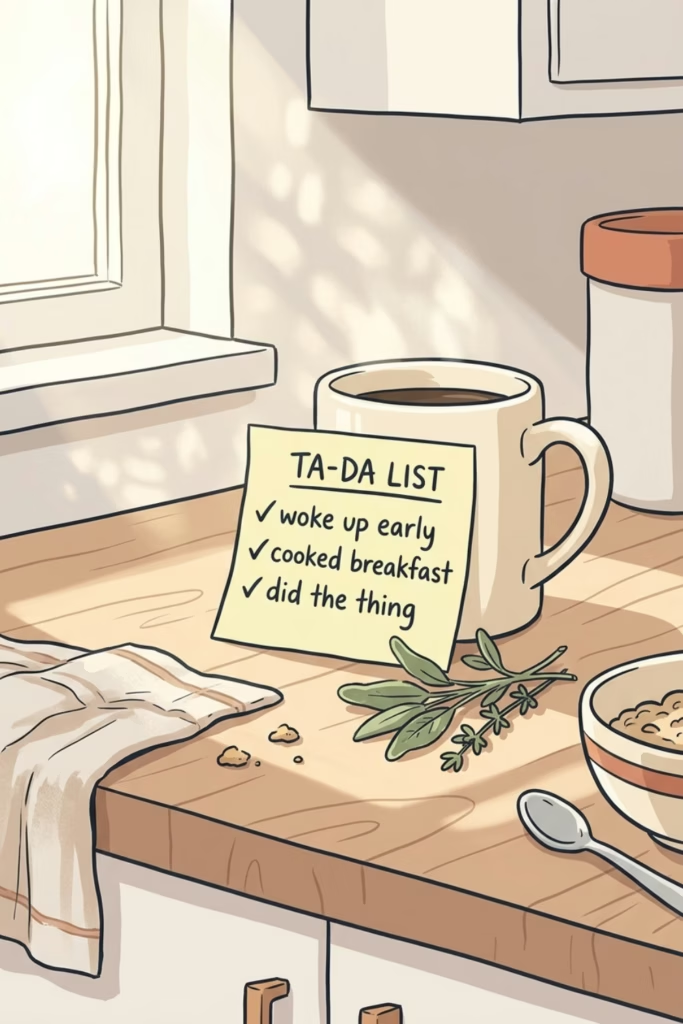
1. The ta-da list. You’ve heard of a to-do list. Flip it. At the end of the day, write down what you actually finished. Research from Feel More Connected shows that writing completed tasks on paper helps reinforce habit formation and makes you feel genuinely proud of your output. It sounds almost embarrassingly simple. It works anyway.
2. The journal beat. One sentence. “I did the thing I said I’d do.” Tracking progress in a journal or even a basic spreadsheet provides a real mental boost, crossing items off a list functions as a reward in itself.
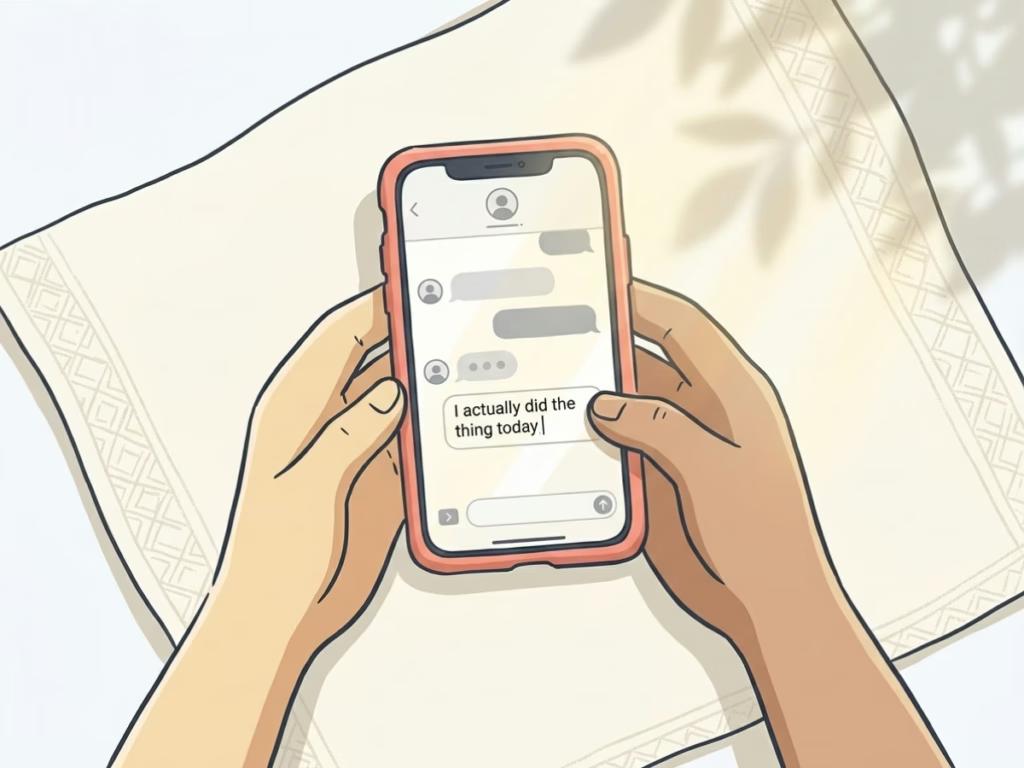
3. Tell one person. Not for the likes. Just one person who actually wants you to win. Sharing wins with supportive people reinforces positive emotions and builds self-trust over time. A text to a friend that says “I actually did the thing today” is enough. Low-key accountability, zero cringe. If you don’t have that person yet, don’t worry. I didn’t for decades. Just write yourself a letter and send it to yourself. I did this in college and periodically read mine whenever I need a boost.
If you’re in a stretch where rest is the win, where just not falling apart is the progress, that counts too. Here’s a piece on how to rest without losing momentum when you need it.
Frequently Asked Questions
Why does celebrating small wins actually matter?
Harvard researchers found that celebrating small wins triggers dopamine, the brain’s natural reward system, boosting mood and confidence. This is sometimes called the small wins dopamine effect, and it’s the same loop that keeps habits alive. It’s less about the celebration itself and more about training your brain to recognize that progress happened, which makes you more likely to keep going.
What counts as a small win?
Any moment of progress worth noticing, even if it’s overlooked in daily life. Waking up early. Finishing a task you kept avoiding. Choosing the less-bad option in a hard moment. It doesn’t need to be impressive. It just needs to be real.
What’s a ta-da list?
It’s the reverse of a to-do list, you write down what you actually completed, rather than what’s still waiting. Research suggests it helps with habit formation and gives you a concrete sense of pride in your progress. Requires: paper, pen, two minutes. Optionally a sticker. (No judgment on the sticker.)
Do I have to tell anyone about my wins?
No. But sharing with even one supportive person, a friend, a sibling, someone who’s rooting for you, reinforces positive emotions and builds self-trust over time. The audience doesn’t need to be big. It just needs to be genuine.
Tonight, before you go to sleep, write down one thing you actually did today. Not what you planned. What happened. That’s your ta-da list, entry one. Start there.
Hang in there champion.
Get The Enough List — free.
Ten minutes, five areas. A short guide for figuring out what enough looks like in money, health, work, people, and time — before you go sprinting at someone else's finish line. Yours when you subscribe.

Thoughts?