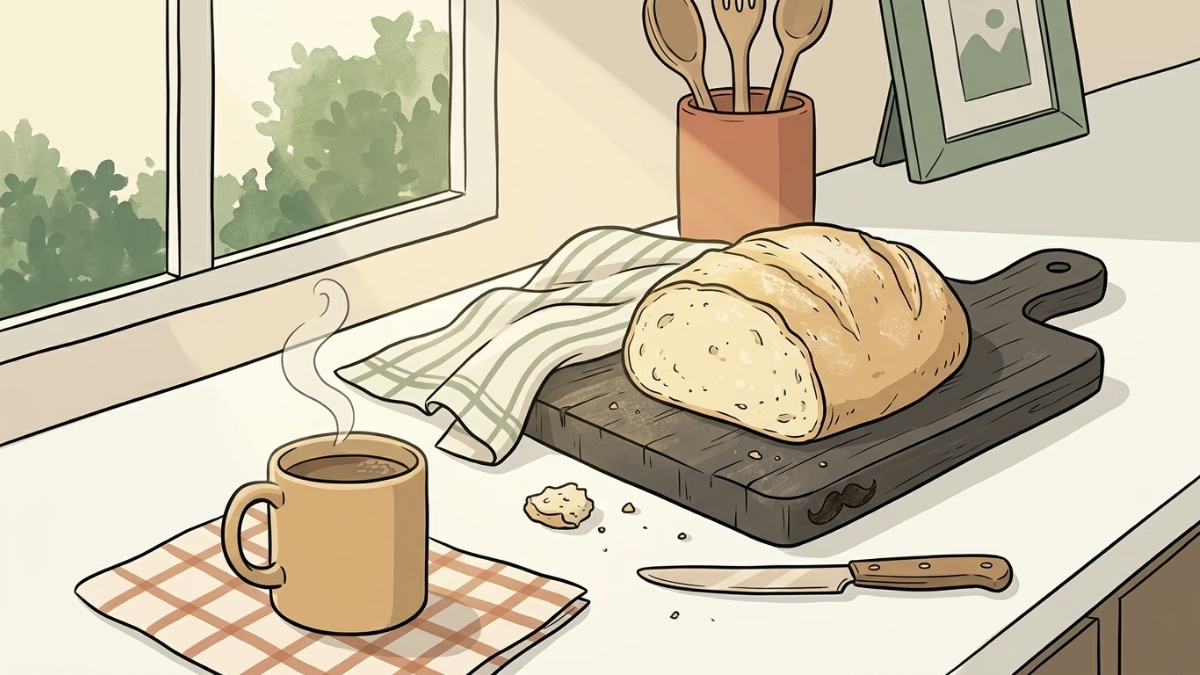
Your first loaf of bread came out dense, pale, and vaguely resembling a decorative river stone. If you picked up baking bread as a mindful hobby, this is exactly where that hobby starts. And that is completely normal, useful, and honestly a little bit exciting if you look at it right.
The reason it failed almost certainly isn’t that you “can’t bake.” Bread faults trace back to one of three root causes: ingredient quality, process errors, or baking conditions, per Agriculture Institute. That’s it. None of those three are personality traits. They’re variables, and variables can be adjusted. What you made on your first attempt wasn’t a failure, it was a baseline. Now you have something to work with. Think of this as your bread troubleshooting guide for that first bake.
Key Takeaways
- Bread faults almost always trace back to ingredient quality, process errors, or baking conditions, rarely to the baker’s ability.
- Inactive yeast is one of the most common causes of dense, low-volume bread; yeast loses potency over time and should be tested before use.
- Bread is often ready to bake once it has grown by about two-thirds, not a full double, because it continues rising in the oven, a tip from baker Luis Troyano via BBC Good Food.
- A reliable doneness target for homemade bread is an internal temperature of 88°C-99°C; guessing by color alone leads to underbaked, gummy crumb.
- A bad first loaf is useful data, it tells you exactly which part of the process to adjust next time.
Baking Bread as a Mindful Hobby: The Part Nobody Talks About
There’s a specific kind of discouragement that hits when you pull a loaf out of the oven, knock on the bottom the way every recipe tells you to, and hear a sound like you’re knocking on a brick. You followed the steps. You waited. You did the thing. And it looks like something that would survive a nuclear event.
Most bread troubleshooting guides skip straight to the fix list without acknowledging that part. So let’s acknowledge it: the first loaf is almost always a disappointment, and that is baked into the process (I won’t apologize). Bread is a living, timing-sensitive thing. You’re not just following a recipe, you’re developing a feel for dough that only comes from touching it repeatedly, watching it, and occasionally producing something your dog won’t even look at.
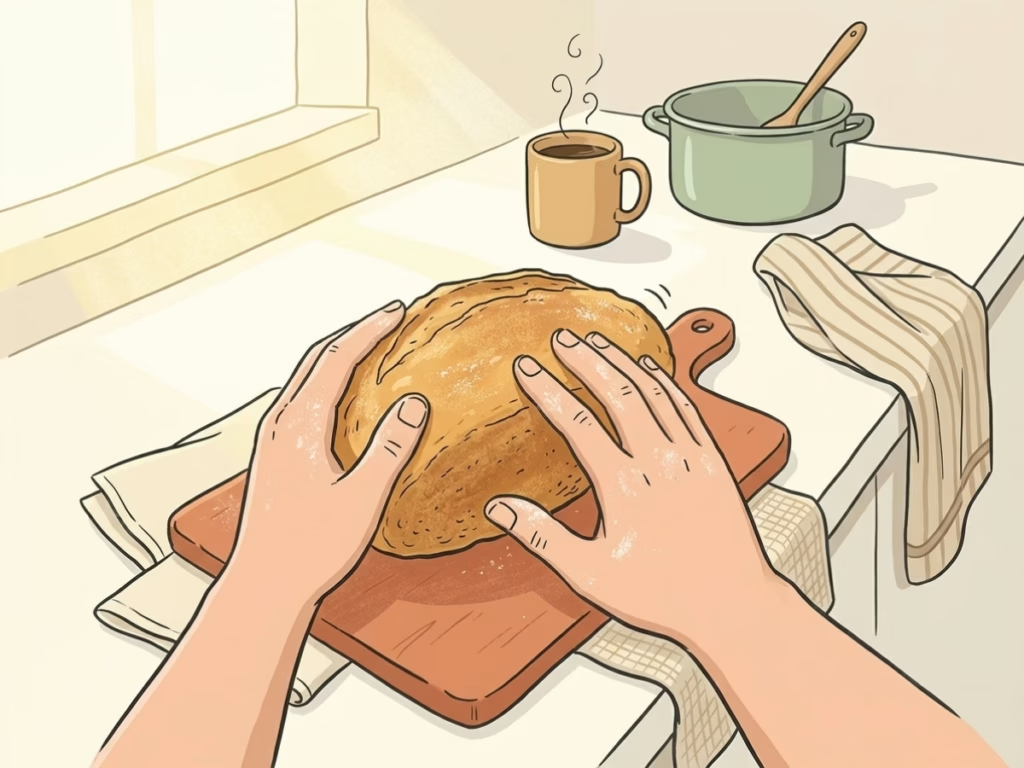
That’s not a flaw in the hobby. That’s the hobby. And if you’re picking up baking bread as a mindful hobby, something that gets you off your phone, into your hands, and present in the moment, the learning curve is actually part of the value. You can’t scroll while you’re shaping a loaf.
The Three Usual Suspects
Let’s go through the most common bread baking mistakes for beginners and figure out which one got you. When a loaf goes wrong, it’s almost always one of these.
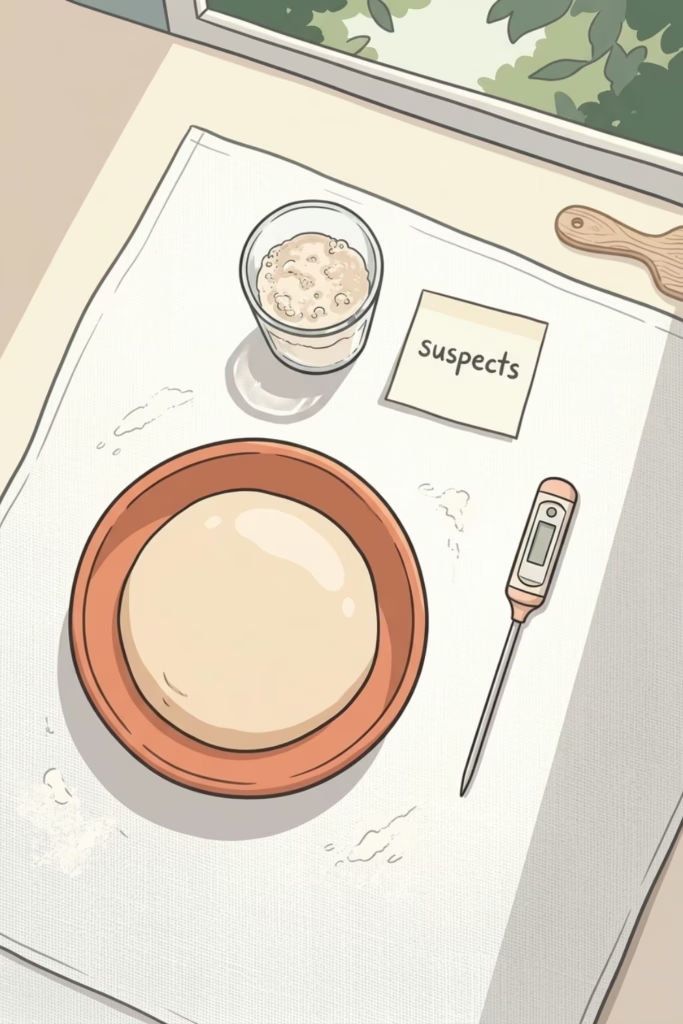
Suspect 1: Dead or dying yeast.
This is the most common culprit for a dense, flat loaf. Yeast is alive (technically), and it loses activity over time, Agriculture Institute. If your yeast has been sitting in the back of the cupboard since you bought it for a recipe you made in 2021 and then never made again (no judgment, we’ve all got a graveyard of ambitious pantry purchases), it may simply not have enough life left to do its job.
The fix is easy: proof your yeast before you use it. Drop it in warm water with a pinch of sugar and wait ten minutes. If it foams, you’re good. If it just sits there, buy new yeast. This one step eliminates an enormous number of first-loaf disasters.
Suspect 2: Proofing timing.
Proofing is the part where dough rises, and it’s where most beginners get tripped up, not because they do it wrong, but because they try to follow a clock instead of watching the dough.
Here’s a counterintuitive thing: you don’t need to wait for your dough to double in size before baking. Baker Luis Troyano, writing for BBC Good Food, says dough is ready for the oven once it has grown by about two-thirds, because it will keep expanding in the oven (this is called “oven spring”). Waiting for a full double can push you into over-proofed territory, where the dough has already peaked and will collapse during baking.
On the other side: if your dough has barely moved after an hour, the simplest fix is usually more time, per this guide on bread rising. Temperature matters a lot here. A cold kitchen slows yeast down dramatically. A warm, draft-free spot, top of the fridge, inside an oven with just the light on, gives it a fighting chance.
Suspect 3: Oven Temperature and Doneness
Color is a terrible way to judge whether bread is done. The outside can look golden and convincing while the inside is still gummy and undercooked. A reliable internal temperature target for a properly baked loaf is 88°C-99°C (Agriculture Institute). A cheap instant-read thermometer, the kind that costs less than a fancy coffee, removes all the guesswork and immediately makes you a better baker. It’s the most useful piece of equipment you can add to your kitchen for under ten dollars.
One Variable at a Time (This Is the Whole Game)
Here’s the thing about troubleshooting bread: if you change everything at once, you learn nothing. You might get a better loaf, but you won’t know why, which means you can’t repeat it. And repeatable wins are the whole point.
Pick the most likely culprit from your first bake and change that one thing.
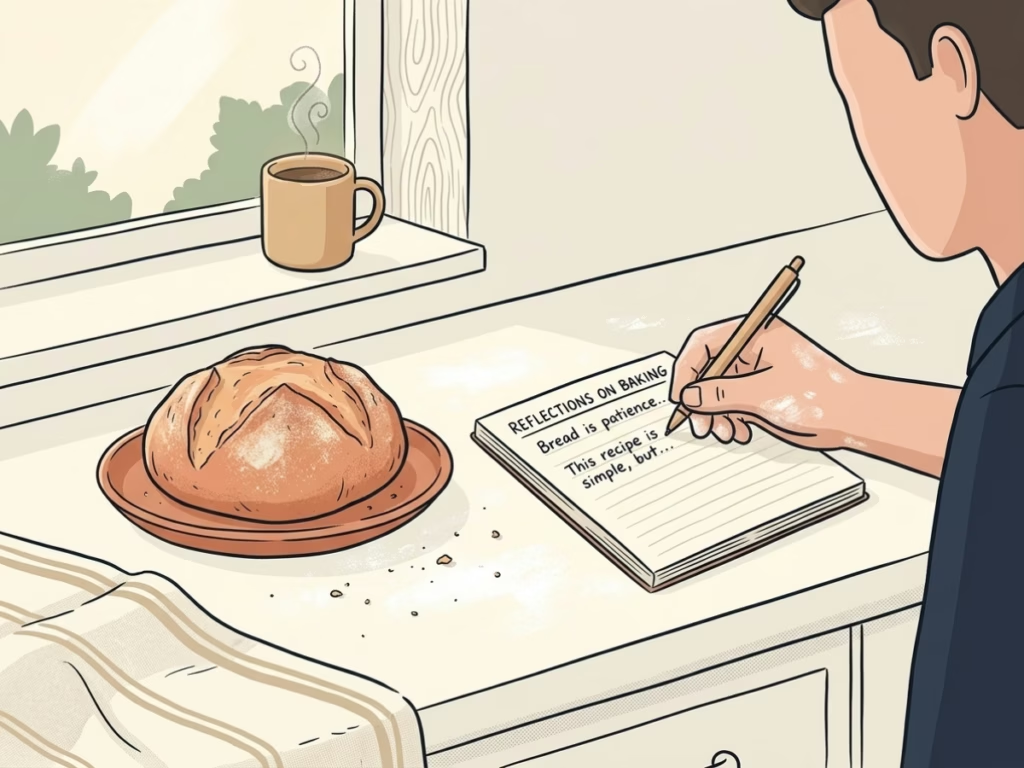
Fresh yeast? Change that. Proofing time? Adjust that. Oven temp? Get a thermometer and check it. One variable, one bake, one data point. This is slow, but it’s also how you actually get good at this.
It’s the same logic as finishing last in a hobby and still getting something out of it, the outcome isn’t the only metric. What did you learn? What do you do differently next time? That’s the loop that actually builds skill.
The Flour Thing (Yes, It Matters)
While we’re here:
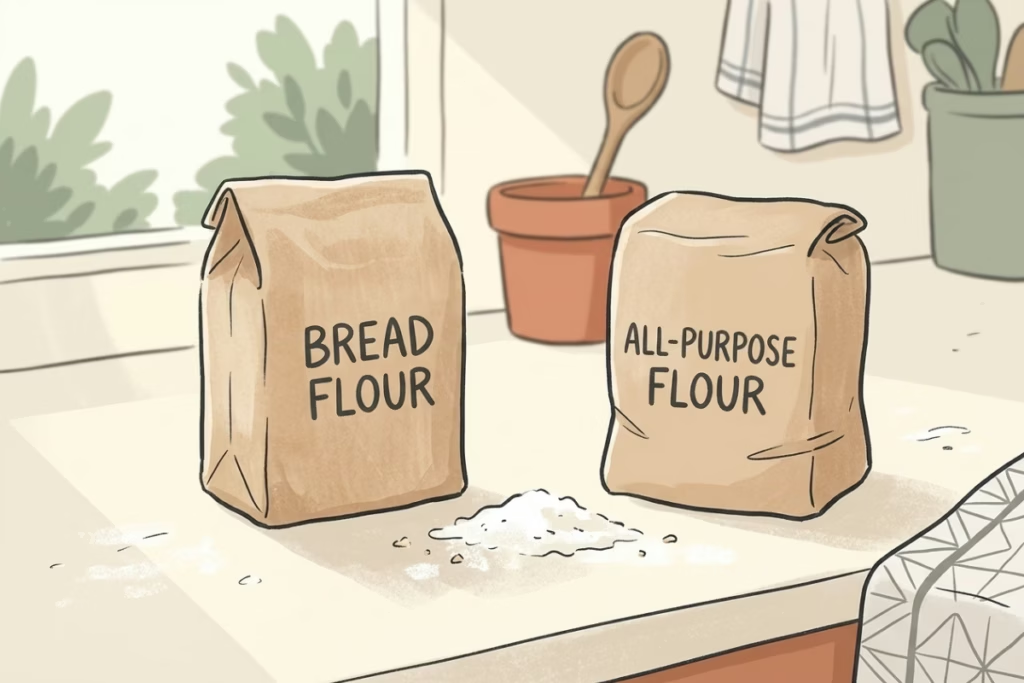
If you used all-purpose flour because that’s what you had, that’s fine and your bread was probably edible. But bread flour has a higher protein content, which supports stronger gluten formation, and gluten is what gives bread its structure and chew (Agriculture Institute). For most yeasted loaves, bread flour is worth the minor upgrade. It’s usually sitting right next to the all-purpose on the shelf.
This is not a lecture. All-purpose flour bread is still bread. But if you’ve been baking with all-purpose and wondering why your loaves feel a bit soft and don’t hold their shape, the flour is probably contributing.
What “Good Enough Bread” Actually Looks Like
Let’s talk about the finish line for a second, because I think a lot of people quit baking bread because they’re comparing their third loaf to something from an artisan bakery with a wood-fired oven and a baker who’s been doing this for twenty years.
That’s not the target. The target, especially early on, is bread that you made, that tastes good, that you can eat. Bread that your household goes through in a few days and that you feel like making again. That’s it. That’s “good enough bread,” and it’s genuinely satisfying to produce.
The Michelin-star sourdough with the perfect open crumb and the decorative scoring? That’s the ramen-to-Michelin progression. Make the ramen first. Get comfortable with the process. The fancy stuff comes later, if you even want it, and maybe you won’t, and that’s also completely fine.
Baking bread as a mindful hobby doesn’t require you to become a professional. It requires you to show up, pay attention, and be willing to eat a slightly dense loaf while you figure it out. The process itself, the mixing, the waiting, the smell of something actually baking in your kitchen, has value independent of whether the result is perfect.
The “It’s Just Data” Reframe
A bad loaf is information. That’s genuinely how to think about it.
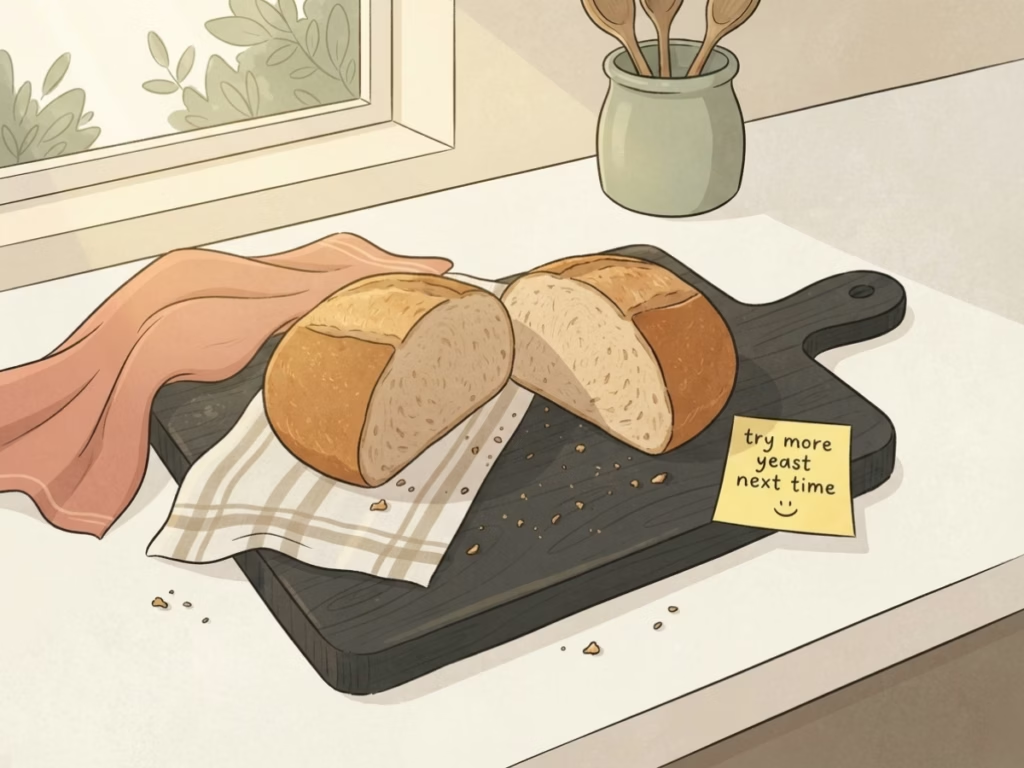
Dense crumb with no rise? Probably the yeast. Collapsed top? Possibly over-proofed. Gummy interior even though it looked done? Pull out that thermometer next time and check the internal temperature. Pale and soft crust? Your oven may run cooler than its dial suggests, an oven thermometer (also cheap, also worth it) will tell you.
Every failure narrows the list of things that could be wrong. By your fourth or fifth bake, you’ll have eliminated most of the obvious errors and you’ll be baking something you’re actually proud of. Not because you suddenly got talented, but because you ran the experiment enough times to understand the variables.
This is, by the way, how experts get good at anything. They test things, fail in specific ways, analyze what happened, and don’t repeat the same mistake twice. The failure isn’t the opposite of progress, it’s the mechanism of progress. That logic applies to bread the same way it applies to every other skill worth having.
Frequently Asked Questions
Why didn’t my bread rise at all?
The most common cause is inactive yeast, yeast loses potency over time and may not have enough life left to leaven your dough (Agriculture Institute). Test your yeast before your next bake by dissolving it in warm water with a pinch of sugar; if it doesn’t foam within ten minutes, replace it. A cold kitchen can also slow rising dramatically, try proofing in a warmer spot.
How do I know when my bread is done baking?
The most reliable method is an instant-read thermometer: a properly baked loaf should reach an internal temperature of 88°C-99°C (Agriculture Institute). Judging by color alone is unreliable, bread can look done on the outside while the crumb is still gummy and undercooked inside.
How long should I let bread rise before baking?
According to baker Luis Troyano, you don’t need to wait for a full double in size, dough is ready for the oven once it has grown by about two-thirds, because it continues rising during baking (BBC Good Food). If your dough hasn’t risen much at all, the simplest fix is usually to give it more time in a warmer environment.
Should I use bread flour or all-purpose flour?
For most yeasted breads, bread flour is preferred because its higher protein content supports stronger gluten development and better structure (Agriculture Institute). That said, all-purpose flour will still produce edible bread, especially for a beginner who’s still learning the process. Get comfortable first, then upgrade the flour.
Why is my homemade bread so dense?
Dense bread almost always points to one of three things: inactive yeast that couldn’t generate enough gas, under-proofing that didn’t give the dough time to develop structure, or over-proofing that caused the dough to peak and deflate before it hit the oven. Start by checking your yeast, then pay closer attention to proofing time on your next bake. Change one variable at a time so you can actually learn what the fix was.
The One Thing to Do Today
Don’t wait until you have the perfect recipe, the right flour, or a free Saturday afternoon. Pull out whatever flour you have, look up a basic no-knead bread recipe (there are good ones everywhere), and make a loaf this week. It will probably not be perfect. Write down what went wrong. Change one thing next time.
That’s how you learn to bake bread by failing forward. That’s also, if you let it be, a genuinely enjoyable way to spend a few hours, hands in dough, something real in the oven, no notifications. That’s baking bread as a mindful hobby in its most honest form. If you want to explore what that kind of low-stakes, high-return hobby can do for you, this piece on sketchbooks and beginner hobbies is worth a read.
Your second loaf will be better than your first. Your fifth will be better than your second. And somewhere around your tenth, you’ll pull something out of the oven, knock on the bottom, and hear a hollow sound, and you’ll know exactly what you did to get there.
That’s the payoff. Go make something bad first.
Get The Enough List — free.
Ten minutes, five areas. A short guide for figuring out what enough looks like in money, health, work, people, and time — before you go sprinting at someone else's finish line. Yours when you subscribe.