
Is it ok to not have a passion? Yes. Full stop. You don’t need a calling, a purpose, or a thing you’d do for free until you die. A mild interest you can show up for consistently is worth more than a grand passion you’ll abandon by February, and most people, if they’re honest, are running exactly that way.
The “follow your passion” advice has been handed out so freely it’s basically ambient noise at this point. Which would be fine if it worked. But for a lot of guys it just produces a low-grade guilt trip: I should feel more excited about this. Something must be wrong with me. Nothing is wrong with you.
Key Takeaways
- Not having a burning passion is normal, most people are quietly doing work they find acceptable, not transcendent.
- Mild interest compounds over time: small curiosities are easier to sustain than grand passions, and they often turn into real skills or community.
- Passion is an unreliable baseline, fit, energy, pay, and schedule can matter more than emotional intensity when choosing a path.
- Waiting for a lightning-bolt calling is a strategy that mostly produces waiting, not a calling.
- You can build a meaningful life around things you find genuinely interesting, even if you’d never call them your purpose.
Passion Is a High Bar That Mostly Moves
Here’s the thing about passion: it’s not a fixed destination. It’s a feeling, and feelings are unreliable narrators. Even people who genuinely love their work don’t feel passionate about it every Tuesday morning. They just keep showing up because it fits well enough and they’re good enough at it that the work itself has become interesting. (And they have bills to pay.)
That’s the actual secret, and it’s much less dramatic than the posters make it sound.
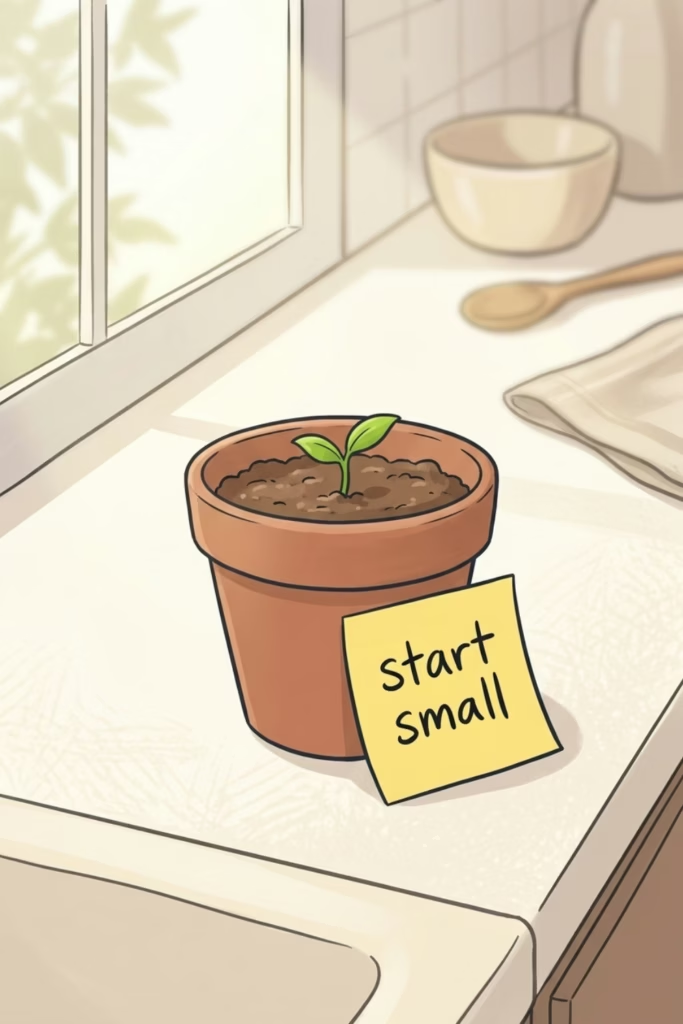
Interest grows through doing, not through waiting to feel ready. You don’t discover a passion and then start. You start something small, get a little better, and occasionally notice that you’re looking forward to it. That’s the whole mechanism.
There’s actually a distinction researchers make between harmonious passion (you do it because it fits your life) and obsessive passion (it takes over your life and you feel terrible when you can’t do it). One of those sounds healthy. The other one sounds like a bad relationship. Worth keeping in mind before you go hunting for something to be obsessed about.
What to Do With a Mild Interest
If you have something you find mildly interesting, a skill, a topic, a type of problem, that is genuinely enough to start with. You don’t have to love it. You just have to find it a little more interesting than doing nothing.
From there, the move is simple: do it enough to get slightly better at it. Better usually means more interesting. More interesting usually means you do it more. That’s the whole compounding loop, and it works just as well for mild interest as it does for passion. Probably better, because you’re not burning yourself out trying to maintain some peak emotional state about it.

The practical version: pick the mildly interesting thing over the couch. Not every day. Just more often than not. Pace it like a long race, not a sprint you can’t sustain.
Frequently Asked Questions About Having No Passion
Is it ok to not have a passion in life?
Yes. The expectation that everyone has a singular passion waiting to be discovered is a cultural story, not a biological fact. Many people build genuinely good, satisfying lives around work they find acceptable and hobbies they find interesting, without ever experiencing a lightning-bolt calling. Not having a passion is not a character flaw.
What if I’m not passionate about anything at all?
Sometimes that’s apathy, sometimes it’s burnout, and sometimes it’s just being a normal person who hasn’t found their groove yet. Chronic stress can suppress motivation and concentration, so if you’ve been running on empty for a while, flat interest can be a stress response, not a personality trait. Start smaller than you think you need to.
Can you have a meaningful life without passion?
Absolutely. Meaning tends to come from connection, contribution, and getting better at things, none of which require passion as the entry ticket. Mild interest, sustained over time, produces real skill and real community. That’s a meaningful life by most reasonable definitions.
Should I choose a career based on passion?
Not necessarily. Fit matters more than intensity: does the work match your energy level, your values, your schedule, and pay you enough to live the life you want? A career you find genuinely interesting and sustainable beats a passion-driven career you’ll resent in three years. Working a job you like enough, one that fits your life and pays the bills, is a completely legitimate goal. Passion can follow competence; it doesn’t have to lead it.
Today’s action: write down one thing you’ve found mildly interesting in the last month. Not life-changing. Not a calling. Just something that made you a little curious. Then do ten minutes of it this week. That’s the whole assignment.
Get The Enough List — free.
Ten minutes, five areas. A short guide for figuring out what enough looks like in money, health, work, people, and time — before you go sprinting at someone else's finish line. Yours when you subscribe.