Being bad at a hobby is genuinely good for you. Research shows that accepting mediocrity in a recreational activity deactivates the brain area tied to performance anxiety, giving you a mental reset that high-stakes activities simply can’t provide. If you’ve ever wondered about the benefits of being bad at a hobby, the short answer is: they’re real, and they’re neurological.
Finishing last at your hobby isn’t a problem to fix. It might actually be the whole point.
Here’s the counter-intuitive part: research shows that accepting mediocrity in a recreational activity deactivates the brain area tied to performance anxiety and constant social judgment. That’s not a consolation prize. That’s a neurological reset most of us are desperately missing and don’t even know it.
TL;DR
- Accepting mediocrity in a recreational activity deactivates the brain region tied to performance anxiety and social judgment, per research on psychological benefits of hobbies.
- Research suggests the activity you fear most due to judgment may be the one that benefits your well-being the most.
- Hobbies support psychological health by providing focus, clarity, and joy while being incompatible with self-consciousness.
- Finishing last in a hobby restores play to its original biological and therapeutic function, something most adults have quietly lost.
- Leisure activities improve overall well-being and life satisfaction beyond simple enjoyment, making low-stakes hobbies a legitimate mental health tool.
Your Brain Needs a Room with No Stakes
Overcoming perfectionism in hobbies doesn’t require a mindset overhaul. It just requires picking something you’re genuinely bad at.
Most of what we do carries weight. Work has deadlines. The gym has PRs. Even cooking dinner has a critic (you, mostly, at 9pm, eating cereal instead). The brain doesn’t get many genuine breaks from the performance loop.
A hobby you’re openly bad at breaks the loop. Hobbies support psychological health by providing focus, clarity, ease and joy, and they work precisely because they’re incompatible with self-consciousness. The moment you stop caring whether you’re good, the anxiety center goes quiet.
And here’s the kicker: research suggests the activity you fear attempting most, due to fear of judgment, may be the one that benefits your well-being the most. So the thing you’ve been putting off because you’d be terrible at it? That’s probably the one.
You’ve Been Treating Hobbies Like a Second Job
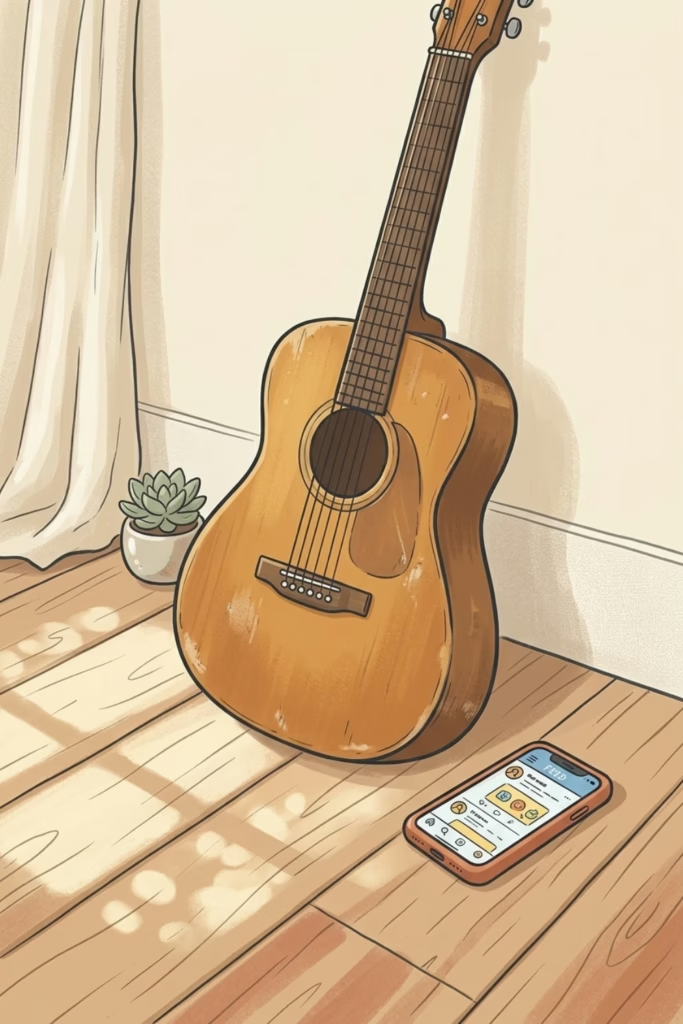
Somewhere along the way, hobbies became resume items. You don’t just run, you train for a half marathon. You don’t just sketch, you start an Etsy shop. You don’t just play guitar, you post covers on Instagram. (No judgment. I full send “great business ideas” yearly now.)
The problem is that turns free time into a performance, and performance is exactly what you’re trying to escape.
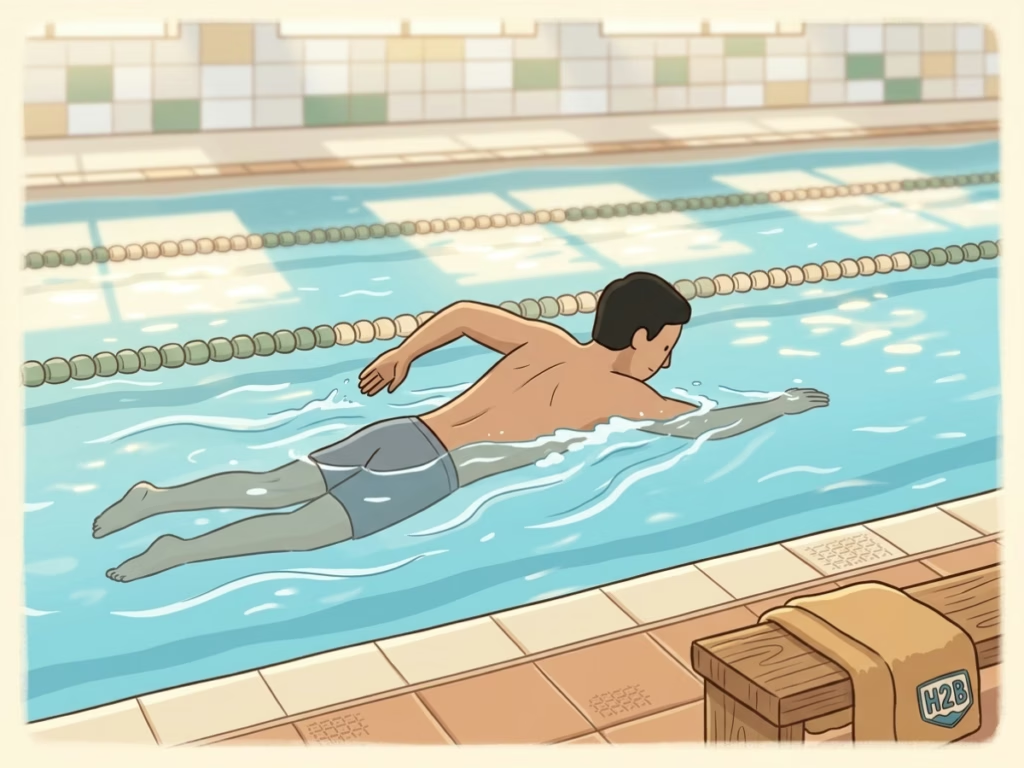
Engaging in hobbies improves well-being and life satisfaction beyond simple enjoyment, but only if you actually let yourself enjoy them. Finishing last in a swim lane, slapping random colors on a canvas, or writing terrible code in a beginner Python class? That’s play in its original form. The kind your brain was built for before someone told you everything had to be productive.
What a Bad Hobby Looks Like (and Why the Benefits Are Real)
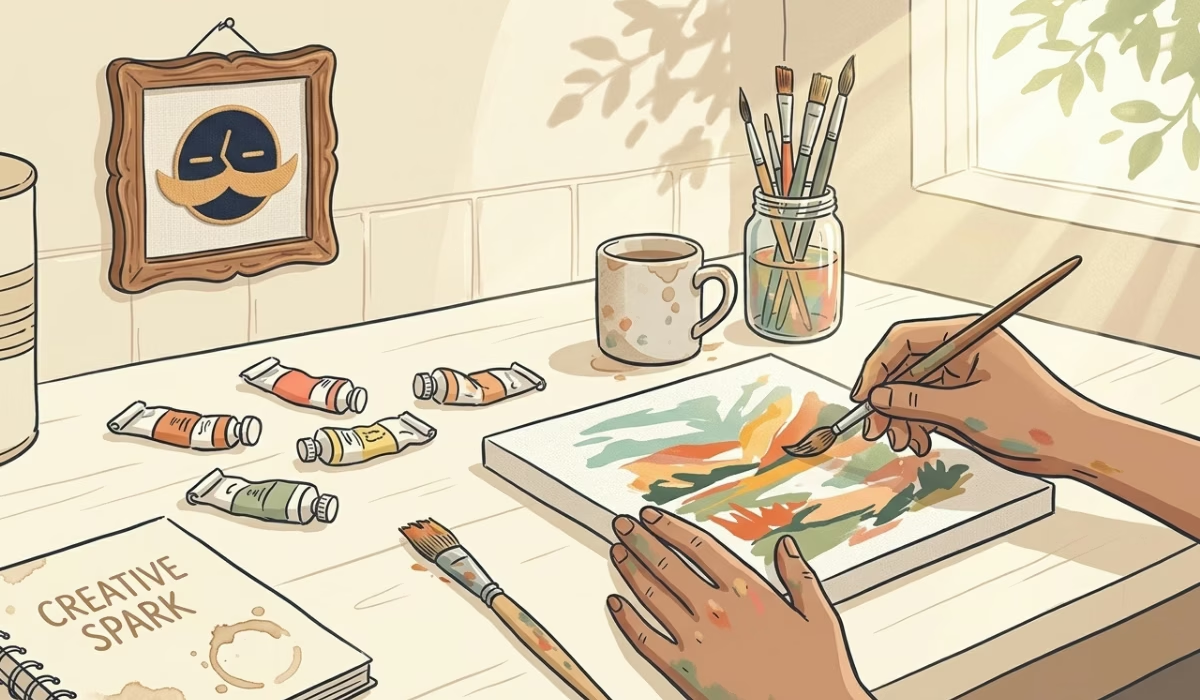
You don’t need to find something exotic. Non-competitive swimming is a classic for a reason, there’s no right answer, no scoreboard, and finishing last is basically the norm (and also fine). Abstract painting where you just pick colors without a plan tends to come out “nice usually,” which is a bar low enough that anyone can clear it. Beginner coding classes online are full of adults learning things they’ll never use professionally, which is exactly why they work.
The criteria: pick something you’d be embarrassed to post about. That embarrassment is the signal. It means there’s no ego riding on it, which means your brain can actually rest.
This is hobby burnout prevention in its simplest form: one corner of your week where nothing is on the line.
When you need a reminder of what rest without rusting looks like, this piece on taking a mid-season break is worth a read.
Frequently Asked Questions
What are the actual benefits of being bad at a hobby?
The core benefits of being bad at a hobby start in the brain. Accepting mediocrity in a recreational activity deactivates the brain area tied to performance anxiety and social judgment. Beyond the neurological effect, leisure activities and hobbies improve overall well-being and life satisfaction beyond simple enjoyment. Being bad removes the performance pressure that turns free time into a second job.
Does it matter which hobby I pick?
Not much, as long as the stakes feel genuinely low. Research indicates the activity you fear most due to fear of judgment may be the one that benefits your well-being the most. If you’re slightly embarrassed to admit you’re doing it, you’re probably on the right track.
Can a bad hobby actually prevent burnout?
Yes, in a real sense. When free time carries no performance expectation, it functions as genuine decompression rather than just a change of scenery. Hobbies support psychological health by providing focus, clarity, and joy while being incompatible with self-consciousness, and self-consciousness is the engine of burnout.
What if I start getting good at it?
That’s allowed. But notice if the enjoyment starts to drop as the stakes rise. If it does, find something new to be bad at. The goal isn’t permanent mediocrity, it’s keeping one corner of your life where the outcome genuinely doesn’t matter.
Today’s action: Pick one thing you’ve avoided because you’d be bad at it. Sign up, show up, and finish last. That’s the whole assignment.
Get The Enough List — free.
Ten minutes, five areas. A short guide for figuring out what enough looks like in money, health, work, people, and time — before you go sprinting at someone else's finish line. Yours when you subscribe.