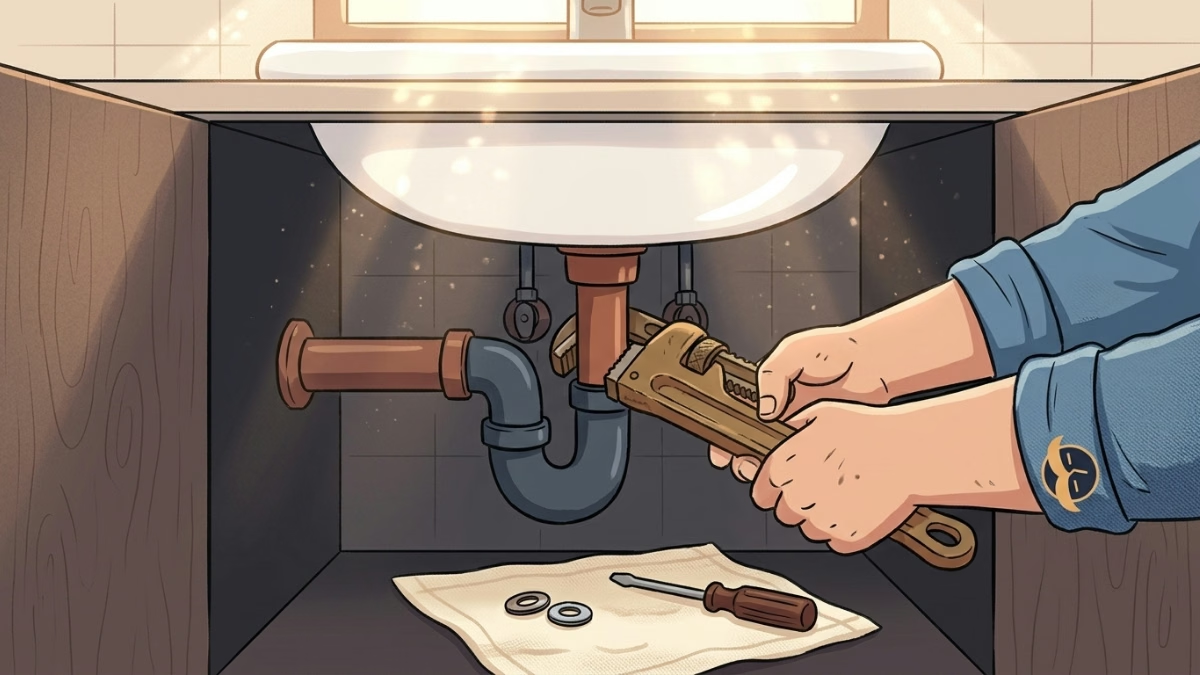
That dripping sound at 2 a.m. is not just annoying. It’s also a slow, invisible drain on your water bill, and, weirdly, a front-row seat to one of the real benefits of learning basic home repair: your brain finally gets to finish something.
A faucet dripping at one drip per second wastes more than 3,000 gallons of water a year, per the EPA. Fixing it can save you around 10% on your water bill. But the part nobody talks about is what the repair does for your head.
Key Takeaways
- A faucet dripping once per second wastes more than 3,000 gallons of water a year, per the EPA’s WaterSense program.
- The EPA estimates that fixing easily corrected household leaks can save homeowners about 10% on their water bills.
- Most faucet leaks trace back to worn washers, damaged O-rings, or a worn valve seat, all replaceable with basic hand tools.
- A typical repair part, often just a replacement washer, runs a couple of dollars, making this one of the highest-ROI home fixes available.
- The meditative value is practical, not mystical: a faucet repair forces you to slow down, observe carefully, and complete one thing fully before moving on.
The Task Your Brain Has Been Craving
Here’s the thing about modern life: almost nothing we do has a clear finish line. Emails refill. Slack pings don’t end. The to-do list is a hydra (cut one head off, two more appear, each wearing a different project manager’s face).
A leaky faucet repair is the opposite of all that.
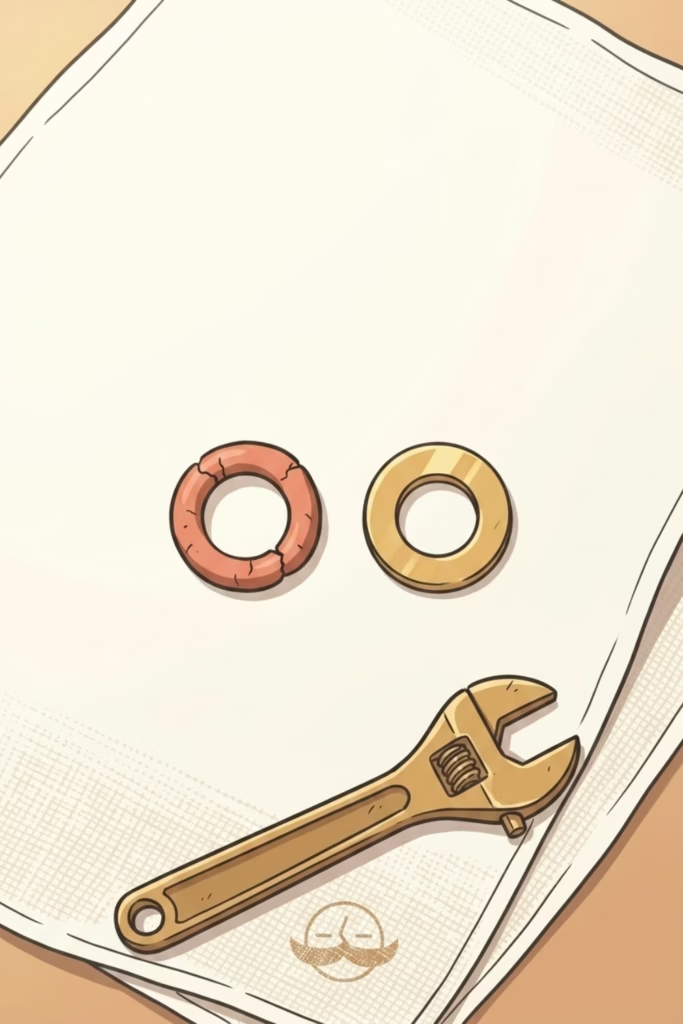
It has a beginning, you turn off the water supply. A middle, you inspect the O-rings, replace a worn cartridge or washer. An end, you turn the water back on, and either it drips or it doesn’t. That’s it. Done.
That structure is genuinely rare, and your brain finds it genuinely satisfying. You’re not multitasking. You’re not half-present. You’re crouched under a sink with a wrench, paying attention to one small thing. That’s closer to meditation than most people’s actual meditation practice. (No shade to the apps. I just personally have never completed a guided session longer than 5 minutes.)
The iFixit repair community points to three usual suspects in a dripping faucet: worn washers, damaged O-rings, and worn valve seats. None of these require a plumber. Most require a wrench, a screwdriver, pliers, and a replacement part that often only costs a few dollars, which is a truly excellent return on a Saturday afternoon.
What You’re Actually Building: The Benefits of Basic Home Repair
The fix itself takes maybe 30 minutes. What you’re building takes longer to appreciate.
Every time you handle a small repair yourself, you add one more entry to the mental ledger of “things I can handle.”
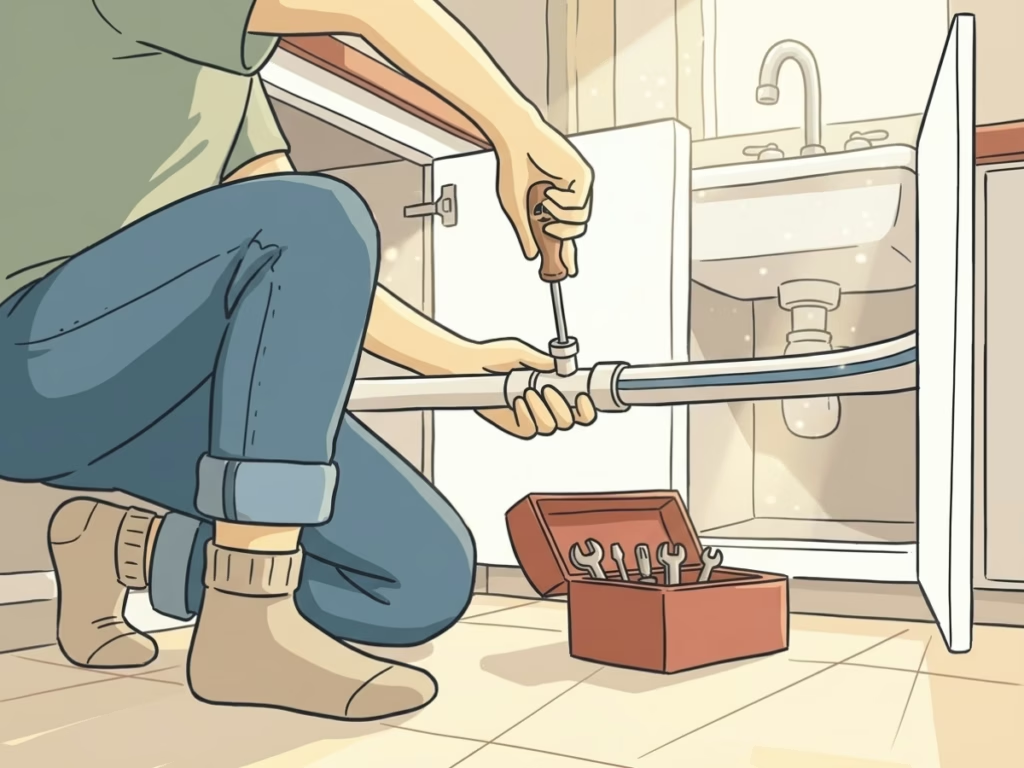
That ledger matters more than it sounds. It’s the same reason finishing last in a hobby still counts, the point isn’t the result, it’s the evidence that you showed up and did the thing.
Home repair is also one of the few skills where failure is immediately visible and immediately fixable. The faucet either drips or it doesn’t. No ambiguity, no performance review, no waiting six weeks for feedback. You learn fast, you adjust, you move on. That’s not so different from why your first loaf of bread sucks and why that’s actually fine.
The Home Depot repair guide lays out the basic steps cleanly: shut off the water, remove the handle, inspect the O-ring and cartridge or stem, replace what’s worn, reassemble, test. It’s structured. It’s repeatable. It rewards patience over speed. Sound familiar? (That’s the meditation part. It snuck up on you.)
Frequently Asked Questions
How much water does a leaky faucet actually waste?
A faucet dripping at one drip per second wastes more than 3,000 gallons of water per year, per the EPA’s WaterSense program. To put that in perspective, that’s enough water to take roughly 150 ten-minute showers. One small washer.
Can I fix a leaky faucet with no plumbing experience?
Yes. The EPA notes that most household leaks are easy to fix and require only a few basic tools and hardware. The most common culprits, worn washers, O-rings, and valve seats, are all replaceable by a careful beginner with a wrench and a screwdriver.
DIY faucet repair is genuinely beginner-friendly. A water leak repair at home usually comes down to one worn part and a wrench.
How much does a DIY faucet repair cost?
The typical replacement part is a washer or O-ring, which runs a couple of dollars at any hardware store. The repair itself, if you do it yourself, costs almost nothing beyond your time.
What’s the actual mental health benefit here?
It’s not mystical. A faucet repair is a bounded task with a clear outcome, which forces single-pointed focus and delivers an immediate, visible result. That combination, attention plus completion, is exactly what stress-heavy brains rarely get from knowledge work. Think of it as a 30-minute vacation from ambiguity.
Does fixing one faucet really make a dent in my water bill?
The EPA estimates that correcting easily fixed household leaks can save about 10% on water bills. One faucet won’t retire you, but if you’ve got a couple of drips around the house, the savings add up fast and the repairs take an afternoon.
Today’s move: go find the drip. You probably already know which faucet it is, the one you’ve been tuning out for three months. Turn off the supply valve, pull the handle, and see what’s in there. Worst case, you learn something. Best case, you fix it for two bucks and sleep through the night for the first time since spring.
Get The Enough List — free.
Ten minutes, five areas. A short guide for figuring out what enough looks like in money, health, work, people, and time — before you go sprinting at someone else's finish line. Yours when you subscribe.