
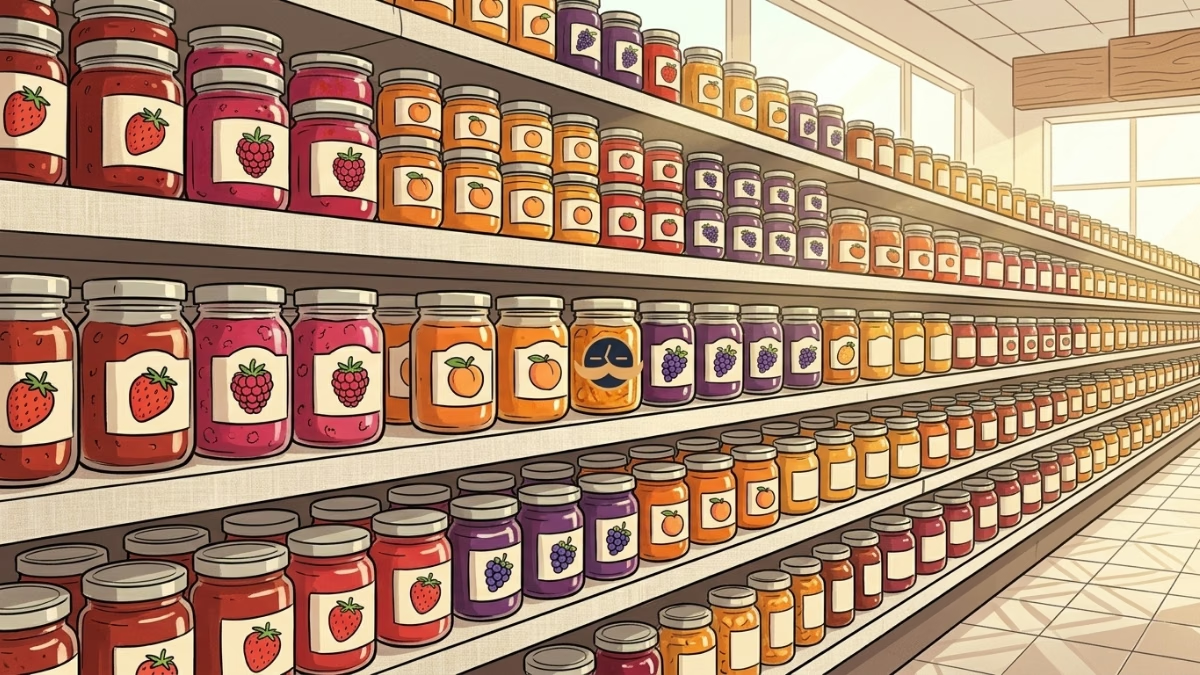
Sixty jam flavors sounds like a good Saturday. It is not. It is a small, sticky nightmare, and there’s research to prove it.
The paradox of choice is the idea that more options make people less satisfied with their decisions, not more. Extra alternatives pile on cognitive effort and, once you’ve finally picked, they leave a visible graveyard of rejected options behind you. Every “what if I’d gone with the other one” lives rent-free in your head. Per The Decision Lab, too many choices can actually limit your sense of freedom by making deciding harder, not easier. Counterintuitive. Deeply annoying. Completely true.
Key Takeaways
- The paradox of choice holds that more options increase cognitive effort and post-decision regret, reducing overall satisfaction, per The Decision Lab.
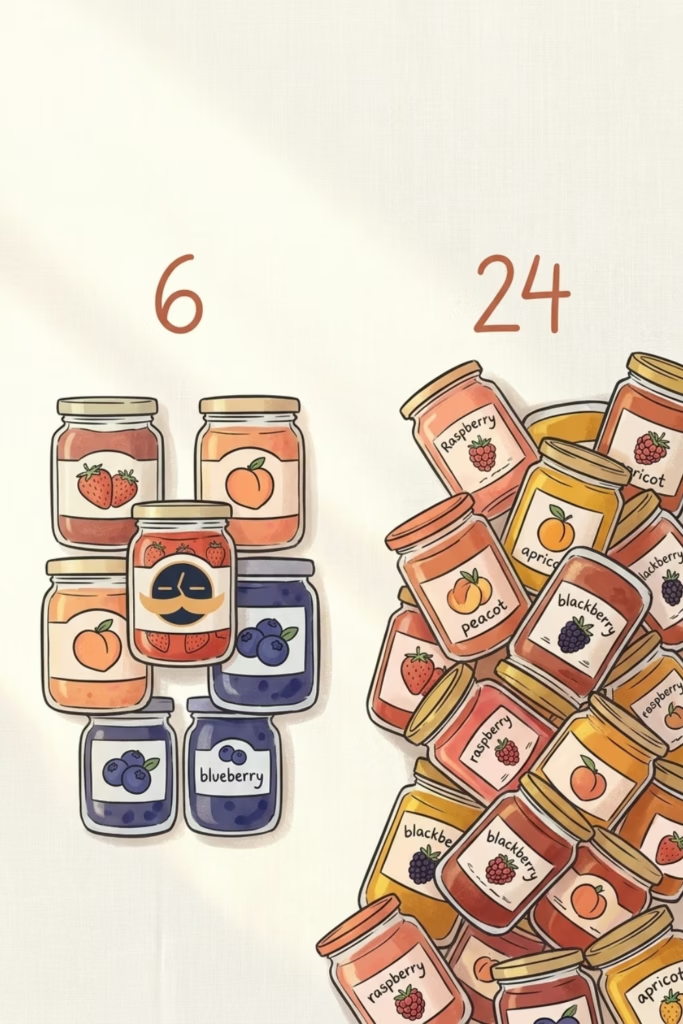
- In a canonical jam study, a 6-flavor display produced a 30% purchase rate while a 24-flavor display produced only 3%, ten times fewer buyers.
- Choice overload doesn’t just slow decisions down; it can stop them entirely, a state known as choice paralysis.
- The strongest fix isn’t better decision-making, it’s narrowing the menu before you start choosing.
- Psychologist Barry Schwartz argues that too many options leave people paralyzed and then less satisfied with whatever they finally pick.
The Jam Study You Need to Know About
Here’s the number that makes this click. In a canonical study summarized by Yu-kai Chou, a 6-flavor jam display produced a 30% purchase rate. A 24-flavor display? 3%. Same store, same shoppers, ten times fewer buyers, just because the menu got longer.
Psychologist Barry Schwartz built a whole book and a TED talk around this pattern: past a certain point, options stop feeling like freedom and start feeling like unpaid labor. You’re no longer shopping. You’re auditing.
Why It Hits Harder After the Decision
The sneaky part isn’t the paralysis, it’s the hangover. Once you finally pick something, every unchosen option becomes a measuring stick. The more options you had, the longer that stick is. MIT’s Office of Graduate Education notes that choice satisfaction drops when the menu grows past a critical point, because your brain keeps running the comparison long after the decision is done.
Fewer options = shorter stick = you actually enjoy what you picked.

How to Fight the Paradox of Choice
The goal isn’t to become a better decision-maker. It’s to face fewer decisions in the first place. Research suggests somewhere around six to eight options is a workable range before too many options anxiety kicks in and the whole thing collapses.
Some moves that actually work:
- Pre-commit to a short list. Three streaming options, not thirty. Two running shoes, not a bunch of browser bookmarks.
- Set a “good enough” threshold. Not the best option, a satisfying one. Then stop looking. (This pairs well with not comparing yourself to everyone else’s highlight reel, which is its own rabbit hole.)
- Use defaults. Same coffee order. Same gym day. Decision fatigue is real, and every small choice you automate is energy you keep for something that matters.
The paradox of choice isn’t about being picky. It’s about the fact that your brain was never built to compare 47 versions of the same thing. Neither was mine. Neither was anyone’s.
Frequently Asked Questions
What is the paradox of choice?
The paradox of choice is a psychological concept, popularized by Barry Schwartz, that says more options often make people less happy, not more. Extra alternatives increase the mental effort of deciding and amplify regret after the choice is made, per The Decision Lab. The name comes from Schwartz’s book The Paradox of Choice: Why More Is Less.
What is choice paralysis?
Choice paralysis is what happens when the number of options becomes so overwhelming that a person struggles to decide at all. It’s the “I’ll just figure it out later” that never gets figured out. The jam study is the cleanest illustration: a 24-option display didn’t just produce fewer buyers than a 6-option display, it produced ten times fewer, per Yu-kai Chou’s summary.
Does having more choices actually make you unhappy?
Yes, past a point. MIT’s Office of Graduate Education notes that satisfaction drops when options exceed a critical threshold, not because you made the wrong call, but because every unchosen option becomes a comparison point. The more you had to pick from, the louder those comparisons get.
How do you avoid decision fatigue from too many options?
Narrow the menu before you start. Set a “good enough” bar and stop browsing once something clears it. Automate low-stakes decisions (same coffee, same gym day) so your mental energy goes toward the calls that actually matter. The goal is fewer decisions, not better ones.
Who came up with the paradox of choice?
Barry Schwartz, a psychologist, is most associated with the concept, through his 2004 book and a widely-watched TED talk. The underlying research draws on earlier work in consumer psychology, but Schwartz made it mainstream.
Today’s move: pick one recurring decision you make more than twice a week, what to eat for lunch, which show to watch, which route to run, and lock it in as a default for the next seven days. Notice how much quieter your head gets. That’s not laziness. That’s the paradox of choice working for you instead of against you.
Get The Enough List — free.
Ten minutes, five areas. A short guide for figuring out what enough looks like in money, health, work, people, and time — before you go sprinting at someone else's finish line. Yours when you subscribe.

Thoughts?