This guide covers how to exercise in summer heat without cooking yourself or bailing on the habit entirely. Summer heat is not the reason to skip your workout. It IS the reason to stop winging it.
The short version: work out before 9 a.m. or after sunset, drink more water than you think you need and start earlier than you think to start, and when the heat index (a.k.a. “feels like”) cracks 105°F, take the session indoors. Everything below is just filling in the details on those three rules.
Key Takeaways
- The safest windows for outdoor exercise in summer are before 9 a.m. or after sunset; the 11 a.m.-3 p.m. window carries the highest risk of heat illness.
- Pre-exercise hydration means drinking about 6 mL of fluid per kilogram of body weight 2-3 hours before your workout, not chugging water right before you head out.
- During exercise, the American College of Sports Medicine recommends 7-10 oz of fluid every 10-20 minutes to prevent a performance-sapping drop in body weight.
- A heat index above 105°F is classified as dangerous. Bring your outdoor exercise indoors on those days.
- Loose, sweat-wicking fabrics (polyester blends or merino wool) keep you cooler than tight gym clothes, which trap heat and block sweat evaporation.
When to Exercise in Summer Heat (and When to Stay Home)
The safest windows for outdoor exercise are before 9 a.m. or after sunset, per CNN. The 11 a.m.-3 p.m. stretch is peak temperature AND peak solar radiation, which is a lovely combination if your goal is heatstroke.
The actual cutoff that matters: if the heat index hits 105°F or higher, move your workout indoors.
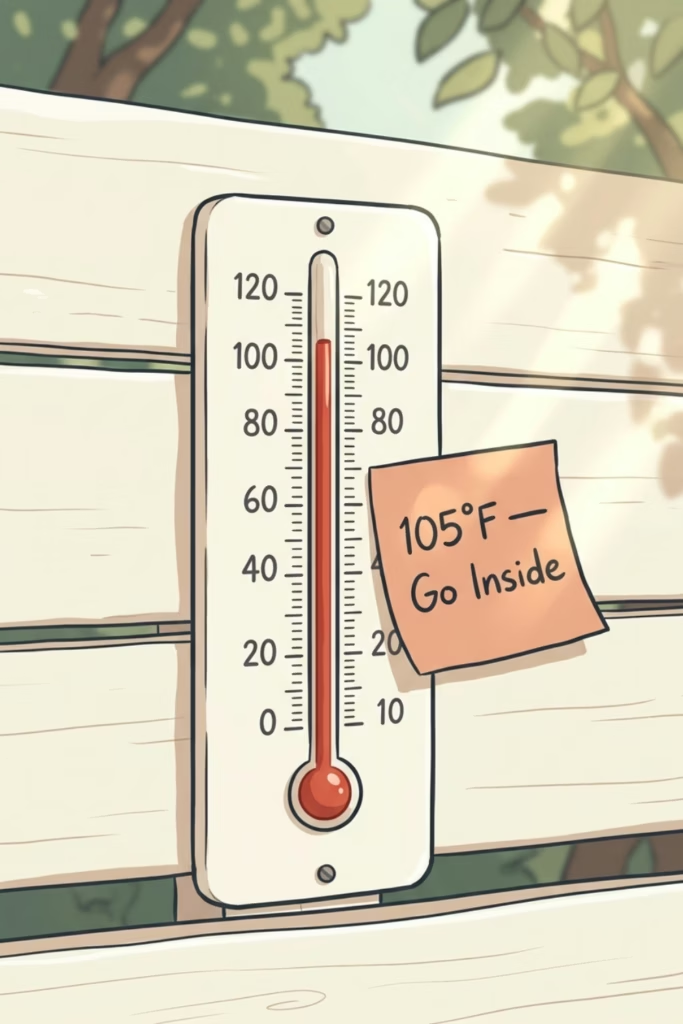
Not “use caution.” Indoors. Peloton’s heat index guide flags anything above 105°F as genuinely dangerous, with sunstroke and heat exhaustion as the realistic outcomes. Your 10-minute home workout is not a lesser option on those days. It’s the smarter one. (We have a quick indoor routine for exactly this situation.)
If you want to think about pacing in heat the same way elite cyclists do, this piece on Tour de France pacing for amateurs is worth a read.
Hydration Math Nobody Told You
“Drink water” is not a hydration strategy. Here’s what actually is:
- Before: 6 mL of fluid per kilogram of body weight, 2-3 hours out. For a 150-lb person, that’s roughly 14 oz, per the Washington Post. Not right before you leave. Hours before.
- During: 7-10 oz every 10-20 minutes, per the American College of Sports Medicine. Set a timer if you have to.
- After: 16-19 oz for every pound of body weight lost. Weigh yourself before and after once, just to calibrate.
The Cold Slushy Trick (Not a Joke)
These cooling strategies before an outdoor workout are backed by actual research, not just gym folklore. Precooling before an outdoor session actually works. Options that are backed up and not just bro science:
- Cold slushy: Crushed ice mixed with water, drunk before you head out. It lowers core temperature more effectively than plain cold water.
- Ice-water towels: Soak towels in ice water, rotate them over your neck, arms, or legs for 5-10 minutes before starting.
- Air conditioning: Sit in a heavily air-conditioned room for 20-30 minutes beforehand.
Gear and Skin
Tight gym clothes look great. They are actively working against you in heat. Loose, lightweight, sweat-wicking fabrics, specifically polyester blends or merino wool, let sweat evaporate and keep your core temperature down. Save the compression gear for fall.
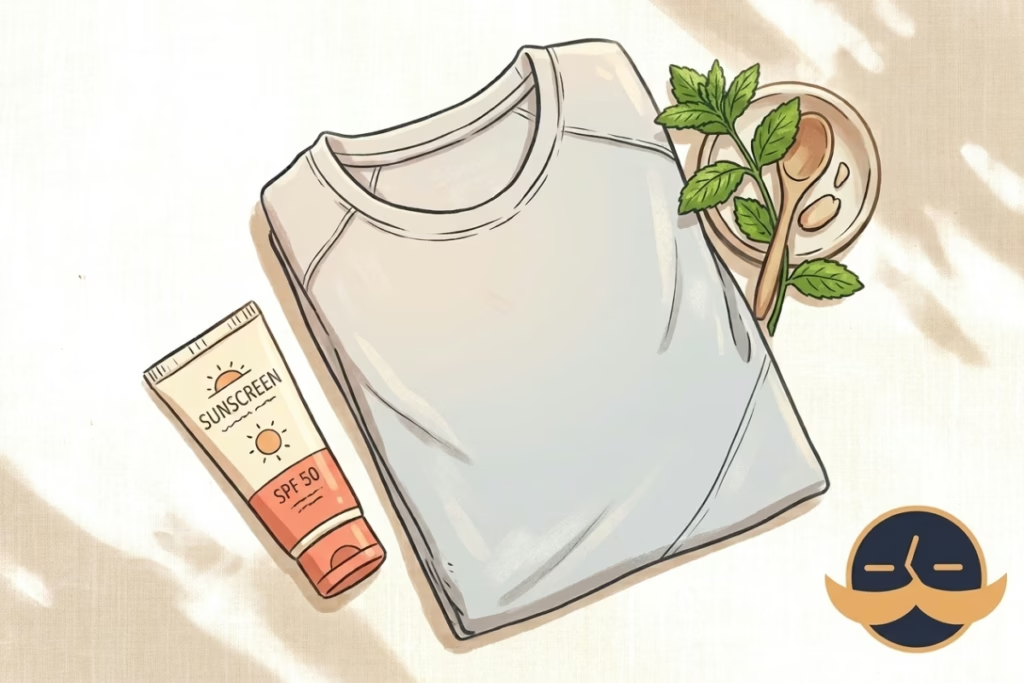
On sunscreen: SPF 30 or higher, broad-spectrum, water-resistant. Apply 30 minutes before going out. Reapply every hour if you’re sweating heavily, per Everyday Health. Most people skip the reapply. Most people are also walking around with a patchy burn by noon.
Frequently Asked Questions
What is the best time to work out in summer heat?
Before 9 a.m. or after sunset are the safest windows for outdoor exercise in summer, per CNN. The 11 a.m.-3 p.m. block combines peak air temperature with peak solar radiation. Think of it as the sun’s double shift.
At what heat index should I move my workout indoors?
A heat index above 105°F is classified as dangerous for outdoor exercise, according to Peloton’s heat index guide. At 90-105°F, use extreme caution and cut intensity and duration. Below 90°F with proper hydration, most healthy adults can exercise outdoors with reasonable care.
How much water should I drink before exercising in heat?
Drink about 6 mL of fluid per kilogram of body weight, 2-3 hours before your workout. For a 150-lb person that’s roughly 14 oz. Chugging water right before you leave doesn’t give your body time to absorb it properly.
Does what I wear actually matter in heat?
Yes, more than most people realize. Loose, lightweight, sweat-wicking fabrics like polyester blends or merino wool allow sweat to evaporate and help regulate core temperature. Tight compression gear traps heat against your skin, which is the opposite of what you want when it’s 95°F outside.
What should I do if I feel heat illness symptoms during a workout?
Stop immediately, move to shade or indoors, and douse yourself with cold water while applying cold wet cloths to your neck, groin, and armpits, per the American Heart Association. If symptoms don’t improve quickly, get medical attention. “Push through it” is not a strategy here.
Today’s action: Check tomorrow’s forecast heat index tonight. If it’s under 90°F, set your alarm for a morning workout before 9 a.m. If it’s over 105°F, find a 10-minute indoor routine and commit to it now, before the morning comes and you talk yourself out of both options.
Get The Enough List — free.
Ten minutes, five areas. A short guide for figuring out what enough looks like in money, health, work, people, and time — before you go sprinting at someone else's finish line. Yours when you subscribe.