
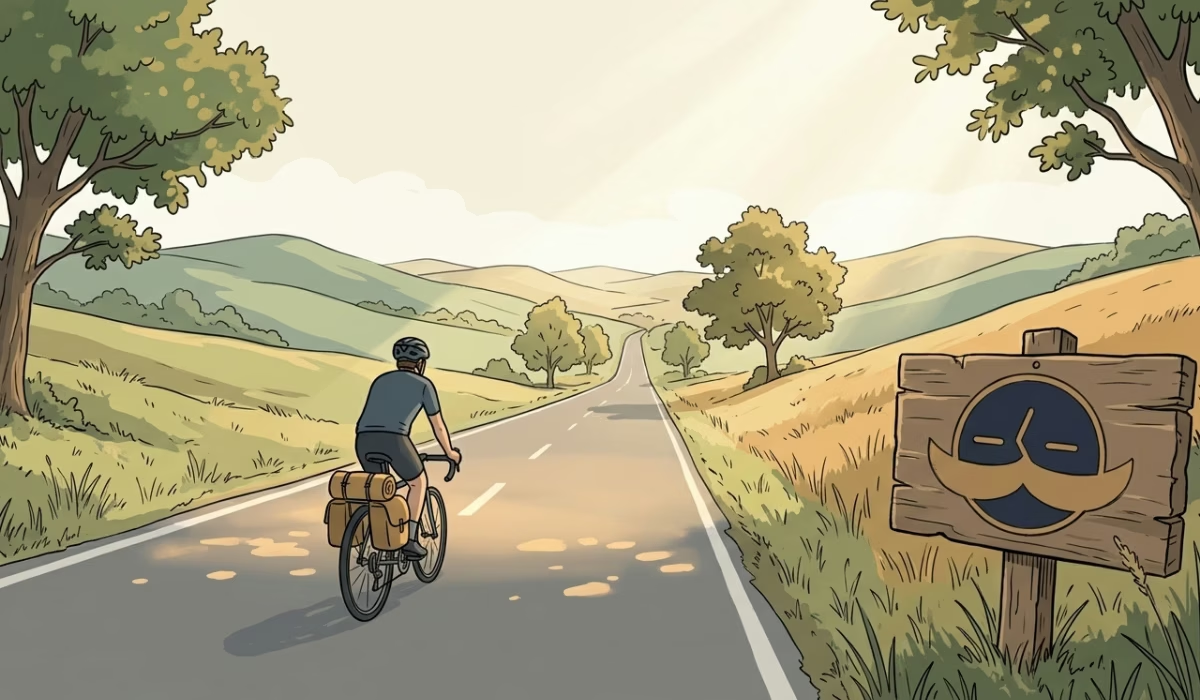
A Tour de France pro averages 27-30 mph over three weeks; a recreational cyclist averages 15-18 mph on flat terrain, roughly half the speed. One study found an amateur completed all 21 Tour stages in 191 hours versus a pro’s 87 hours, yet only burned slightly more total energy despite taking twice as long.
If you’ve ever wondered what the Tour de France pace for amateurs actually looks like next to the pros, the numbers are more interesting than the motivational posters let on. The gap between you and a Tour de France rider is not motivational poster material. It’s about 12 miles per hour, 104 hours of riding time, and roughly the difference between a human and a very aerodynamic robot who eats three energy gels every sixty minutes like clockwork.
And that’s fine. In fact, that’s the lesson.
Tour de France pros average 27-30 mph over three weeks of racing, per Bicycling.com. A recreational cyclist on flat terrain averages 15-18 mph. The 2025 Tour was the fastest edition ever recorded, clocking an overall average of 42.85 km/h (26.6 mph), per ProCyclingUK. You are not going to do that. Neither am I. Neither is basically anyone reading this. That’s the honest starting point for understanding the tour de france pace for amateurs, and it turns out the gap is more interesting than it is discouraging.
Key Takeaways
- Tour de France pros average 27-30 mph; recreational cyclists average 15-18 mph on flat terrain, roughly half the pro speed, per Bicycling.com.
- A recreationally trained cyclist completed all 21 Tour stages in 191 hours, compared to a pro’s 87 hours, yet expended up to 8,500 kcal versus the pro’s 7,000 kcal, more energy, less speed, per Journal of Applied Physiology.
- The 2025 Tour de France was the fastest edition on record, with an overall average speed of 42.85 km/h (26.6 mph).
- Experts recommend cycling 300 km per week for six months before attempting any Tour mountain stage, a realistic but demanding benchmark for committed amateurs.
- Finishing at your own pace isn’t a coward’s way out; it’s the only physiologically honest strategy, and the one that keeps you in the game long-term.
The Tour de France Pace for Amateurs: Worse Than You Think, Better Than You Think
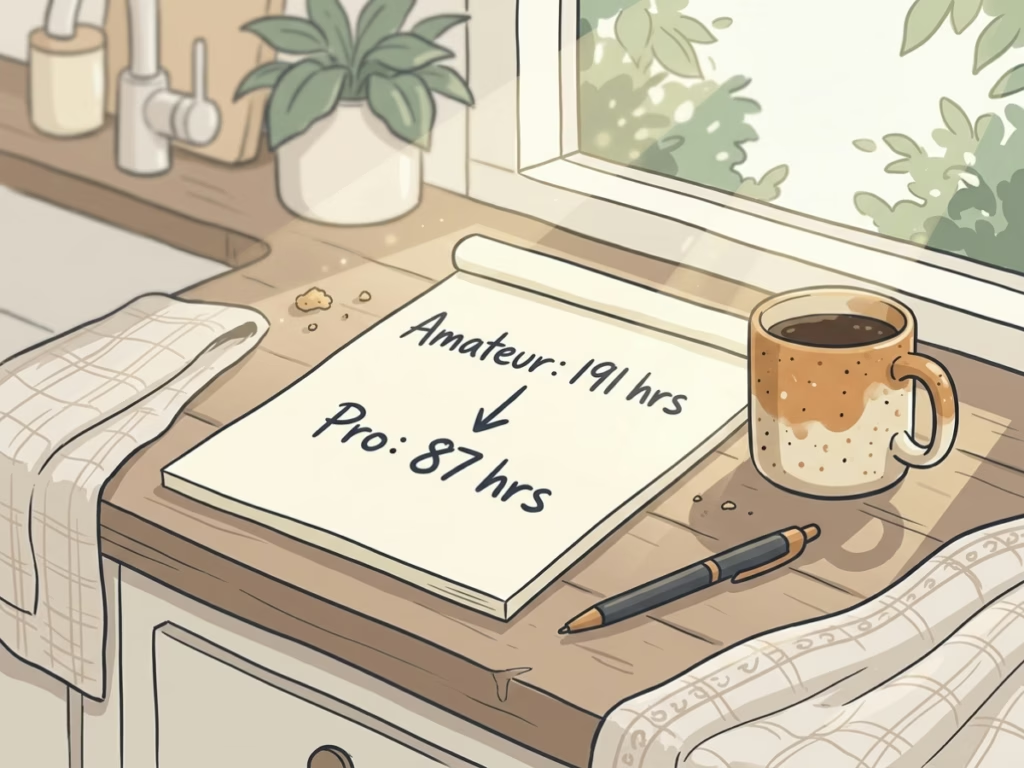
Here’s the stat that genuinely stopped me mid-scroll. A study published in the Journal of Applied Physiology tracked a recreationally trained cyclist completing all 21 Tour de France stages. He finished in 191 hours total (158 hours of actual moving time). The professional finished in 87 hours.
So the amateur took more than twice as long. Already humbling. But here’s the part that breaks the brain: the amateur burned up to 8,500 kcal per stage, while the pro burned up to 7,000 kcal (same study). The slower guy burned more energy. He worked harder to go less far.
That’s not a knock on the amateur. That’s just physics. Greater body mass, less aerodynamic efficiency, more time spent in the saddle grinding through the same kilometers. The pro’s body is a finely tuned system that converts fuel into speed at an almost unfair rate. Yours is a normal human body doing an extraordinary thing. It’s going to take longer and cost more.
The metaphor writes itself.
What “Going Your Own Pace” Actually Means Physiologically
There’s a temptation, especially if you’re the kind of guy who reads self-improvement content at 11pm (no judgment, I’m projecting), to treat “go at your own pace” as a soft consolation. Like a participation ribbon with better branding.
It’s not. It’s the only option that works.
Tour riders sustain above 38 km/h across three weeks including mountain stages, per ProCyclingUK. A strong amateur might hit 30-35 km/h on a good flat day. But here’s what the Reddit thread on this topic gets right: most people can match a Tour pro’s pace for somewhere between 30 and 60 seconds before the wheels come off (discussed here). One minute. Maybe two if you’ve been training seriously and the wind is behind you.
Then it’s over. You’re cooked. You’re left sitting on the side of a French mountain eating your third gel and reconsidering your life choices.
The pros aren’t able to go that hard simply from ignoring their body screaming. They’re able to go that hard because years of training have shifted what “sustainable” means for their bodies. Their normal is your sprint. That’s not meant to be discouraging, but useful information. It tells you that the goal isn’t to match their pace. The goal is to find your sustainable pace and actually finish the thing.
The Carb Gel Problem (Or: You Can’t Hustle Your Way Through a Mountain)
Tour de France pros consume 90-120 grams of carbohydrates per hour during racing, roughly three gels, every hour, for six to eight hours a day, per Bicycling.com. That’s not a “snack time” situation. That’s a need for a fueling protocol. Miss it and you bonk. Bonking, for the uninitiated, is the cycling term for when your body runs out of glycogen and your legs stop working and you briefly consider whether the ditch looks comfortable.

The point isn’t the gels. The point is that even the best athletes in the world, on the best day of their lives, need to continuously feed the effort or the effort stops. They can’t just push harder. They have to manage the inputs.
This is the part where I’d usually make a clunky metaphor about work-life balance, but honestly the cycling version is clear enough. You cannot sustain output without recovery. You cannot sustain recovery without actually stopping. And you cannot sustain any of it if you’ve set a pace that requires you to be a professional cyclist when you are, in fact, a person with a job and a mortgage and a lower back that’s been making a new sound lately.
The hustle-bro version of this story is: “If you just worked as hard as a Tour pro, you’d get Tour pro results.” The actual version is: “Tour pros work that hard because they’ve spent years building the infrastructure to support it, and also their entire life is optimized around this one thing, and also they are genetic outliers, and also they still bonk if they skip a gel.”
Setting Your Own Finish Line Before You Start Pedaling
Expert cycling guide Gibaud recommends cycling 300 km per week for six months before attempting any Tour de France mountain stage, per Matador Network. That’s a real, achievable benchmark. It’s also roughly 43 km a day, every day, for half a year. Which is a serious commitment and not something you stumble into. That’s the honest benchmark for tour de france training for normal guys: volume and consistency, not speed.
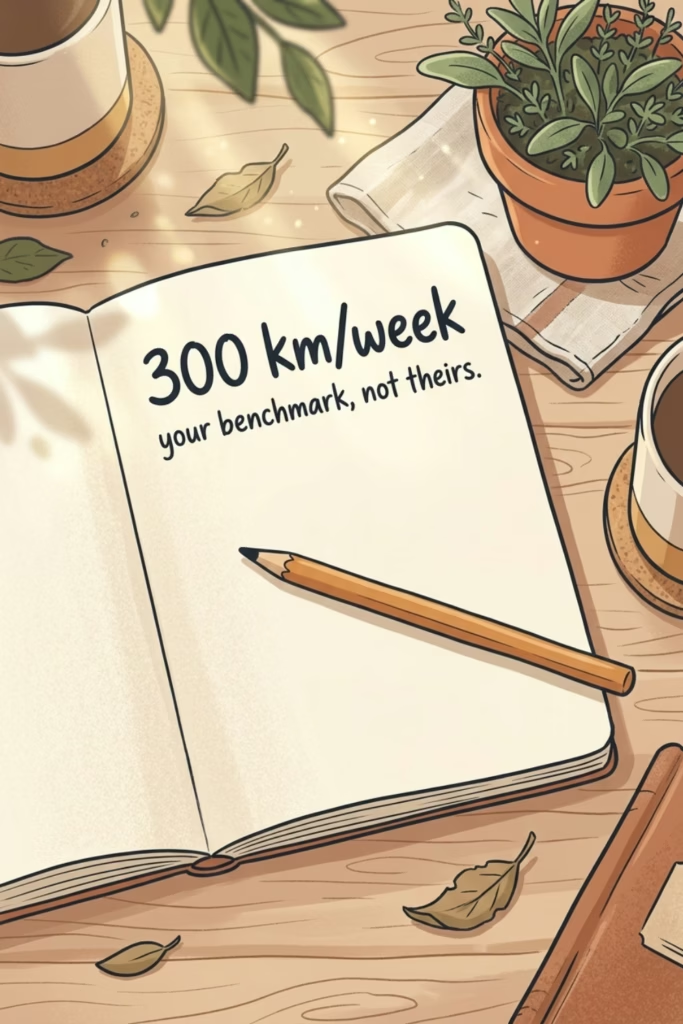
Notice what that benchmark is NOT: “ride as fast as the pros.” It’s a volume target. A consistency target. Something you can measure, track, and actually hit if you build toward it deliberately.
This is the SMART goal version of athletic ambition, and it works for the same reason it works in every other area of life. You’re not chasing a feeling or a vague aspiration. You’re chasing 300 km per week, which either happened or it didn’t. You either built the base or you’re still building it. Both are fine. Neither requires you to be someone else.
Marcus Aurelius had a version of this, actually. The lessons from his Meditations keep coming back to the same thing: do the work that’s in front of you, at a pace that’s honest, without performing it for an audience. He wasn’t writing about cycling, obviously. He was a Roman emperor, not a Lycra guy. But the principle holds.
For men in their 30s and 40s, finding a sustainable pace in cycling, and in life, is the actual training goal, not matching a pro’s numbers.
The Silent Win Nobody Puts on Instagram
Here’s the thing about finishing a long ride at your own pace: nobody cares. And I mean that in the best possible way.
The amateur in that physiology study finished all 21 Tour de France stages. He burned more calories than the pro. He spent more time on the bike. He did not win the Tour de France. He also did something that the vast majority of humans on earth will never do, and he did it at a pace that was sustainable for his body, and that is worth something.
The art of the silent win is exactly this: progress that doesn’t come with a podium ceremony or a highlight reel. It comes with a completed stage, tired legs and the quiet knowledge that you set a goal, built toward it honestly, and didn’t quit when the mountain got steep. That’s the version of this that’s actually available to normal guys.
The Tour de France is three weeks long. Life is longer. The guys who finish are the ones who figured out their pace early and didn’t burn all their matches in week one trying to keep up with someone else’s race. This is quiet self-improvement, cycling-marathon edition.
Rest Is Part of the Race
One more thing the Tour teaches, and it’s the one that gets skipped in every “train like the pros” article: rest days are built into the race. They’re not optional. They’re not a sign of weakness. They’re scheduled.
If you’re running yourself into the ground trying to improve at anything, fitness, career, relationships, a hobby you’re trying not to quit, the mid-season break concept is worth taking seriously. Stopping isn’t the opposite of progress. Stopping strategically IS progress. The body (and the brain) that gets adequate recovery is the one that shows up for week three.
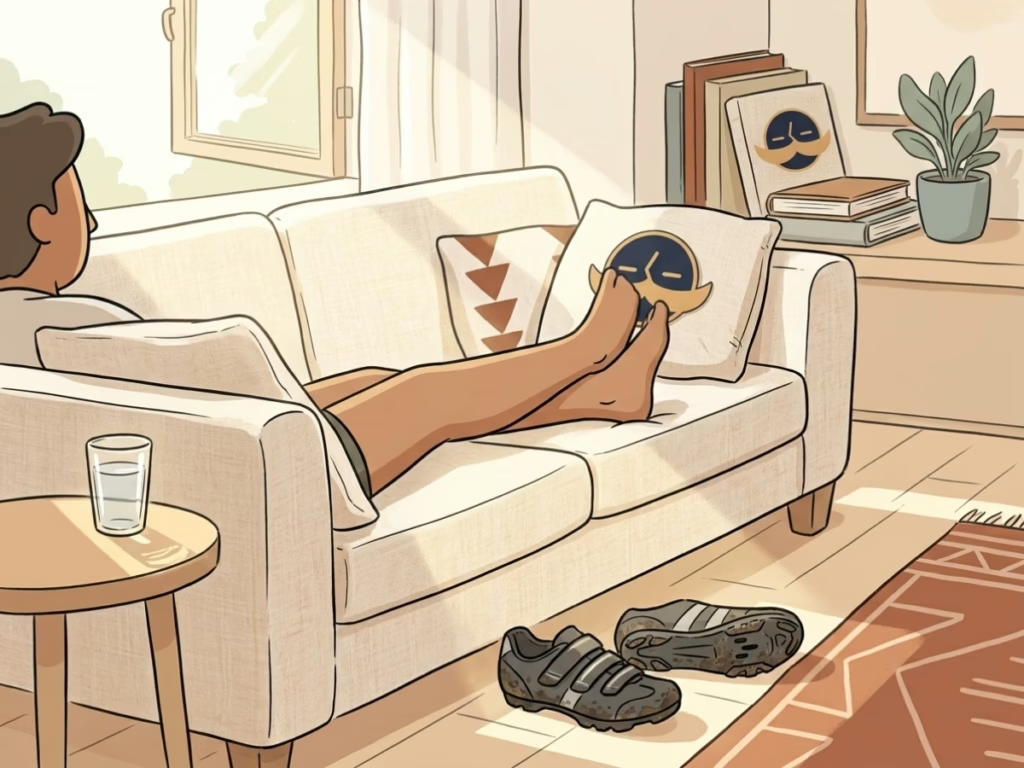
The ones who skip rest to “stay ahead” are usually the ones you see sitting on the side of the road eating a gel with a thousand-yard stare.
Frequently Asked Questions
How fast do Tour de France pros actually ride compared to an average person?
Tour de France professionals average 27-30 mph over the entire race, while recreational cyclists typically average 15-18 mph on flat terrain, roughly half the speed, per Bicycling.com. The 2025 Tour was the fastest edition ever recorded at an average of 42.85 km/h overall, per ProCyclingUK. To put that in perspective: the pros are riding at a pace that most recreational cyclists would describe as an all-out sprint, and they’re sustaining it for six to eight hours a day across three weeks.
How long would it take an amateur to ride the full Tour de France route?
A study in the Journal of Applied Physiology tracked a recreationally trained cyclist completing all 21 Tour stages: he finished in 191 hours total (158 hours of moving time), compared to a professional’s 87 hours (per the study). That’s more than twice as long on the bike. The amateur also burned more total energy per stage despite going slower, which is the kind of fact that makes you appreciate how genuinely extraordinary professional cyclists are.
Do I need to train like a Tour pro to ride a famous Tour stage?
Not even close. Expert cycling guide Gibaud recommends building to 300 km per week for six months before attempting a Tour mountain stage (per Matador Network). That’s a real, achievable training benchmark that has nothing to do with matching pro speeds, it’s about building the aerobic base to survive the climb. Volume and consistency matter far more than pace for anyone who isn’t, in fact, a professional cyclist.
Why does an amateur burn more calories than a pro on the same route?
Because efficiency is a trained skill. A heavier body with less aerodynamic positioning and less-optimized pedaling mechanics simply costs more energy to move the same distance, per the Journal of Applied Physiology. The pro’s body has been refined over years to convert fuel into forward motion at a remarkable rate. The amateur’s body is doing something impressive, just less efficiently.
What’s the actual takeaway for a normal guy who wants to improve?
Define your own benchmark before you start measuring yourself against someone else’s. The Tour de France is a useful mirror because the numbers are so stark, it makes obvious what’s always true: you are not competing with professionals, and the finish line you’re chasing should be one you planted yourself. Build toward a sustainable pace, rest when the race calls for it, and track your own progress instead of someone else’s highlight reel.
Here’s the one thing you can do today: pick a distance or a time goal that’s honest for where you actually are right now, not where you wish you were. Write it down. Not a Tour de France stage. Not “get fit.” Something specific and achievable in the next 30 days. That’s your 300 km per week. That’s your race. The pros are riding theirs. You get to ride yours.
Get The Enough List — free.
Ten minutes, five areas. A short guide for figuring out what enough looks like in money, health, work, people, and time — before you go sprinting at someone else's finish line. Yours when you subscribe.

Thoughts?