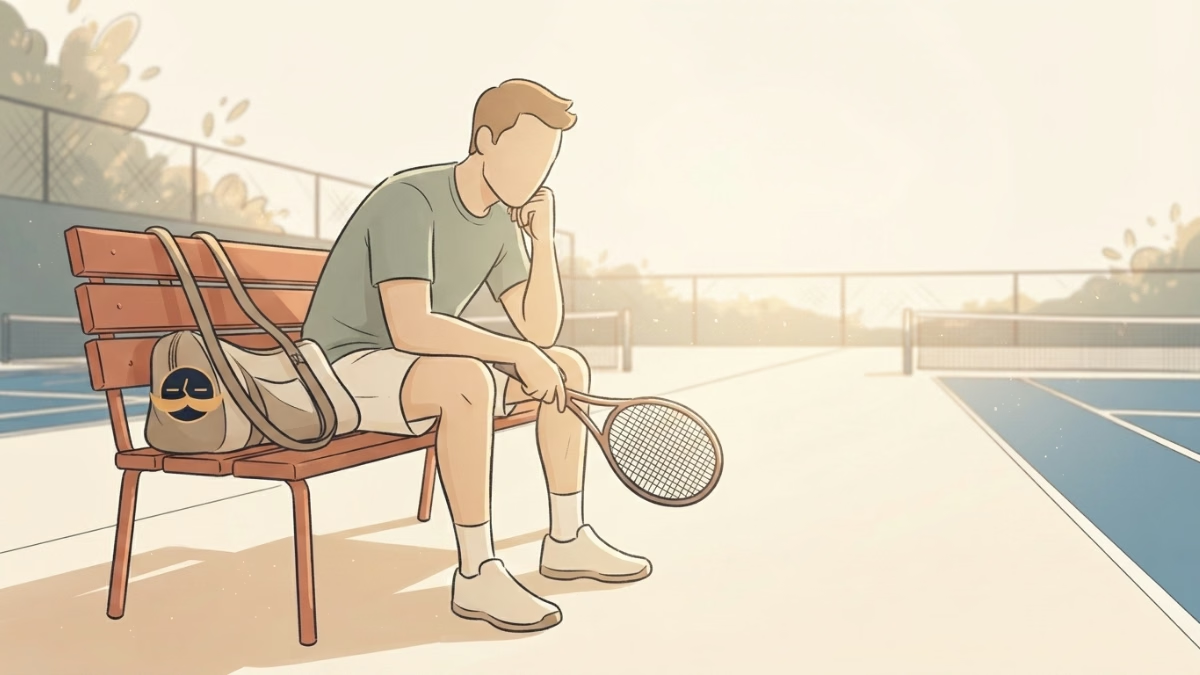
Carlos Alcaraz lost at the 2024 US Open, and the most useful thing anyone wrote about it wasn’t about his backhand. It was this: elite players need to be able to win on a bad day, because perfection isn’t always on the menu. That’s not a tennis lesson. That’s the whole thing.
Here’s how to handle failure like an athlete, and actually use it.
Key Takeaways
- The USTA explicitly frames losing as a learning tool, encouraging players to look for what they can improve rather than externalizing blame.
- A loss affects your mentality, not your ability, separating identity from outcome is the first move elite players make after a defeat.
- The most painful loss can be the greatest teacher when you treat it as feedback rather than proof of failure.
- Winning on a bad day matters more than being perfect on a good day, elite players build consistency and weapons that hold up when their level dips.
- After a loss, shifting attention to what comes next, the next week of practice, beats dwelling on what just happened.
Step 1: Separate the loss from your identity (the first move athletes make)
The first thing that happens after a bad loss isn’t strategic. It’s personal. You start treating the outcome as a verdict on who you are. (Guilty. We’ve all been there, staring at the ceiling at 2am like there’s an answer up there somewhere.)
The antidote is a clean mental split. As one tennis psychology resource puts it, a loss affects your mentality, not your ability. The skill didn’t leave. The confidence took a hit. Those are different problems with different solutions, and mixing them up is how you spiral.
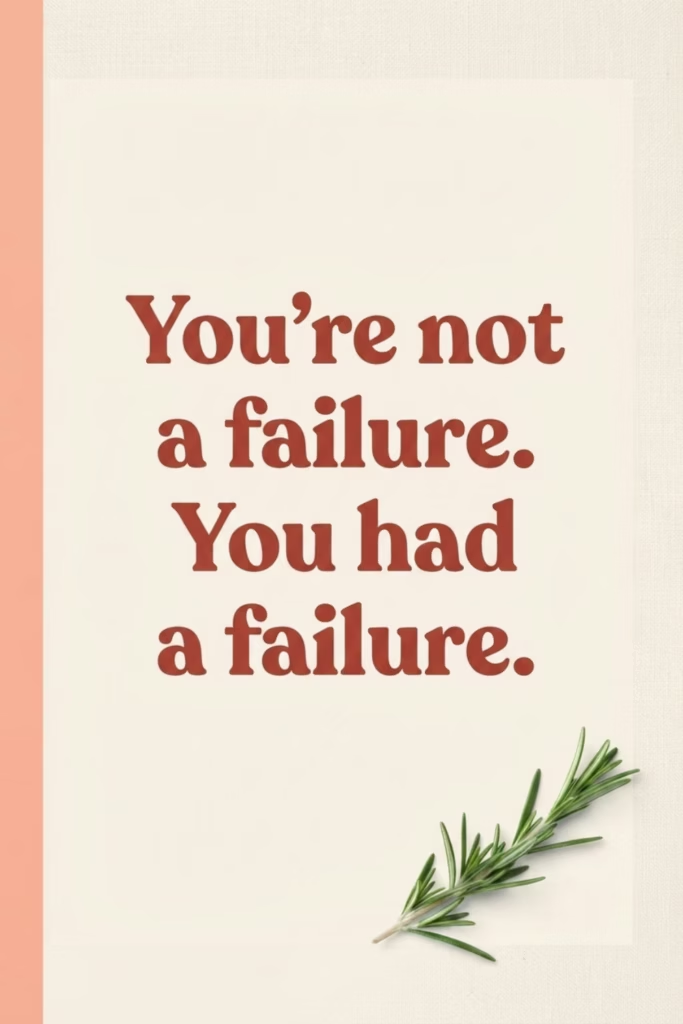
You’re not a failure. You had a failure. Big difference.
Step 2: Run the objective audit (not the emotional one)
This is where most people skip straight to motivation quotes and miss the actual work. Elite players don’t just “reflect” after a loss, they look at what’s measurable before they change anything.
The USTA’s guidance on learning from losing pushes players to look for what they can improve rather than externalizing blame. That’s a deceptively hard ask. It’s much easier to blame the ref, the weather, the guy who coughed at the wrong moment. But controllable actions are the only ones you can actually do something about.
Ask yourself the honest version of these three questions after any setback:
- What specifically went wrong, and was it within my control?
- Did I stay focused on the process, or did I get in my own head?
- What’s one thing I can actually fix before next time?
That last one matters. The most painful loss can be the greatest teacher, but only if you extract the lesson instead of just feeling bad about it. Feeling bad is free. The lesson costs attention.
This is the sports mindset after failure that separates a one-time loss from a pattern.
Step 3: Turn toward what’s next
Resilience lessons from tennis are consistent on this point: shift your attention to the next week of practice, not the replay of what just happened. Dwelling is just watching a bad movie twice and expecting a different ending.
This isn’t toxic positivity. It’s triage. You did the audit. You got the data. Now you move. The arena doesn’t care how long you stood in the parking lot afterward. (Roosevelt had thoughts on this too, if you want the longer version.)
If you’re prone to comparing your bad days to everyone else’s highlight reel, that’s a separate trap worth reading about here.

Frequently Asked Questions
How do elite athletes handle failure without losing confidence?
They separate identity from outcome first, then run an objective review of what happened before making any changes. According to tennis psychology resources, a loss affects mentality, not ability, and keeping that distinction clear is what stops one bad result from becoming a confidence collapse. Think of it as reading the box score before you fire the coach.
What does the USTA say about learning from losing?
The USTA explicitly positions losing as a learning tool, encouraging players to look for what they can improve rather than externalizing blame. The emphasis is on controllable actions, the things you can actually change before the next match, not the ones you’d need a time machine for.
What’s the biggest mistake people make after a setback?
Skipping the audit and going straight to motivation. Feeling bad about a loss is easy. Extracting a specific, actionable lesson from it is the work. Without that step, you’re just collecting losses instead of data.
How long should you dwell on a loss before moving on?
Sports psychology guidance recommends shifting focus to the next week of practice fairly quickly, not because the loss doesn’t matter, but because dwelling past the point of useful analysis just costs you practice time. Do the audit. Get the lesson. Move.
Does this framework work outside of sports?
Yes, and that’s the whole point. The audit-then-move structure applies to a failed job interview, a project that flopped, or a habit you broke for the third time. The mechanics are identical: separate identity from outcome, look at what was controllable, then face forward. That’s how to handle failure like an athlete, whether the arena is a tennis court or a job interview.
One thing you can do today: write down one recent setback and answer those three audit questions honestly. Not to beat yourself up, to get the data. That’s how you turn a loss into something useful before the week is out.
Get The Enough List — free.
Ten minutes, five areas. A short guide for figuring out what enough looks like in money, health, work, people, and time — before you go sprinting at someone else's finish line. Yours when you subscribe.