
Feedback feels like an attack because your brain treats it like one. That’s the whole problem, and once you see it clearly, you can actually do something about it.
The goal here isn’t to become someone who enjoys criticism (that person is either lying or genuinely alarming). The goal is to separate the useful signal from the emotional noise so you can act on the part that actually matters. Here’s how to do that in real time.
This is a guide to taking feedback without taking it personally. Not by pretending it doesn’t sting, but by separating the useful signal from the emotional noise.
Key Takeaways
- The most important move happens before you speak: label what you’re feeling so the emotion doesn’t run the conversation.
- Asking for a specific example lowers tension faster than defending yourself and improves the accuracy of what you heard.
- Distinguishing intent from impact lets you extract the useful signal without assuming the other person meant harm.
- If you’re genuinely angry or upset, the University of Texas at Austin advises waiting until your emotions are under control before reopening the discussion.
- Showing genuine appreciation to the person giving feedback is part of receiving it well, not just politeness, but a skill.
How to Take Feedback Without Taking It Personally: Start Before You Speak
Most advice on receiving feedback focuses on what to say. The real leverage is in what you do in the three seconds before you say anything.
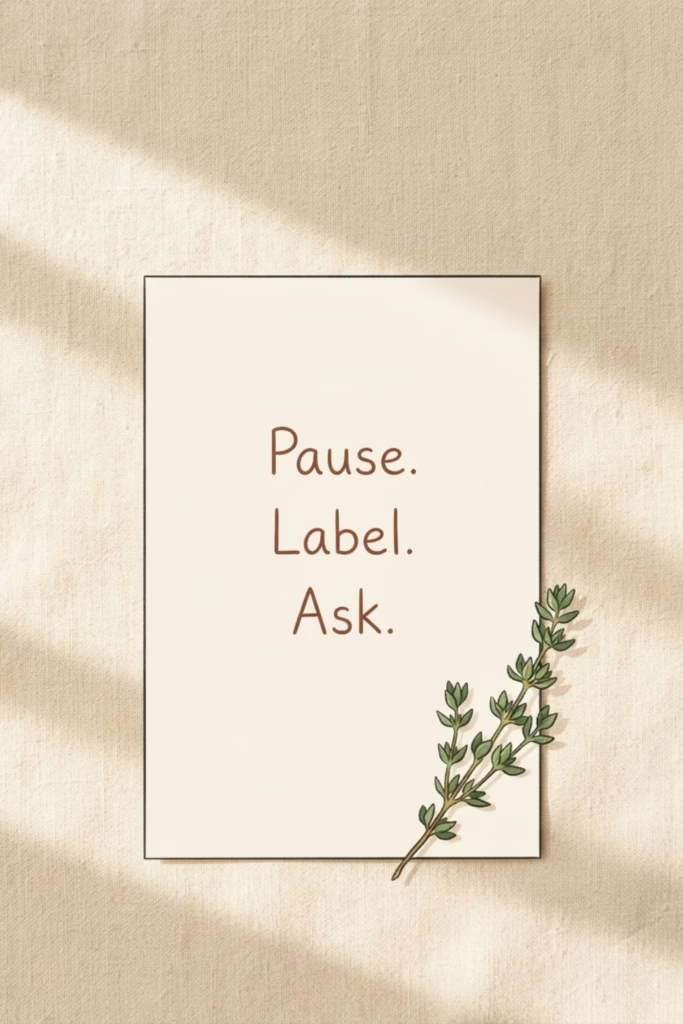
IMD recommends labeling your emotion before reacting, not suppressing it, not performing calm, just naming it internally. “I feel embarrassed.” “I feel blindsided.” That one move creates just enough distance between the feeling and your response that you stop being the feeling’s spokesperson.
This is harder than it sounds. Especially if the feedback is wrong, or delivered badly, or coming from someone you don’t fully trust. (We’ve all been there. The feedback that stings worst is usually a mix of “partially true” and “delivered like a parking ticket.”)
Label first. React second.
Separate Intent from Impact
Here’s a reframe that genuinely helps: the person giving you feedback probably isn’t trying to hurt you, even if it hurts. IMD advises distinguishing impact from intent so you can extract the useful part without assuming malice.
Your boss saying your report was unclear isn’t a verdict on your intelligence. Your friend saying you’ve seemed distant lately isn’t a breakup notice. The impact is real; the intent is usually just… someone trying to communicate something.
Once you stop treating feedback as a character assassination, you can actually hear it.
Ask a Question Instead of Defending Yourself
This one feels counterintuitive, but it works. When feedback lands and your instinct is to explain yourself, ask a question instead.
The University of Texas at Austin recommends asking for specific examples so you and the other person are actually talking about the same thing. “Can you give me an example of what you mean?” does two things at once: it lowers the temperature, and it gives you actual information instead of a vague critique you’ll spend three days overthinking and hyper-focusing on.
This works whether you’re getting feedback at work from a manager or hearing it from a friend who finally said the thing they’d been sitting on.
Bonus: if the feedback was vague or unfair, a good question exposes that pretty quickly. No need to argue. Just ask.
When to Wait, and What to Do After.
Sometimes the feedback hits a nerve and there’s no amount of labeling that’s going to help you respond well in the moment. That’s fine.
The University of Texas at Austin is direct on this: if you’re angry or upset, wait until your emotions are under control before reopening the discussion. “I want to think about this and come back to you” is not weakness. It’s the move that keeps you from saying something that will keep you up at night. (Not speaking from experience. Definitely not. (also sorry))
After the conversation, do something with what you heard. Even if you only agree with 30% of the feedback, act on that 30%. Then let the person know. IMD’s framework ends with closing the loop, following up after the fact, and it matters more than most people realize. It signals that you actually listened, which makes people more willing to be honest with you next time.

And if you’re working on how you measure yourself against other people’s opinions more broadly, this piece on stopping the comparison spiral is worth five minutes.
Frequently Asked Questions
Why does feedback feel so personal even when it’s about my work?
Your brain processes social threats the same way it processes physical ones, the defensive reaction is automatic, not a character flaw. The gap between “this piece of work needs improvement” and “I am not good enough” closes faster than you’d like. Naming the feeling before you respond (the label move above) is the most practical way to slow that process down.
What do I actually say when feedback catches me off guard?
You don’t need a perfect response. “Thanks, can you give me a specific example?” buys you time, gets you better information, and signals that you’re taking it seriously. The University of Texas at Austin lists asking for examples as a core skill in receiving feedback well, it’s not stalling, it’s good practice.
Is it okay to disagree with feedback?
Yes, but timing matters. Disagreeing in the first thirty seconds usually looks like defensiveness even when it’s legitimate. Listen fully, ask your clarifying question, and then, if you still disagree, say so calmly and specifically. “I see it differently because…” lands better than “No, actually.”
How do I handle feedback from someone I don’t respect?
Try to find the one true thing in what they said, act on that, and let the rest go. Carey Nieuwhof recommends not offering excuses or getting your back up when receiving negative feedback, and that applies even when the source is imperfect. The feedback being useful doesn’t require the person to be your favorite human.
Does saying “thank you” for feedback actually matter?
It does, and not just as a social nicety. The University of Texas at Austin includes showing appreciation as a genuine skill in receiving feedback well. It signals that you’re not punishing people for being honest with you, which means they’ll keep being honest with you. That’s worth a lot.
Today’s action: Next time feedback lands and your chest tightens, don’t say anything for three seconds. Name the feeling silently. Then ask one question before you respond. That’s the whole move. Start there.
Get The Enough List — free.
Ten minutes, five areas. A short guide for figuring out what enough looks like in money, health, work, people, and time — before you go sprinting at someone else's finish line. Yours when you subscribe.