
To set realistic personal goals, run a 3-step sanity check: write the goal down, make it SMART, and treat it as a 30-day experiment instead of a year-long moral test. If you’ve been trying to figure out how to set realistic personal goals that don’t collapse the first time life gets messy, this is the framework.
Most goal-setting advice fails you at the exact moment you need it most: when you’ve already missed three days in a row and you’re deciding whether to quit or pretend the goal never existed. Here’s a faster, more honest framework to set goals that survive contact with real life. This is also for anyone who keeps overthinking goal setting and never actually starts.
TL;DR
- Sharing a written goal with one person adds accountability and costs about 30 seconds.
- The SMART framework (Specific, Measurable, Achievable, Relevant, Time-bound) is the proven standard for setting clear, attainable goals without overwhelming yourself.
- Treating a goal as a 7-to-30-day experiment instead of a permanent commitment prevents the all-or-nothing collapse after a single missed day.
- Setting 6 to 8 goals instead of one single goal can reduce pressure and prevent the discouragement that comes from putting all your eggs in one basket.
- A quarterly self-check, asking ‘Am I still moving?’ rather than ‘Did I win?’, keeps goals alive without turning every week into a performance review.
Step 1: Write Down Your Realistic Personal Goal and Make It SMART
Before anything else, write the goal down. Not in your head. On paper, in a notes app, on a sticky note on your bathroom mirror (make sure you clear the old ones because we’re going to start fresh). Writing a goal down forces you to be specific, and telling one other person about it adds just enough social pressure to make quitting feel awkward. Both are worth doing, and both take under a minute. That’s a meaningful jump for something that takes about 45 seconds.
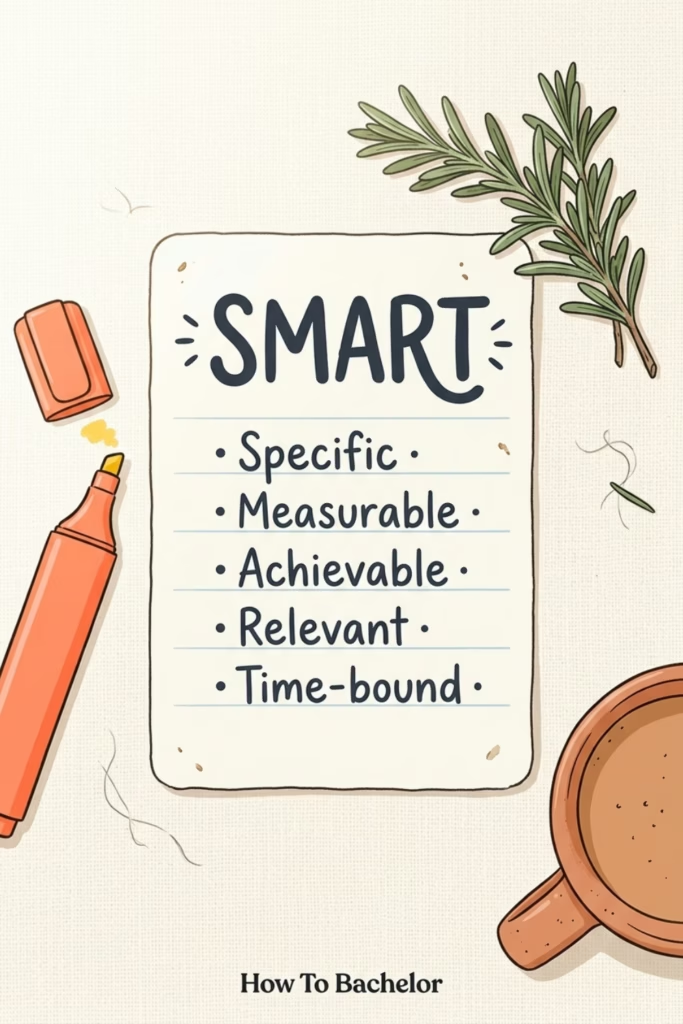
Once it’s written, run it through the SMART filter, per Hope for the Warriors:
- Specific, what exactly are you doing? (“Get fit” is a vibe. “Do 20 minutes of cardio four times a week” is a goal.)
- Measurable, how do you know when you’ve hit it?
- Achievable, can you actually do this with your current schedule, not the imaginary version of your schedule?
- Relevant, does it connect to something you actually care about, or is it something you think you should care about?
- Time-bound, when does this end? A goal with no finish line is just inevitable guilt with better branding.
Step 2: Don’t Set One Goal. Set Six to Eight.
This sounds like the opposite of every productivity article you’ve ever read, and that’s because it is. The conventional wisdom is “focus on one thing.” The problem is that if that one thing stalls, you’ve got nothing. No momentum, no wins, just a single point of failure staring back at you.
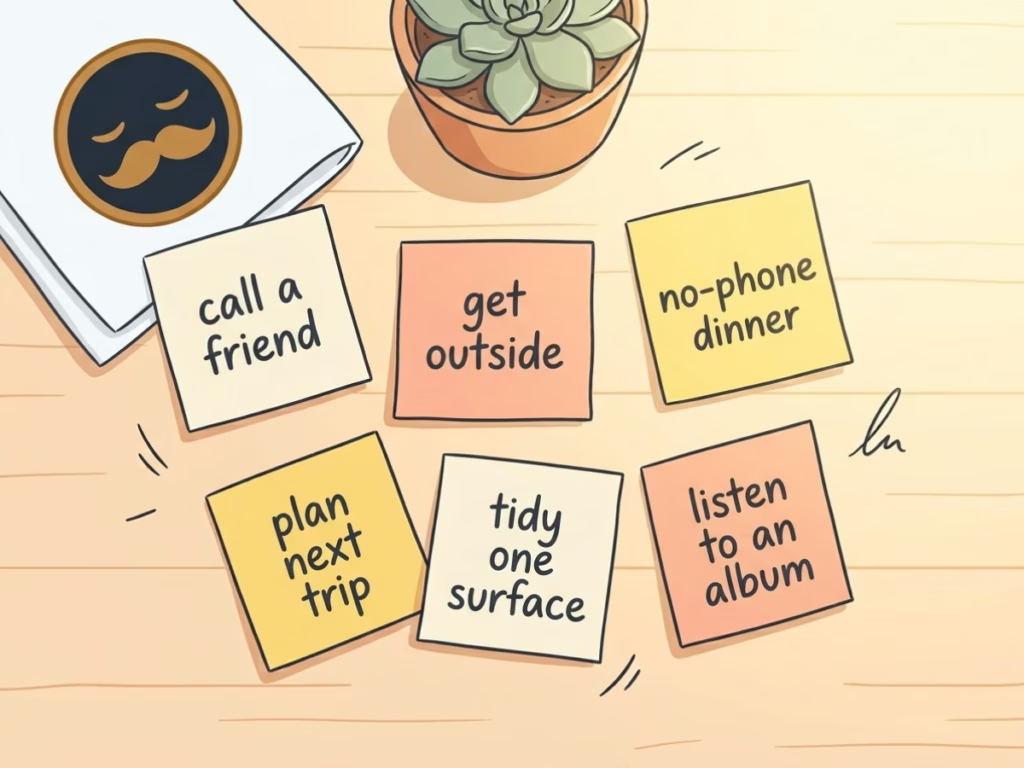
Setting 6 to 8 smaller goals, wake up earlier, drink more water, finish one book a month, whatever actually matters to you, spreads the risk, per Korn Ferry. Miss one? You’ve still got five others moving. It’s diversification, except for your personal life instead of your retirement account (which, yes, is also a good idea, but one thing at a time).
Step 3: Run It as a 30-Day Experiment, Not a Life Sentence
Here’s where most people go wrong. They set a goal in January, miss a week in February, and quietly declare themselves a failure. The system broke down; they didn’t. There’s a difference.
Treat the goal as a 30-day experiment instead, per Forrest Hanson. At the end of 30 days, ask two questions: “How often did I actually hit the target?” and “What got in the way?” Then adjust and run it again. You’re not a moral failure; you’re a scientist with a slightly flawed hypothesis. Iterate and Improve. That’s the whole game.

And if you need a reset between experiments, there’s nothing wrong with building in real downtime. Resting without losing momentum is its own skill worth practicing.
Frequently Asked Questions
How many goals should I set at once?
Research from Korn Ferry suggests setting 6 to 8 goals rather than just one. It sounds counterintuitive, but it reduces the pressure of a single point of failure and keeps you moving even when one area stalls. Think of it as giving yourself more than one way to win.
Does writing goals down actually help?
Yes, and the gap is significant. Yes. Writing forces specificity, which is half the battle. Telling one person adds accountability without requiring a whole support group. It’s a low-effort move with a disproportionate return. The act of writing forces you to be specific, which is half the battle right there. It’s one of the simplest moves when you’re learning how to set realistic personal goals that actually stick.
What’s the difference between SMART goals and PACT goals?
SMART goals (Specific, Measurable, Achievable, Relevant, Time-bound) focus on clear outcomes and are the proven standard for personal goal setting, per Hope for the Warriors. PACT (Purposeful, Actionable, Continuous, Trackable) emphasizes daily progress and experimentation over rigid long-term planning, per NSLS. Neither is wrong; SMART is better for concrete outcomes, PACT is better when you’re still figuring out the path.
What do I do after I miss a few days?
First, stop treating it as a moral failure. Overthinking goal setting after a stumble is how most people quit. Don’t declare the goal dead. What did you learn? Treat the miss as data: what actually broke down? Time, energy, motivation, a bad week? Adjust the system and run the experiment again for another 30 days, per Forrest Hanson. One missed week doesn’t erase the goal; it just updates the hypothesis.
How often should I check in on my goals?
A quarterly self-check is a practical cadence, enough time to have real data, not so long that you’ve drifted completely off course, per Korn Ferry. Ask yourself: “Am I still moving, and does this still matter to me?” If yes, keep going. If no, that’s useful information too.
Today’s action: Pick one goal you’ve been vague about, run it through the SMART filter, and write it down somewhere you’ll actually see it. Then tell one person. That’s it. The rest is just showing up.
Get The Enough List — free.
Ten minutes, five areas. A short guide for figuring out what enough looks like in money, health, work, people, and time — before you go sprinting at someone else's finish line. Yours when you subscribe.