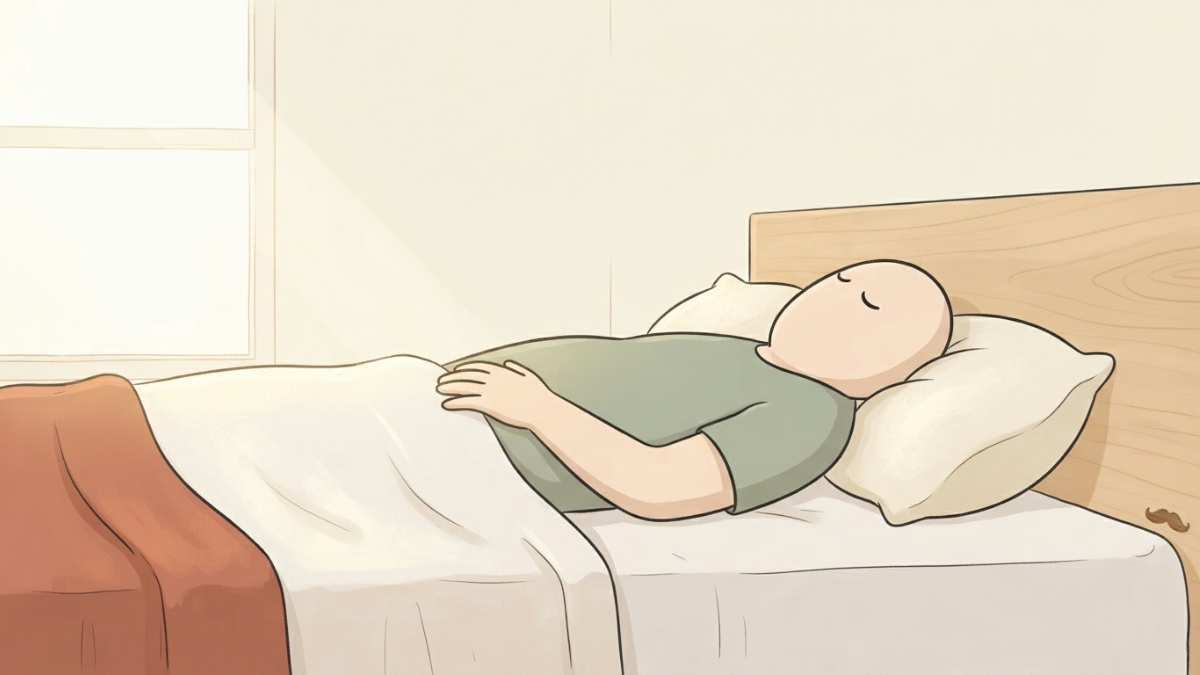
If you’ve been searching for how to stop trying to fall asleep and actually get some rest, the answer is less effort, not more. The harder you try to fall asleep, the more awake you get. That’s not a cruel joke, it’s just how your brain works, and it’s the one thing most sleep advice quietly skips over.
If you’re lying there doing mental laps around the ceiling at 2 a.m., the problem probably isn’t that you’re not trying hard enough. It’s that you’re trying at all.
Key Takeaways
- Trying to force sleep triggers performance anxiety that keeps your brain alert instead of drifting off.
- Stanford’s insomnia guidance recommends stopping the effort to sleep and extend your wind down time until you are sleepy.
- Paradoxical intention, a formal clinical technique, instructs insomnia sufferers to try to stay awake instead of forcing sleep, which reduces the anxiety that blocks sleep onset.
- Time reports that the cue to get out of bed often arrives around 20-ish minutes of frustrated wakefulness, after which you return only when genuinely drowsy.
- Associating your bed with frustration and wakefulness makes the problem worse over time; getting up resets that connection.
Why Effort Is the Enemy Here
Sleep isn’t a task you can muscle through. The moment you start working at it, checking the clock, negotiating with yourself, doing the “okay, this time I’ll ACTUALLY relax” thing, your brain flips into problem-solving mode. Problem-solving mode is, famously, the opposite of sleep.
Sleep specialists frame this as a frustration loop: the more you chase sleep, the more alert you become, which makes sleep feel further away, which makes you try harder. Time reports that the cue to get up often arrives around 20-ish minutes of that frustrated, actively-trying-to-force-it feeling. Most of us ignore it and keep grinding. (Spoiler: that doesn’t work. You already know this.)
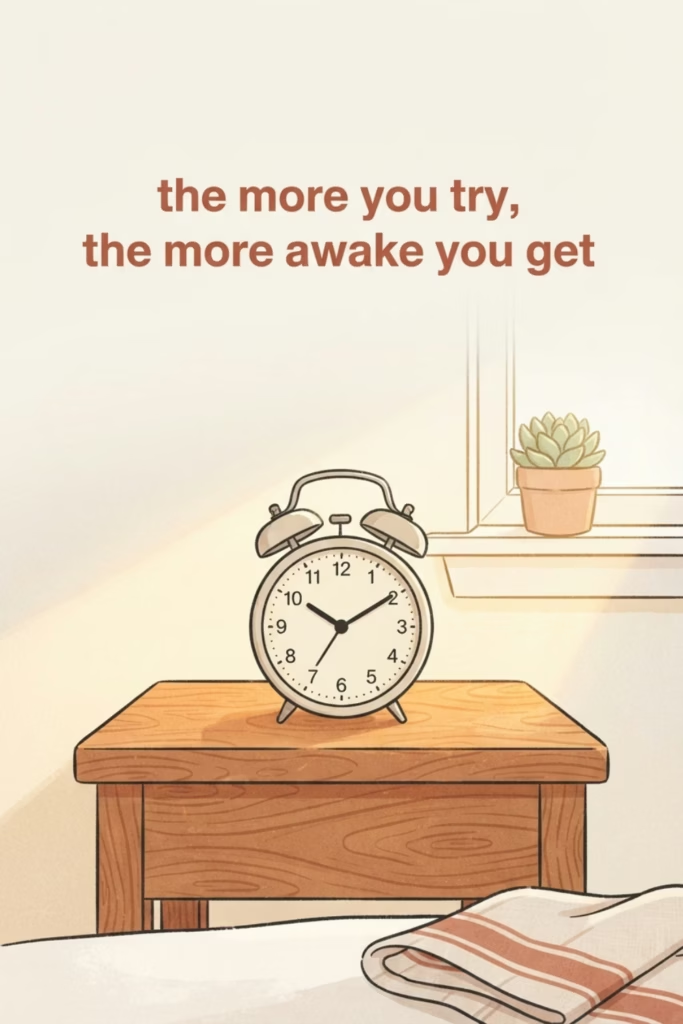
Sleep researchers sometimes call this the difference between sleep pressure, the natural biological drive to sleep, and sleep effort, the counterproductive work of trying to force it. Sleep onset insomnia often comes down to too much of the second and not enough patience for the first.
There’s even a formal clinical technique built on this exact idea. It’s called paradoxical intention, and the instruction is exactly what it sounds like: don’t try to fall asleep, try to stay awake instead. The goal is to drain the anxiety out of the act of falling asleep. Less effort, less pressure, less brain on high alert. More sleep.
The Fix: Get Out of Bed
This is the part that feels like giving up. It isn’t.
Stanford’s insomnia guidance says it plainly: stop trying to sleep. If you’re struggling to fall asleep, get out of bed and do something quiet in another room until you feel genuinely drowsy, then go back.
The reason this works is straightforward. Your brain learns from repetition. If you spend enough nights lying awake in bed, frustrated and staring at the ceiling, your brain starts associating your bed with frustration and wakefulness. That’s the opposite of what you want. Getting up breaks that association before it cements.
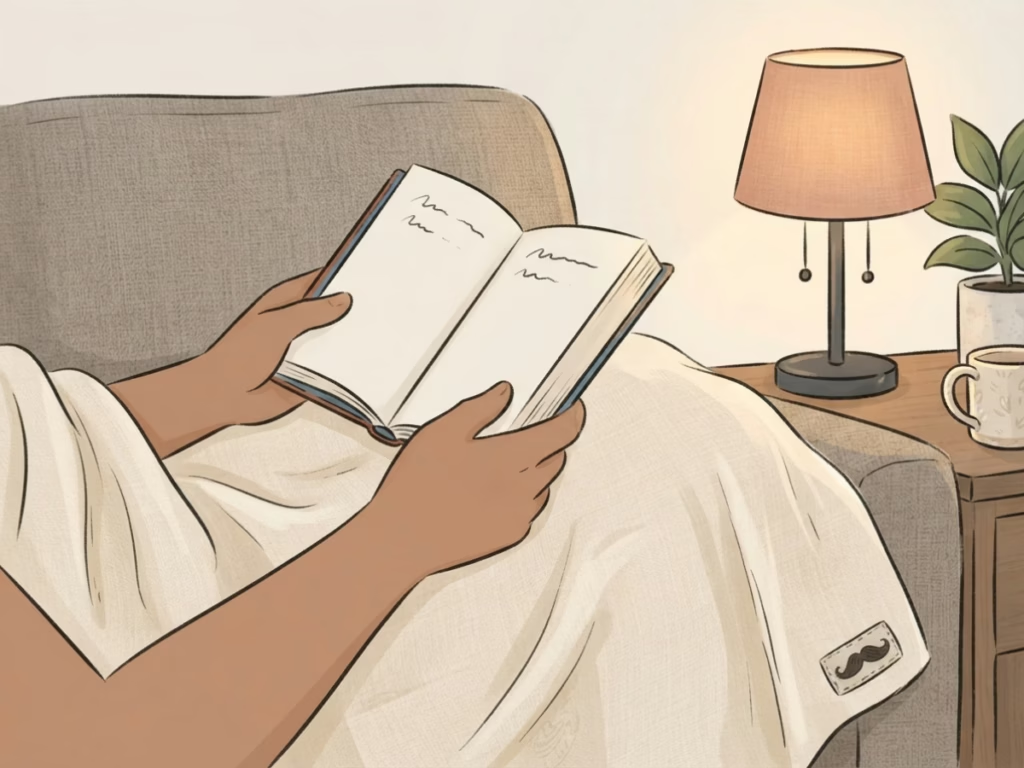
What counts as “something quiet”? Reading a physical book. Sitting on the couch in dim light. (Not your phone. Not a show. Your brain will absolutely take that invitation to wake all the way up.) Think of it less as a productive activity and more as a waiting room for drowsiness.
How to Stop Trying to Fall Asleep Tonight
If you wake up and can’t get back to sleep, set a loose mental timer for 15 to 20 minutes. If you’re still lying there frustrated and trying, get up. Go somewhere else. Do something boring and low-light. Wait for actual sleepiness, not just tiredness, actual heavy eyelids, then go back to bed.
That’s it. Not a protocol. Not a stack of supplements. Just: stop trying so hard, and let sleep do what it does when you get out of its way.
If you want to build the kind of daily habits that make sleep easier before you even hit the pillow, the 20-minute walk is one of the lowest-effort things you can do for your sleep quality. Start there.
Frequently Asked Questions
How do I stop trying to fall asleep?
The core move is to stop treating sleep like a task. When you notice you’re actively working at it, that’s the signal to back off. Stanford’s insomnia guidance recommends leaving the bed entirely if you’re having a hard time falling asleep, doing something quiet in another room, and returning only when you feel genuinely sleepy. The goal is to remove the effort, not add more of it.
What is paradoxical intention for sleep?
Paradoxical intention is a clinical insomnia technique where you try to stay awake instead of trying to fall asleep. The idea is that the anxiety of trying to sleep is often what keeps you alert, and removing that pressure lets sleep arrive on its own. The technique is used in structured insomnia programs as a way to break the frustration loop without medication.
How long should I stay in bed if I can’t sleep?
Around 15 to 20 minutes of genuine frustration is a reasonable threshold. Time recommends using that feeling of actively trying to force sleep as the cue to get up, rather than watching the clock. Once you’re up, stay up until you’re actually drowsy, then return.
Does getting out of bed when you can’t sleep actually help?
Yes, and there’s a specific reason: it prevents your brain from associating your bed with wakefulness and frustration. The more nights you spend lying awake in bed trying to force sleep, the stronger that association gets. Getting up resets it. Sleep specialists call this stimulus control, and it’s one of the core techniques in cognitive behavioral therapy for insomnia.
What should I do while I wait to get sleepy again?
Something dim and low-stimulation. A physical book, quiet music, sitting in a dark-ish room. The goal is to occupy yourself just enough that you’re not thinking about sleep, without doing anything that signals to your brain that it’s time to be awake and engaged. Screens are the obvious thing to avoid here, the light and the content both work against you.
Get The Enough List — free.
Ten minutes, five areas. A short guide for figuring out what enough looks like in money, health, work, people, and time — before you go sprinting at someone else's finish line. Yours when you subscribe.