

Marcus Aurelius’s Meditations teaches that external events don’t hurt you, your opinion about them does. The core lessons: ask ‘Is this necessary?’, focus on effort over outcomes, and remember that the present moment is the only thing actually in your control.
Marcus Aurelius ran the Roman Empire and wrote a private journal he never intended anyone to read. That journal, Meditations, is still in print nearly 1,800 years later. The lessons from it are blunt, practical, and, this is the part that gets me, he was writing them to himself, not to impress anyone.
That’s the whole thing right there. No personal brand. No audience. Just a man trying to stay sane while leading an empire through a plague. If the lessons from Marcus Aurelius’s Meditations still land today, it’s probably because the problems haven’t changed that much. The technology has improved. The anxiety is the same. His core point: external events don’t hurt you. Your opinion about them does.
TL;DR
- Marcus Aurelius wrote Meditations as a private journal, not a book for publication, making its advice raw and unfiltered in a way most polished self-help isn’t.
- Aurelius’s core Stoic insight: things have no natural power to shape your judgments unless you allow it, per Ryan Holiday’s analysis of the text.
- The ‘Is this necessary?’ filter applies to both actions and thoughts, a practical tool for cutting mental and behavioral clutter.
- Memento mori, regularly remembering your mortality, is a Stoic practice Aurelius used to clarify what actually matters today.
- Focusing on effort rather than outcomes is a core Meditations principle; tying your wellbeing to things outside your control is unsustainable.
The One Insight That Changes Everything
The text is clear on this: external events don’t have the power to shape your judgment unless you hand them that power, per Ryan Holiday. Things happen. Your opinion about them is the variable you actually control.
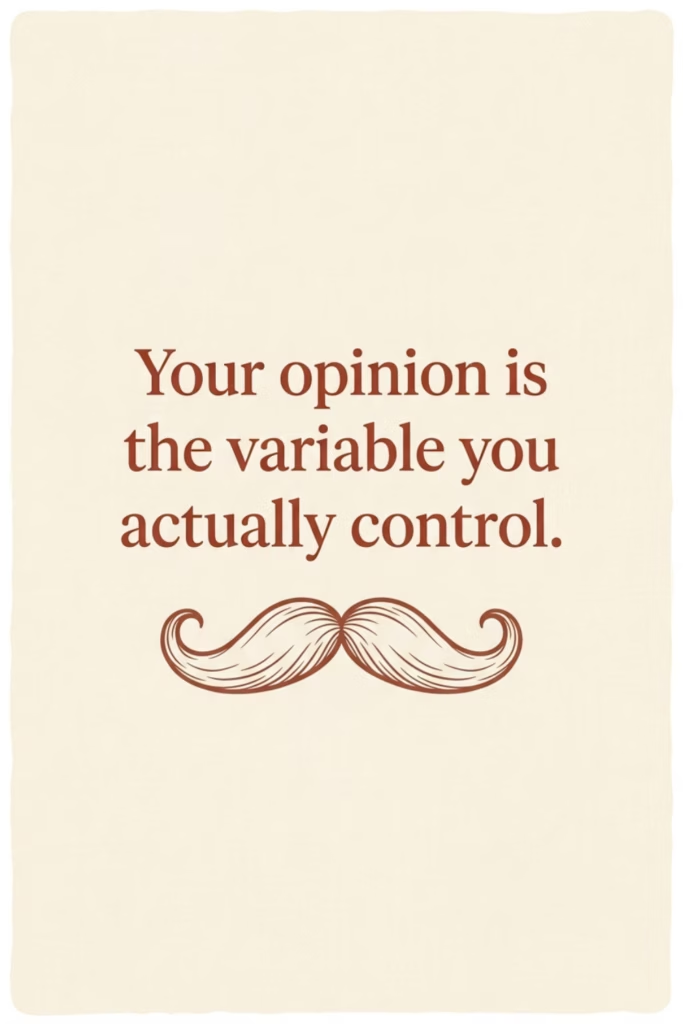
This isn’t “good vibes only” nonsense. It’s more uncomfortable than that. It means the traffic, the bad boss, the bill that arrived at the wrong time, none of those are doing anything to you until you decide what they mean. Aurelius was writing this to himself during a genuine catastrophe and still landing on: you still have a choice here. Aurelius called this the inner retreat, the idea that you can always return to yourself even when everything outside is chaos.
The hustle-bro version of this would be “dominate your circumstances.” The Stoic version is quieter and harder: stop expecting circumstances to cooperate, and put your energy where it actually lives.
Two Filters Worth Stealing
“Is this necessary?” Aurelius asked this about both actions and thoughts. Not “is this fun” or “is this impressive”, but is this necessary. Run your to-do list through that once and watch it shrink. Run your mental chatter through it and watch that shrink faster.

I tried this before having a discussion with my friend about him having to find a new place due to unforeseen circumstances. Once I realized “We’re here now, let’s get through it,” the conversation was a lot easier.
Memento mori. Remember you’re going to die. I know, cheerful stuff. Aurelius used it as a clarifying tool, per the text itself, not a downer. The idea being that a short life well-lived beats a long one spent in the wrong direction. It’s a useful question: if today were a representative sample of my life, am I okay with that? If the answer is no, that’s information worth having before the next crisis.
Effort Over Outcomes (The Part That Stings)
Tying your wellbeing to outcomes is irrational because outcomes aren’t fully yours. Effort is.
Aurelius kept coming back to this: do the work, hold it loosely, don’t let the result be the whole scoreboard.
This maps directly onto the rest vs. rust problem, the trap of measuring yourself only by output, then burning out when the output doesn’t cooperate. The Stoic move is to define what “enough effort” looks like, put it in, and then actually let go of what happens next. Not passively. Deliberately.
That’s the “define your own enough” practice in action, and it’s been around since at least 161 CE. We’re just slow learners.
Frequently Asked Questions About Marcus Aurelius’s Meditations
What is the main lesson of Marcus Aurelius’s Meditations?
The central lesson is that external events don’t hurt you, your opinions about them do. Aurelius argued that things have no natural power to shape your judgments unless you allow it, per Ryan Holiday’s analysis. In practice, that means the gap between what happens and how you respond is where all the real work lives.
What is memento mori and how did Marcus Aurelius use it?
Memento mori is the practice of remembering your own mortality. Aurelius used it not as a morbid exercise but as a clarifying one, a reminder that life is short and finite, which should shape what you do, say, and think right now. Think of it as a filter: does this actually matter given the time I have? That’s the present-moment practice Stoicism keeps coming back to.
What does “Is this necessary?” mean in Stoic practice?
It’s a question Aurelius applied to both actions and thoughts to cut what was wasteful or excessive. If something doesn’t serve a genuine purpose, it’s clutter, and clutter costs you attention and energy you could spend elsewhere. It’s a minimalism practice for your brain, not just your calendar.
Why does Meditations feel more honest than most self-help?
Because Aurelius never meant for anyone to read it. It was a private journal, notes he was writing to himself, not a polished philosophy for public consumption. That makes the advice feel less like a pitch and more like someone actually trying to figure it out in real time.
Here’s the one thing you can do today: pick a single decision you’ve been overthinking and run it through “Is this necessary?” Not “is this good” or “is this safe”, is this necessary. Answer honestly, then act on the answer. That’s it. Aurelius was doing it during a plague. You can probably manage it on a late night while you’re brain won’t turn off.
Get The Enough List — free.
Ten minutes, five areas. A short guide for figuring out what enough looks like in money, health, work, people, and time — before you go sprinting at someone else's finish line. Yours when you subscribe.

Thoughts?