
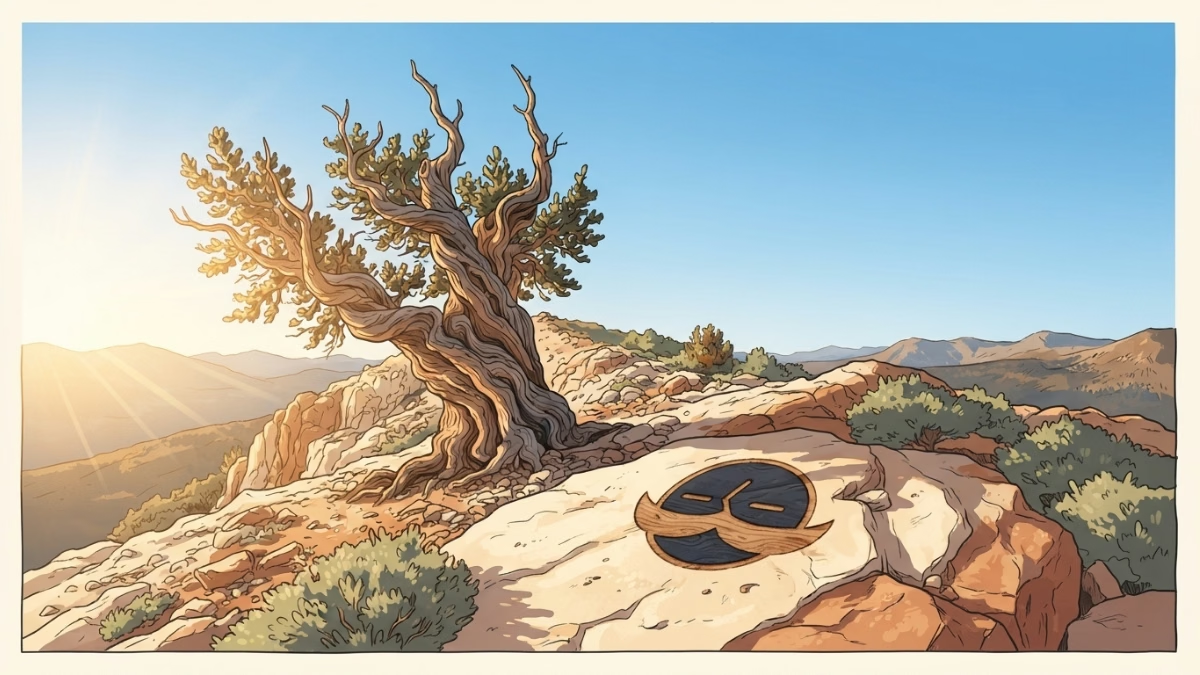
The oldest living tree on Earth has been quietly minding its own business for over 5,000 years. It hasn’t disrupted anything, scaled anything, or posted about its morning routine. It just kept growing, slowly, stubbornly, in conditions most things wouldn’t survive.
That tree is a Great Basin bristlecone pine (Pinus longaeva), and it has a few lessons on patience that hold up better than most productivity advice.
Key Takeaways
- Great Basin bristlecone pines include individual specimens dated to more than 5,000 years old, making them among the oldest known non-clonal trees on Earth.
- A peer-reviewed study in Experimental Gerontology found that bristlecone pine longevity is not accompanied by clear senescence, meaning these trees do not appear to age the way most organisms do.
- Bristlecone pines thrive specifically because of harsh, nutrient-poor conditions, not despite them, suggesting that difficulty can be a structural advantage, not just an obstacle.
- Their twisted, weathered trunks are a visible record of endurance, not evidence of failure, the damage is part of what makes them interesting.
- The core bristlecone pine lesson on patience: slow, consistent growth in a hard niche outlasts fast growth in easy conditions.
What the Science Actually Says
Specimens of Pinus longaeva have been dated to more than 5,000 years old, making them among the oldest known non-clonal organisms on the planet. And here’s the part that should stop you mid-scroll: a peer-reviewed paper in Experimental Gerontology found that bristlecone pine longevity isn’t accompanied by clear senescence, meaning these trees don’t appear to age and decline the way most living things do. They just… keep going.
The reason isn’t luck. It’s the environment. Bristlecone pines grow at high elevation in rocky, nutrient-poor soil where almost nothing else can compete. That harsh niche is precisely what makes them durable, slow growth in difficult conditions produces denser wood, stronger structure, and a tree that doesn’t need ideal circumstances to survive.
Fast growth in easy conditions, on the other hand, produces soft wood. Pretty while it lasts.
Bristlecone Pine Lessons on Patience (No Inspirational Poster Required)
Here’s what the bristlecone pine is actually teaching you, stripped of the greeting-card version: surviving a hard niche beats competing everywhere. The tree didn’t try to grow faster. It didn’t try to move somewhere easier. It adapted, stayed put, and outlasted basically everything.
Your twisted, weathered parts (let’s be mature now)? Those aren’t evidence of failure, they’re a record of what you’ve held up under. Same principle applies whether you’re building a skill, a habit, or just trying to get through a rough stretch without abandoning the whole project.
This connects to something we talk about a lot here, the idea that your first attempt being bad is not a bug, it’s the process.
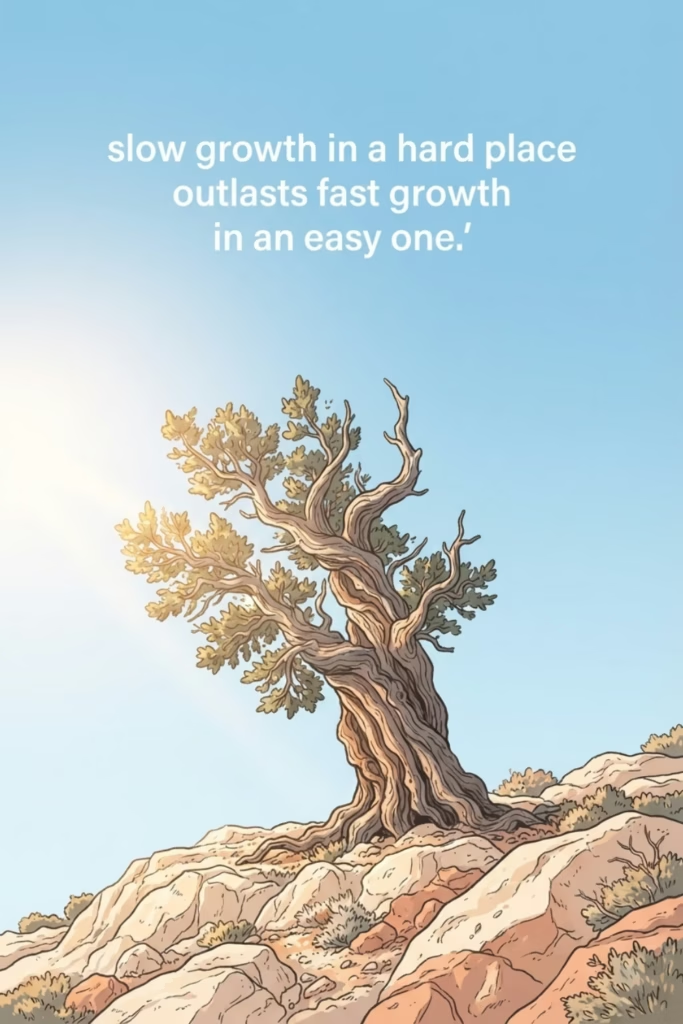
The bristlecone pine didn’t grow 5,000 years of rings by having a great first century.
Frequently Asked Questions
How old is the oldest bristlecone pine?
Individual Great Basin bristlecone pine specimens have been dated to more than 5,000 years old, making them among the oldest known non-clonal trees on Earth. Methuselah, the most famous specimen, is commonly used in educational contexts to illustrate how slow growth and nutrient-poor conditions connect to extreme longevity.
Why do bristlecone pines live so long?
They grow extremely slowly in harsh, high-elevation environments where competition is low and conditions are difficult. That slow growth produces dense, resilient wood, structurally stronger than trees that grow quickly in ideal conditions. Difficulty, in other words, is part of the design.
Do bristlecone pines age like other trees?
Not in the usual sense. A peer-reviewed study in Experimental Gerontology concluded that bristlecone pine longevity is not accompanied by the kind of meristem (unspecialized cells in plant tissue) decline you’d expect from normal senescence. They don’t appear to deteriorate the way most organisms do as they age.
What’s the practical takeaway from bristlecone pine lessons on patience?
Slow, consistent progress in a difficult environment is more durable than rapid growth in easy conditions. If your progress feels slow right now, that’s not automatically a sign something is wrong, it might be the thing that makes it last.
Today’s move: pick one thing you’ve been measuring by speed (a skill, a habit, a goal) and ask yourself what “still standing in five years” looks like instead of “crushing it this month.” Write it down. The bristlecone pine didn’t have a Q4 target. It just kept growing.
Get The Enough List — free.
Ten minutes, five areas. A short guide for figuring out what enough looks like in money, health, work, people, and time — before you go sprinting at someone else's finish line. Yours when you subscribe.

Thoughts?