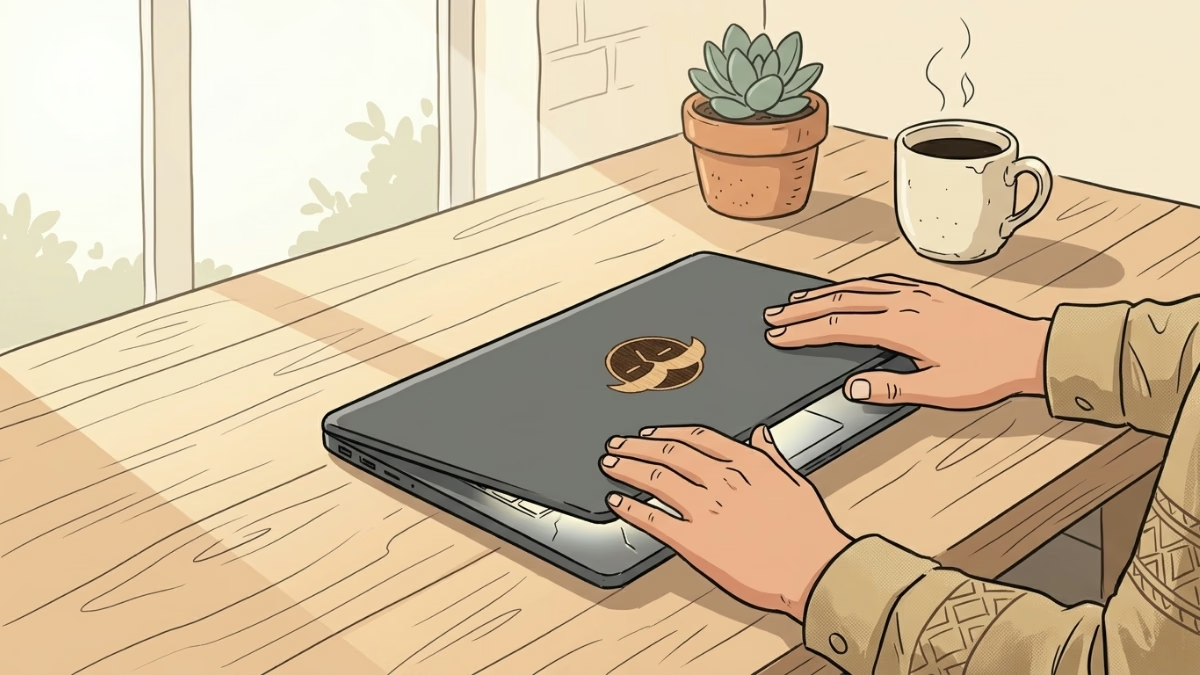
Your workday doesn’t end when you close your laptop. It ends when your brain stops working. “Think of it as your end of workday checklist, five items, same order, every time. For a lot of us, that’s never, or at least not until about 11pm when we’re staring at the ceiling running through tomorrow’s to-do list like it’s a trailer we didn’t ask for.
The fix is an end of day shutdown ritual. Five minutes. Same sequence every day. Done.
Key Takeaways
- Cal Newport’s shutdown ritual ends with a verbal phrase like ‘shutdown complete’ to signal that professional concerns are fully off-limits until the next workday.
- The goal isn’t to finish more work, it’s to move unfinished tasks into a trusted system so they stop occupying your working memory, per Simply Psychology.
- A practical shutdown sequence has five steps: review completed work, capture open items, set tomorrow’s first task, close all work apps, and say the shutdown phrase.
- Todoist recommends closing all tabs and leaving only the one you’ll need to start tomorrow’s most important task, a small physical act that makes the mental boundary real.
- The ritual works because it’s boringly consistent, not inspiring, the same tiny sequence every day matters more than any single productivity hack.
What an End of Day Shutdown Ritual Actually Is (and Why It Works)
Cal Newport’s version includes checking your inbox, skimming your task list, looking at the next few days on your calendar, and then closing out with a firm verbal phrase, something like “shutdown complete”, per this breakdown of Newport’s approach. After that, professional concerns are off-limits. No checking email. No “just one more thing.” Shutdown means shutdown.
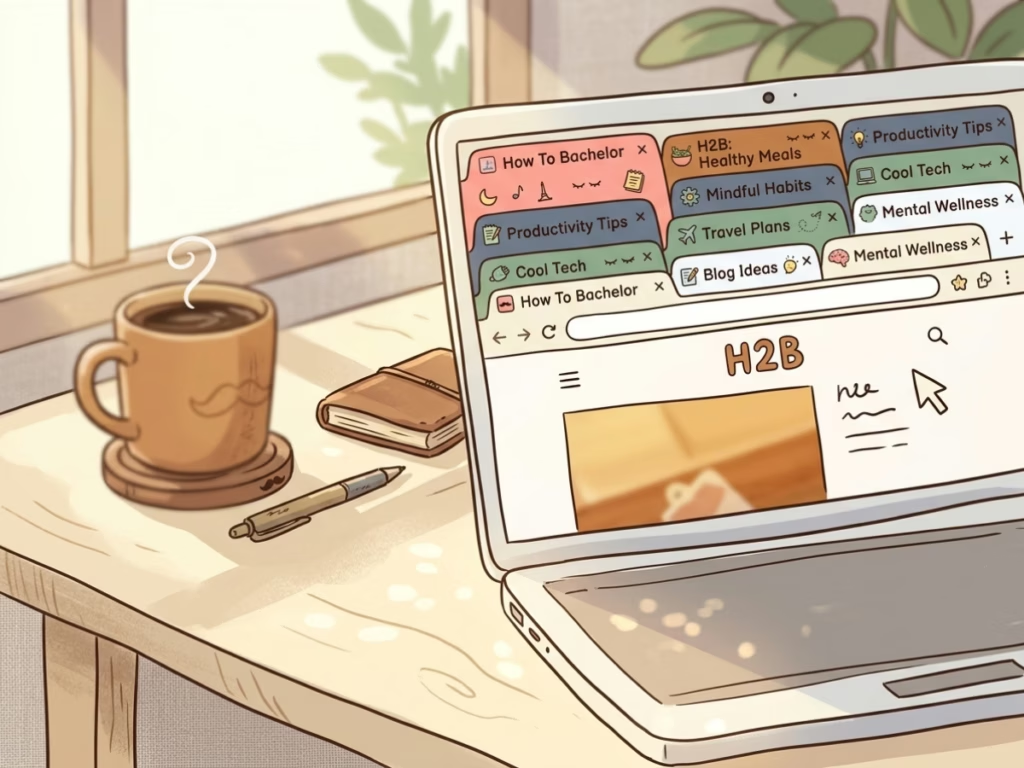
The reason it works isn’t magic. Simply Psychology explains it well: when you move incomplete tasks into a trusted system, they stop occupying your working memory. Your brain has been holding those open loops like browser tabs you forgot to close. The ritual closes them.
This is especially useful if you work from home, where the “office” is twelve feet from the couch and the boundary between work and not-work is essentially vibes.
The 5-Step Sequence
Run through these in order. It takes five minutes if you’re not precious about it.
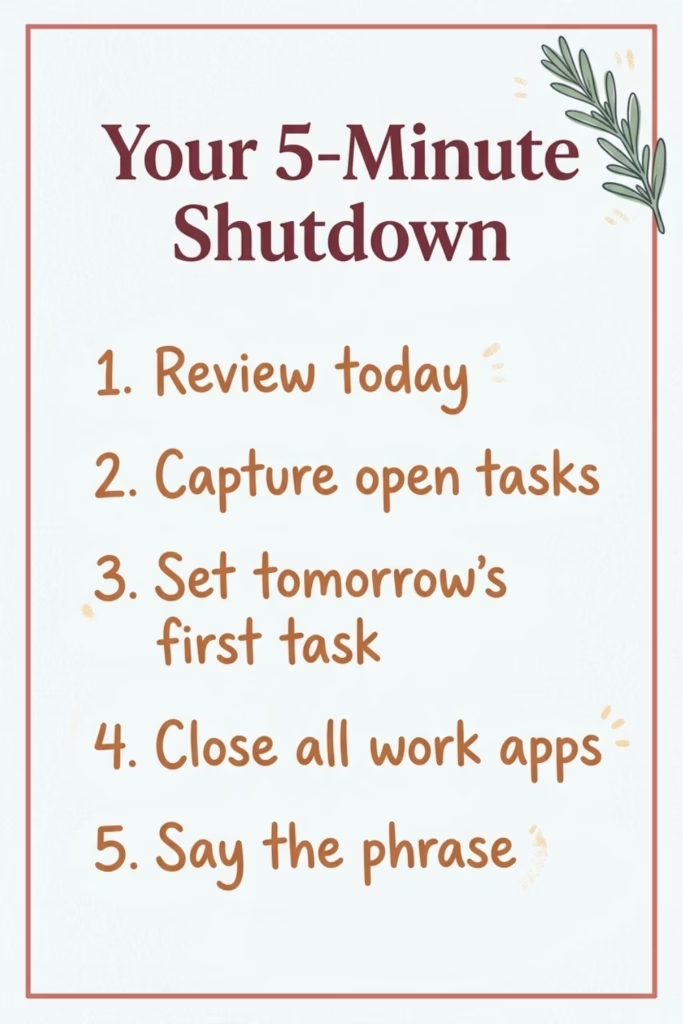
- Review what you actually finished today. Not a guilt trip, just a quick look. Feels better than you expect.
- Capture anything still open. Write it down somewhere you trust. The goal is to get it OUT of your head and INTO a system. An anti-to-do list can help here if you’re prone to overloading tomorrow before it starts.
- Set tomorrow’s first task. Just one. Todoist recommends leaving only the tab you’ll need for that task open, everything else gets closed. You shouldn’t have more than 8 open anyways. Wink wink. Nudge nudge.
- Close your work apps. All of them. Email, Slack, the seventeen browser tabs. Physical closure reinforces the mental kind, per Simply Psychology.
- Say your shutdown phrase out loud. “Shutdown complete.” “Done for today.” Whatever doesn’t make you feel like a robot. Say it anyway. It works.
That’s it. Boringly consistent beats brilliantly occasional every single time.
Frequently Asked Questions
Does the shutdown phrase actually do anything?
Yes, and it’s not woo. A verbal or physical cue, closing the laptop, saying a phrase, doing a quick desk tidy, gives your brain a concrete stopping point rather than an ambiguous fade-out, per Simply Psychology. Without it, work just sort of… leaks into the evening. The phrase is the period at the end of the sentence.
What if I have genuinely unfinished work?
That’s what step two is for. You’re not finishing it, you’re capturing it somewhere trustworthy so your brain can let go. The ritual isn’t about clearing your plate; it’s about convincing your nervous system the plate is safe to put down for the night.
How is this different from just logging off?
Logging off is a physical act. The shutdown ritual is a cognitive one. Most people log off and then spend the next two hours mentally composing emails they haven’t sent yet. The sequence gives your brain permission to stop, which logging off alone doesn’t.
Does this work for remote workers specifically?
It’s arguably more important for remote workers, because the end of work is otherwise completely ambiguous, per Locu. When your commute is a ten-second walk to the kitchen, you need something else to mark the transition. The ritual is that something.
How long before it actually feels like it’s working?
Give it a week of consistent use. The sequence needs to become automatic before your brain starts trusting it. Like any habit, the first few times feel a little silly. Push through the silly.
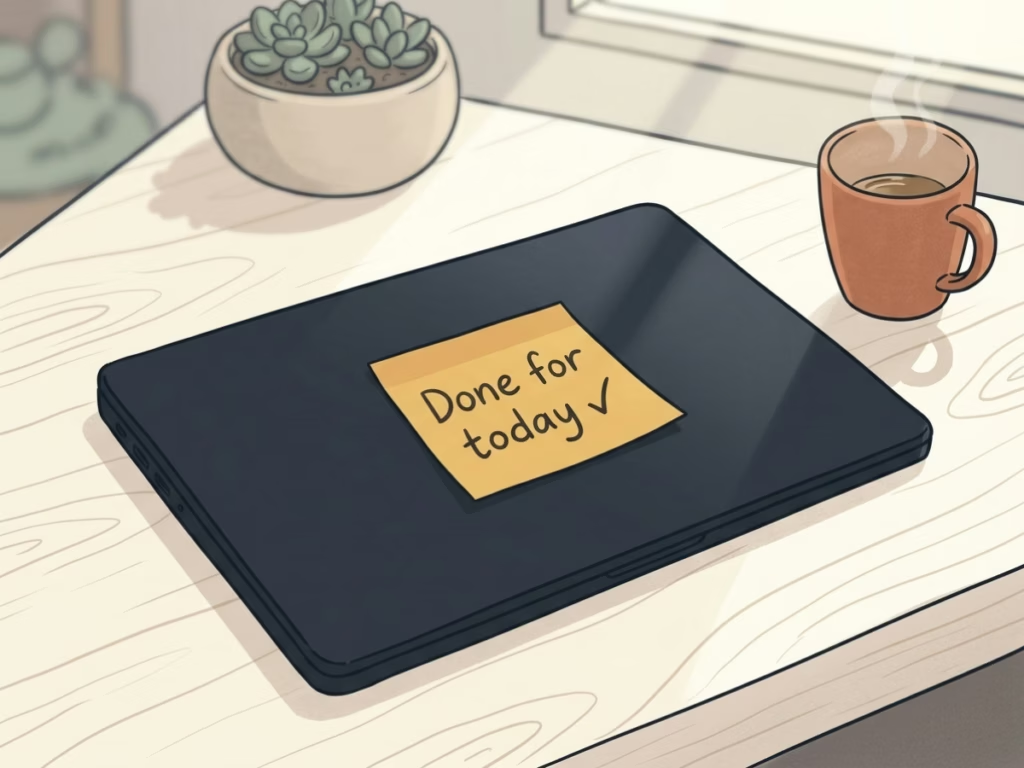
Tonight, before you close the laptop, run through the five steps once. Review, capture, set tomorrow’s first task, close the apps, say the phrase. It’ll take five minutes. Then go be a person for the rest of the evening, you’ve earned it.
If you want a gut-check on whether your goals for tomorrow are actually realistic, this sanity check is worth two minutes of your time before you hit step three.
Get The Enough List — free.
Ten minutes, five areas. A short guide for figuring out what enough looks like in money, health, work, people, and time — before you go sprinting at someone else's finish line. Yours when you subscribe.