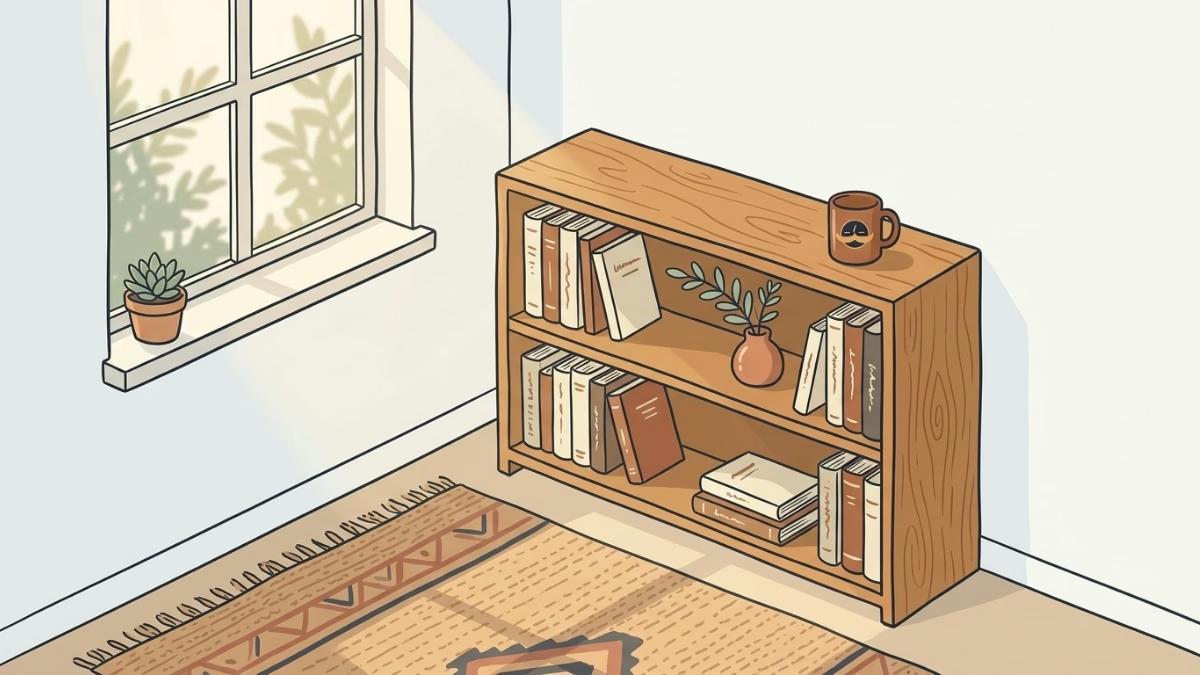
The problem with most bookshelves isn’t what’s on them. It’s what’s on them that you’re never going to read. That’s exactly what makes it hard to build a reading habit that sticks.
If you want to build a reading habit that actually sticks, start with the shelf, not the reading schedule. A smaller, more honest collection removes the friction of choosing what’s next and replaces the vague guilt of “I should read more” with something concrete you can act on today.
Key Takeaways
- A curated shelf of 20-30 books you love beats 200 books you feel obligated to read.
- Displaying only books you’d reread removes decision fatigue and makes starting the next book easier.
- Smaller shelves signal intention, empty space isn’t wasted, it’s a reminder that your time is finite.
- Rotating books in and out seasonally keeps the shelf honest and your reading habit alive.
- Anchor tall or heavy bookshelves to wall studs for safety, per This Old House guidance.
Less Shelf, More Reading
Here’s the counterintuitive part: a bigger bookshelf often produces less reading. When forty unread spines are staring at you, picking one feels like a commitment hearing. So you watch another episode of whatever.
Try this instead. Pull every book off your shelf. Ask one question about each: would I actually reread this? If the answer is a shrug, it goes in the donate pile. What’s left is your real shelf, the books that earned their space.
Most people end up with fewer than they expected.
Build the Shelf Around the Books, Not the Room
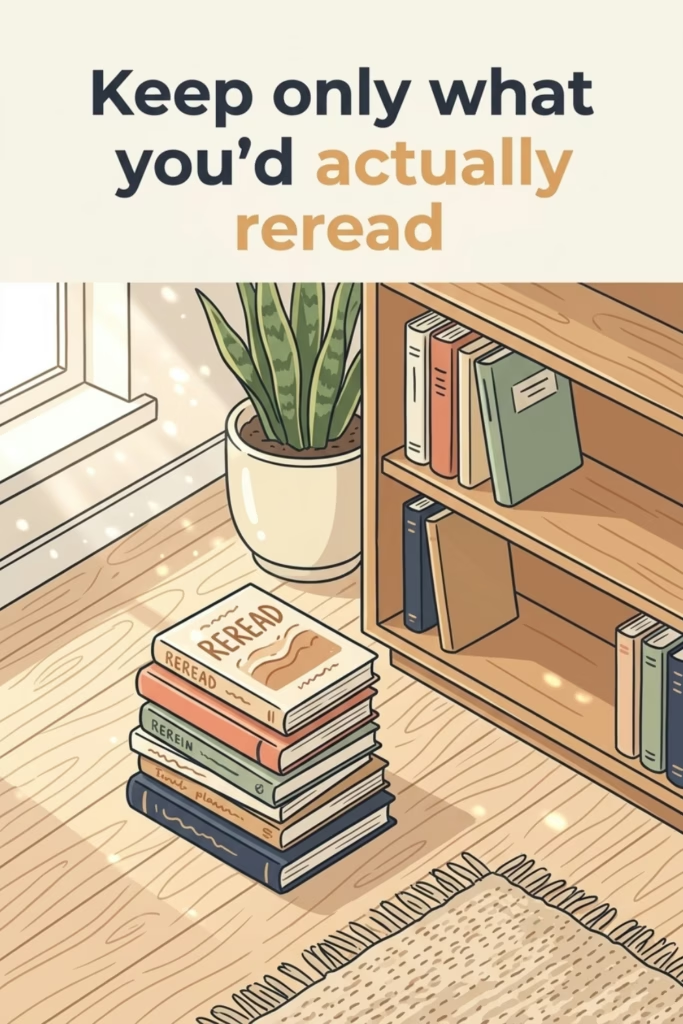
Before you buy or build anything, measure what you’re actually keeping. Sketchlist recommends planning shelf height, width, depth, and spacing before cutting anything, because the books you own should determine the shelf’s dimensions, not the other way around. A shelf built for 30 books looks intentional. A shelf built for 300 that holds 40 looks like a waiting room.
If you’re mounting something tall or heavy, anchor it to wall studs. This Old House recommends locating studs and fastening the unit to them for stability, which matters a lot more when the shelf is full.
Rotate to Keep Your Reading Habit Alive
If you’re trying to figure out how to start reading again after a long gap, a smaller shelf is the lowest-friction entry point. There’s no intimidating backlog, just a handful of books you actually want.
A curated shelf isn’t a permanent monument. It’s a rotation. Swap books in when something genuinely earns a spot. Move others out when you’ve outgrown them, or when you’re honest that you’re never finishing them. (Some books just aren’t for you. That’s fine.)
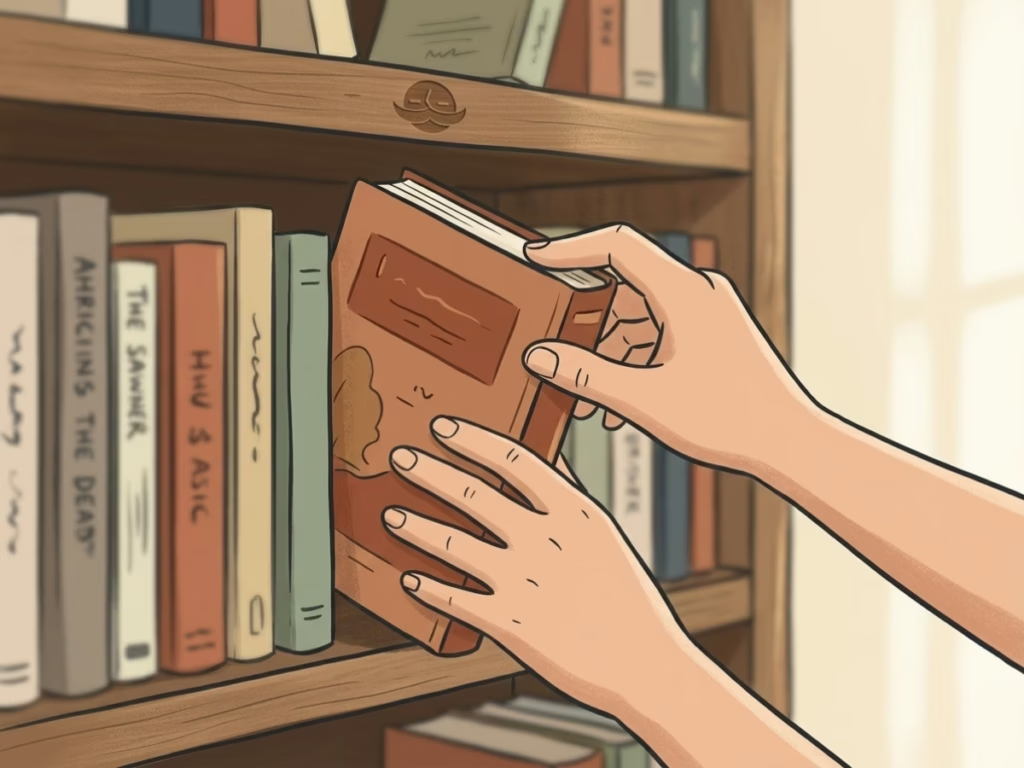
This is also how the shelf stays useful for building a reading habit over time. When every book on it is one you’d actually open, choosing the next one takes about ten seconds. That’s the version of “reading more” that’s worth chasing.
If you want a framework for what to do with the time you free up, the Man in the Arena post is worth a read. And if reading feels like one hobby among many you’re trying to make stick, finishing last in your hobby has something honest to say about that.
Frequently Asked Questions
How many books should be on a personal bookshelf?
There’s no magic number, but a shelf you’d be proud to show someone is usually smaller than you think. The useful question isn’t “how many?”, it’s “would I reread this?” Keep the ones that pass. Donate the rest without guilt.
What’s the easiest way to start building a reading habit?
Remove the decision. If your shelf only holds books you genuinely want to read, you’ll pick one up more often because there’s no bad choice. The logic is simple: if your shelf only holds books you genuinely want to read, you’ll pick one up more often because there’s no bad choice. Fewer options, less friction, more reading.
Should I organize my bookshelf by genre, color, or author?
When it comes to bookshelf organization ideas, the only rule is organize it however makes you most likely to grab a book. Color looks great on Instagram and means nothing to your reading habit. Genre or “mood” groupings (light reads vs. heavier ones) tend to work better in practice, you can match the book to how your brain feels that day.
How do I stop buying books I never read?
Wait 48 hours before buying. If you’re still thinking about it, get it. If you forgot about it, you have your answer. A one-in-one-out rule also helps: a new book earns its spot by displacing one that’s already there.
Do I need to build a physical bookshelf, or can I use an e-reader?
Either works. The curation principle is the same, a Kindle stuffed with 400 unread samples is the digital version of the same problem. Keep your “library” to what you’d actually read next. The format matters less than the intention behind it.
Today’s action: Take ten minutes and pull five books off your shelf that you know you’re not going to read. Put them in a bag for the library drop box. See what the shelf looks like with a little room to breathe.
Get The Enough List — free.
Ten minutes, five areas. A short guide for figuring out what enough looks like in money, health, work, people, and time — before you go sprinting at someone else's finish line. Yours when you subscribe.