
Meditation doesn’t require a cushion, a guru, or a diffuser pumping lavender into your apartment. For beginner meditation for busy men, the whole practice fits inside three minutes and costs exactly nothing.
Here’s the short version: sit somewhere reasonably quiet, close your eyes, breathe normally, and when your brain wanders off to write a grocery list or replay that awkward thing you said in 2014, gently bring your attention back to the breath. That’s it. That is the practice. Everything else is branding.
Calm’s men’s meditation guide recommends starting with just 2-5 minutes a day. Not 20. Not the amount of time it takes to finish a podcast. Five minutes.
Key Takeaways
- Starting with just 2-5 minutes a day is the standard recommendation for beginner meditation, according to Calm’s men’s meditation guide.
- The point of meditation is not to empty your mind, it’s to notice when you’ve drifted and gently come back to your breath.
- A structured 3-minute session can be broken into grounding (1 min), noticing what you feel (1 min), and returning to calm (1 min).
- Insight Timer hosts a dedicated “3-Minute Breathing Space” practice specifically designed for people who don’t have time to sit and meditate.
- A 30-day ramp, 5 minutes in week one, 10 in week two, 15-20 by week four, is one proven path from beginner to habit.
The 3-Minute Beginner Meditation Script (Actually Usable)
Set a timer so you’re not peeking at your phone every 30 seconds like it’s going to text you something important (it won’t).
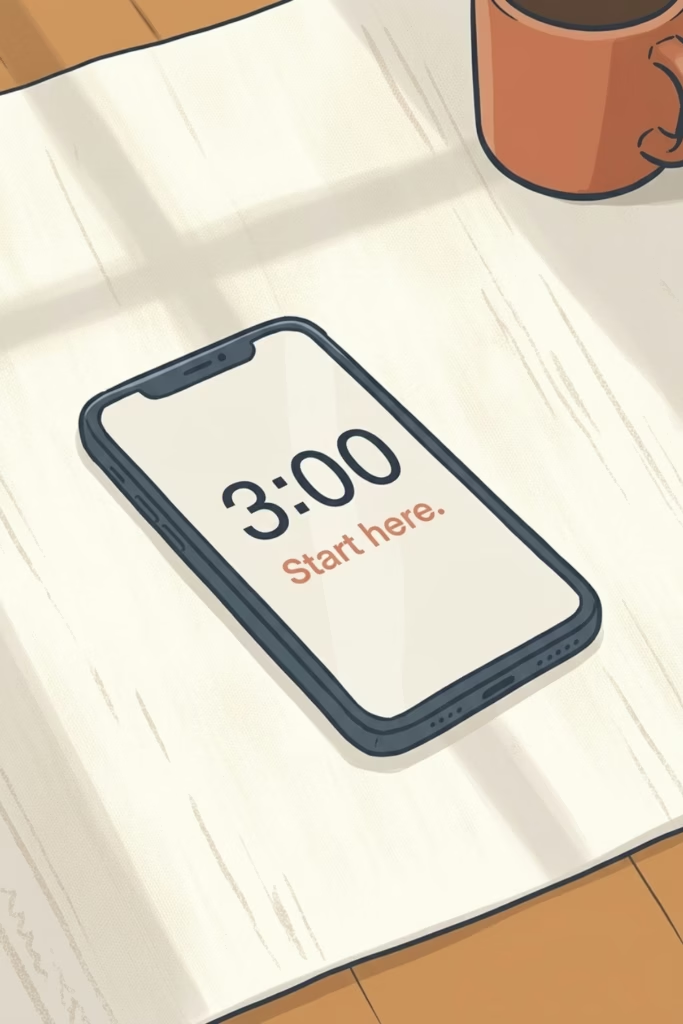
Minute one. Ground yourself. Sit with your feet flat on the floor. Feel the chair under you. Take three slow breaths. You are a person sitting in a room. Congratulations, you’ve started.
Minute two. Notice what’s happening. Your mind will immediately try to escape. It might go to work, to whatever you watched last night, to some abstract worry about interest rates. Don’t fight it. Just notice it, the way you’d notice a dog wandering across your yard, and return to your breath. This returning-to-the-breath is the actual exercise. The wandering isn’t failure; it’s the rep.
Minute three. Let things settle. Breathe a little slower. Imagine the noise in your head dialing down like someone finally turned the volume knob. You’re not solving anything. You’re just sitting. This is allowed.
Insight Timer hosts a 3-Minute Breathing Space practice built specifically for people who genuinely don’t have time to sit and meditate, which, if you’re reading this, is probably you.
“But My Brain Won’t Stop”
Good news: nobody’s does.

The goal was never to think about nothing (that’s not meditation, that’s a coma). The goal is to notice you’ve drifted and come back. Every time you do that, even once, you’ve done the thing. It’s basically a bicep curl for your attention span, except you don’t need to post it. If you came here looking for a quick meditation for stress relief, this is it. Mindfulness for busy men doesn’t have to look any fancier than this.
If three minutes goes well and you want to build, one structured approach ramps from 5 minutes daily in week one to 10 in week two and 15-20 minutes by week four. But don’t worry about week four right now. Worry about today.
If you’re the kind of person who’s already skeptical of self-improvement as a concept, you might like this take on being a work in progress. Same energy applies here. You don’t have to be good at this. You just have to try it.
Frequently Asked Questions
How long should a beginner meditate each day?
Starting with 2-5 minutes daily is the standard recommendation for beginner meditation for busy men, per Calm’s meditation guide for men. Think of it like starting a new workout, the first week isn’t about volume, it’s about showing up.
What do I do when my mind keeps wandering?
Notice it, don’t fight it, and bring your attention back to your breath. That moment of noticing and returning is the actual practice, not a sign you’re bad at this. The more your mind wanders and you redirect it, the more useful the session, not less.
Do I need an app or guided audio to meditate?
No. A timer and your breath are the only equipment required. Apps and guided meditations can be useful training wheels, but they’re optional, not prerequisites.
Can three minutes of meditation actually do anything?
Three minutes done consistently beats 20 minutes planned and skipped. The 3-Minute Breathing Space on Insight Timer exists precisely because short, realistic practices build the habit that longer ones never get started.
Today’s action: set a three-minute timer right now, before you open another tab. Sit, breathe, come back when you drift. Do it once. See what you think.
Get The Enough List — free.
Ten minutes, five areas. A short guide for figuring out what enough looks like in money, health, work, people, and time — before you go sprinting at someone else's finish line. Yours when you subscribe.