
Around week four, something quietly breaks. Not dramatically, no blaze of glory, no formal resignation letter to your new habits. You just… don’t do the thing one day. Then you feel vaguely bad about it the next day and don’t do it again. That’s how the streak dies.
How to stay consistent when you lose motivation isn’t about summoning more willpower. It’s about having a boring fallback plan ready before you need it.
The NFL figured this out the hard way. Every year, around Week 4, rosters that looked solid in September start showing cracks, injuries stack up, depth gets tested, and the teams that survive aren’t the ones who had the best game plan on paper. They’re the ones who already knew what they’d do when their first option wasn’t available. The backup plan was built in, not improvised at halftime.
Your habits work the same way.
Key Takeaways
- A 10-minute focused minimum on tough days is enough to preserve momentum and avoid a full reset, per consistency research.
- Tying a habit to a fixed daily trigger (after breakfast, after work) makes the behavior rely on routine rather than mood.
- Missing one day is recoverable, missing two in a row is where streaks actually die.
- Short maintenance sessions of 10-20 minutes are a research-backed way to keep a habit alive through low-motivation periods.
- The goal on a hard week isn’t peak performance, it’s keeping the chain intact until conditions improve.
Motivation Isn’t the Problem. Your Fallback Plan Is.
Motivation was always going to leave. It’s not a reliable fuel source, it’s more like a weather event. Great when it shows up, useless to schedule around.
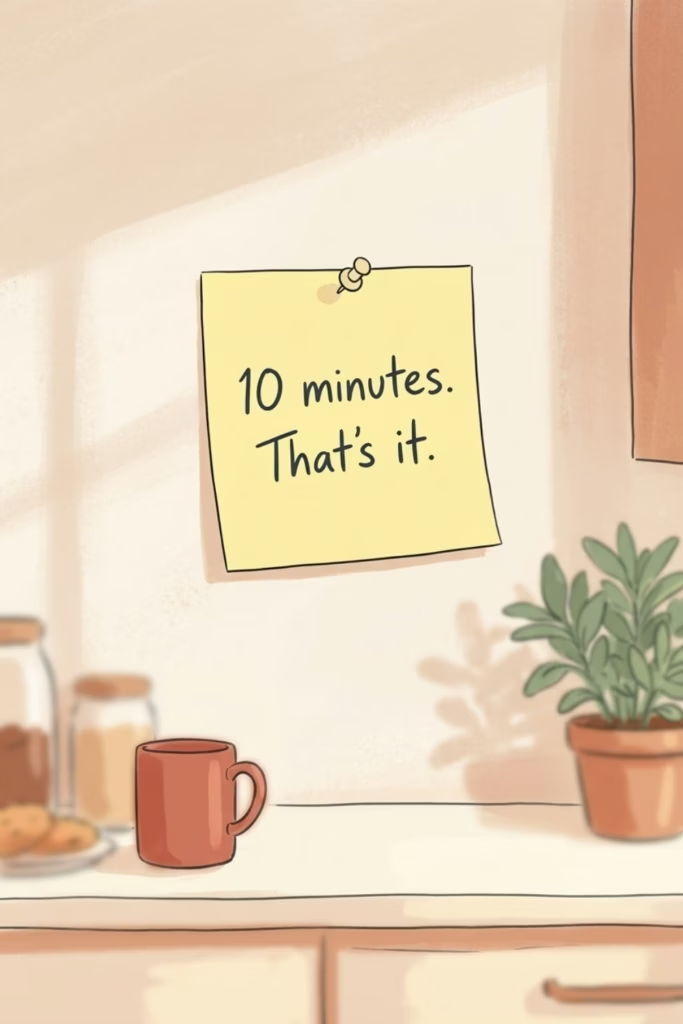
What actually keeps you consistent on low-motivation days is a fixed trigger and a smaller target. Consistency research backs this up: tying a habit to an existing routine, after breakfast, after you shut your laptop, means the behavior runs on autopilot rather than vibes. And on the hard days, your minimum target drops to something laughably easy: 10 minutes of focused work, one completed rep, one small thing done. That’s it. You’re not trying to win. You’re trying to stay in the game.
(Think of it like keeping the lights on in a building. You’re not running full operations, you’re just making sure the circuit doesn’t go dark.)
The Never-Miss-Twice Rule
One missed day is noise. Two missed days in a row is the start of a new pattern.
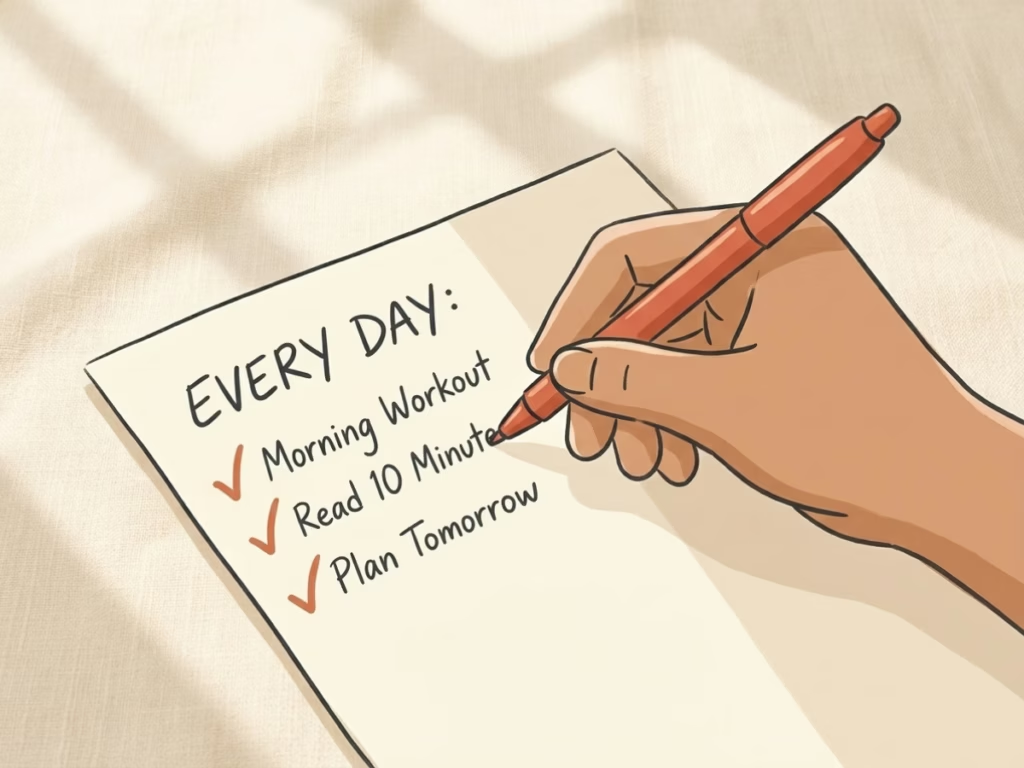
That’s the core of the never-miss-twice rule, and it reframes the whole conversation. A bad Wednesday isn’t a failure, it’s just a Wednesday. The question is what you do Thursday. If Thursday also goes sideways, you’ve got a problem. If Thursday you do the 10-minute version and call it done, the streak is functionally intact.
This is how you rebuild momentum after a bad week: not with a dramatic comeback performance, but with one small, ugly, unglamorous rep. Short sessions of 10-20 minutes are specifically recommended as maintenance behavior, not because they move the needle much, but because they keep the habit alive until conditions improve.
You’re benching your star receiver, not shutting down the whole offense.
Frequently Asked Questions
How long does it take for a new habit to get past the motivation slump?
There’s no universal timeline, but the week-four window is a commonly cited drop-off point in consistency guides. What helps isn’t white-knuckling through it, it’s having a minimum viable version you can do on a bad day without feeling like you’ve failed.
What’s a good minimum standard for a low-motivation day?
A 10-minute focused session is a specific, proven fallback, GoalTrack recommends exactly this as a way to preserve momentum without demanding peak output. One completed habit, even a tiny one, counts.
Should I try to catch up after a missed day?
No. Catching up usually means overloading the next day and burning out again. Just pick up where you left off at normal volume. The goal is longevity, not accounting.
How do I stop relying on motivation to start?
Attach the habit to a fixed trigger that already happens, waking up, finishing a meal, ending the workday. Research consistently shows that behavior tied to a routine cue holds up when mood-based motivation doesn’t.
Building small habits for consistency, like a two-minute version of your workout or one paragraph of writing, gives the routine something to grip when motivation fades.
Week 4 you is not the enemy. Week 4 you is just tired and a little behind. That’s allowed. If you want a longer look at being a work in progress without treating it like a personal flaw, this one’s worth a read.
For today: pick your minimum. The version of this habit you can do even when you’re running on fumes. Write it down somewhere. That’s your fallback plan, and honestly, it’s the most useful thing you’ll build this week.
Get The Enough List — free.
Ten minutes, five areas. A short guide for figuring out what enough looks like in money, health, work, people, and time — before you go sprinting at someone else's finish line. Yours when you subscribe.

Thoughts?