
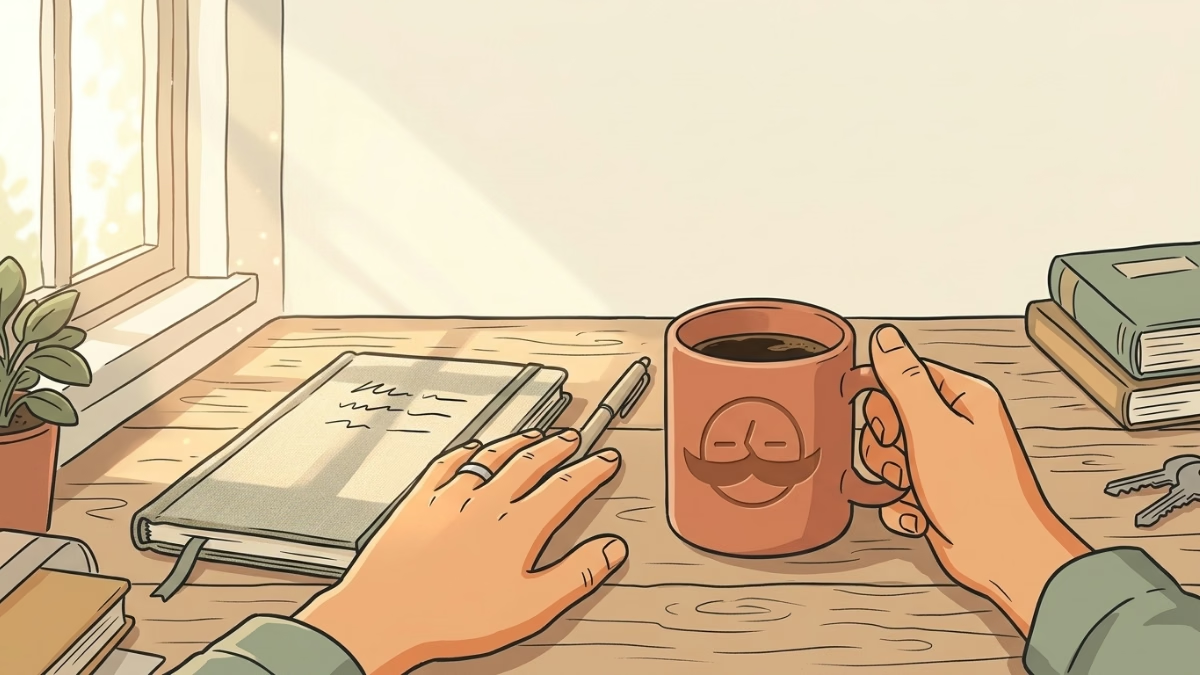
You’re not behind. You’re just using someone else’s scoreboard.
That sentence is the whole post, honestly, but you probably need more than a bumper sticker, so let’s get into it. Accepting that you’re a work in progress isn’t a consolation prize for people who gave up. It’s a skill, and one that most of us are actively bad at, because we’ve been handed a measuring stick we didn’t make and told to run as fast as we can toward a finish line we never planted.
The result? A lot of exhausted people who’ve done genuinely good things, but can’t shake the feeling that they’re somehow still losing.
Here’s the short version: the “feeling behind” sensation is almost always a measurement problem, not a progress problem. Once you fix the measurement, the panic tends to quiet down considerably. The rest of this is about how.
Key Takeaways
- A 2026 cross-temporal meta-analysis of 82,939 students found perfectionism, including concerns over mistakes and doubts about actions, has increased linearly over the past 35 years, meaning the pressure you feel isn’t just in your head.
- Research distinguishes perfectionistic strivings (which can support excellence) from perfectionistic concerns (which tend to harm you), meaning ambition itself isn’t the problem; tying self-worth to flawless output is.
- Self-compassion and mindfulness techniques show benefits for both types of perfectionism, per a 2026 Psychology Today review, suggesting the fix is internal, not more output.
- Feeling ‘behind’ is usually a measurement problem: you’re using a finish line someone else planted, not one you chose.
- Progress is almost always unglamorous and private, building the habit, making the ramen, analyzing the failure. The visible highlight reel is not the actual work.
Why “Feeling Behind” Is Getting Worse (Not Better)
Before you blame yourself for being weak or oversensitive, consider this: a 2026 cross-temporal meta-analysis of 307 samples and 82,939 college students found linear increases in self-oriented perfectionism, concerns over mistakes, and doubts about actions over the past 35 years, per York St. John University. Thirty-five years of it trending in one direction.
Which means if you feel more pressure to be further along than any previous generation seemed to, you are probably not imagining it. The ambient temperature around achievement and image has genuinely risen. You didn’t invent the heat.
A separate 2026 review on perfectionism in the workplace found that perfectionistic self-presentation, the performance of having it all together, actually makes people avoid asking for help and seeking feedback, which makes them more stuck, not less, per Business Science Daily. So the more desperately you try to look like you’re not a work in progress, the slower you actually progress. That’s not irony, that’s just how it works.
The same review makes a useful distinction worth stealing: perfectionistic strivings (wanting to do things well, holding yourself to a real standard) can support excellence. Perfectionistic concerns (tying your self-worth to whether you met those standards, and spiraling when you didn’t) tend to cause harm. The first one is fine. Good, even. The second one is what makes you feel like a fraud for still having things to figure out.
The Image Trap (And Why It’s Not Really About You)
Part of what makes “feeling behind” so sticky is that it’s rarely about your actual life. It’s about the image of your life held up against the image of someone else’s.
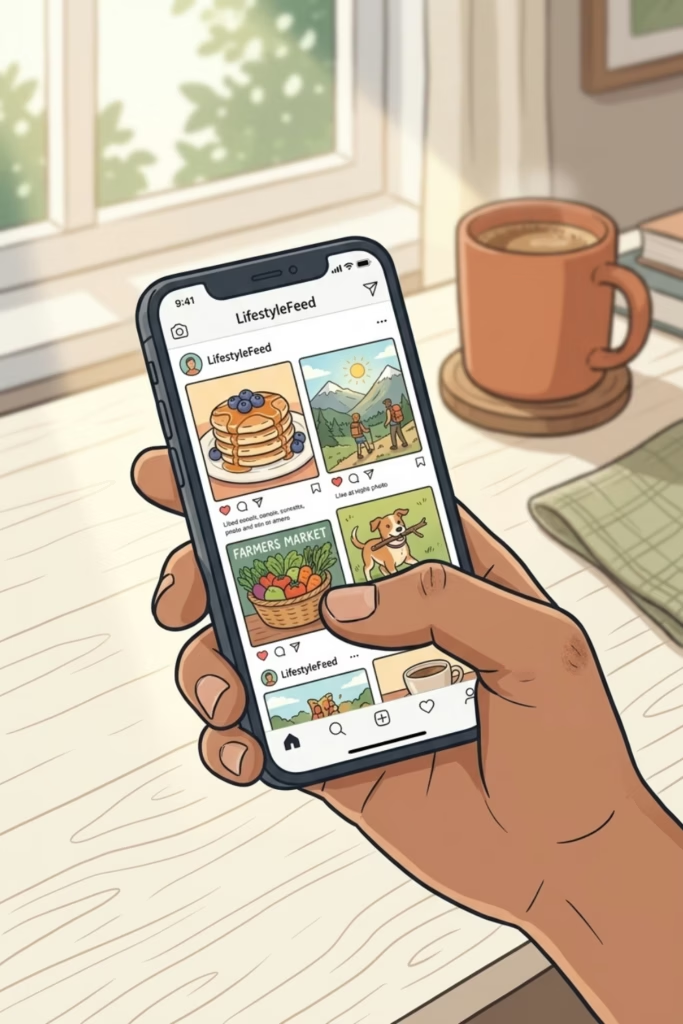
You’re not comparing your real Tuesday, coffee going cold, something half-finished on your desk, that one thing you keep putting off, against their real Tuesday. You’re comparing it to their best-angle Saturday, served up chronologically between two other people’s vacations and promotions.
That’s a fight you will lose every time, not because you’re losing at life, but because you’re playing a rigged game. The highlight reel isn’t lying, exactly. It’s just showing you the 4% and letting you assume it represents the other 96.
This is also worth noting: the stress isn’t purely personal. The APA’s 2025 Stress in America report, which surveyed more than 3,000 U.S. adults, found that 62% cited societal division as a significant source of stress. The baseline stress level everybody’s running on right now is elevated. You are not operating in neutral conditions and then mysteriously falling short. You’re operating under load, like everyone else. Cut yourself the same slack you’d extend to a friend who you knew was carrying all of that.
What It Actually Means to Accept You’re a Work in Progress
Let’s be honest about what we’re calling it. “Work in progress” is not a polite way of saying “not there yet, poor guy.” It’s just an accurate description of what a living, thinking person looks like at any given moment.
Nobody finishes. There is no level you hit where the self-improvement ticker stops and you get to coast in permanent peace. The people who look like they’ve figured it out are also still figuring it out, they’ve just made peace with the process.
The useful shift is this: stop treating your current state as a problem to be solved, and start treating it as a baseline to build from. Those feel similar but they’re not. One puts you in a constant deficit. The other puts you at a starting line, which is exactly where everyone else actually is, whatever their Instagram might suggest.
There’s a version of this worth reading in more depth over at You’re Not Behind in Life. There Is No Scoreboard, which is essentially an extended meditation on the same thing. Worth your time.
How to Actually Stop Feeling Behind (Not Just Knowing You Should)
Knowing that comparison is a trap doesn’t automatically stop the trap from working. Your brain doesn’t care that you’ve read the right articles. So here’s what actually helps.
Plant your own finish line first. Before you start measuring progress, you have to decide what you’re measuring progress toward. Sounds obvious. Almost nobody does it. Most people vaguely sprint in the direction of “more”, more money, more status, more done, without ever asking whether “more” is where they actually want to end up.
Sit down, seriously, and ask yourself: what does “enough” look like for me? Not for your parents, not for your college roommate who just bought a house, not for whoever’s LinkedIn posts make you feel inexplicably bad about yourself. For you. What would have to be true for you to look around and feel like you’re doing alright?
Write it down. It’s shockingly hard to do this without the answer drifting toward things you think you should want. Notice when that happens and push past it.
Separate strivings from concerns. Going back to what the research actually found: wanting to do well is healthy. Basing your self-worth on a flawless performance is the part that hurts you. If you catch yourself not asking for help because you don’t want to look like you need it, that’s the concern type doing its thing. The fix isn’t lowering your standards. The fix is letting yourself be visibly imperfect while you pursue those standards.
(This is, incidentally, the exact opposite of what most self-improvement content tells you to do, which is why most of it quietly makes you feel worse.)
Use self-compassion as a tool, not a trophy. A 2026 Psychology Today review found that self-compassion and mindfulness techniques showed benefits for both types of perfectionism, per Psychology Today. This isn’t “just be nicer to yourself” as a platitude. It’s a practical intervention. The internal voice that catalogues everything you haven’t done yet is not motivating you. It’s draining the tank you need to actually do the things. Quieting it is not giving up. It’s maintenance.
Make the next small move, not the whole movie. Here’s the other thing. When you’re stuck in the “feeling behind” spiral, the typical response is to either freeze or try to make up for lost time by doing everything at once. Both strategies fail reliably. The version that works is embarrassingly small: pick one thing, do it, notice that you did it.
Want to be in better shape? Take a walk today. Want to read more? Read one page. Not because one page changes your life, but because one page is more than zero, and momentum is how this actually works. Make the ramen before you go chasing the Michelin star. Then build from there.
Progress over perfection isn’t just a bumper sticker for adults who’ve stopped trying. It’s the actual mechanism.

The “Character Over Image” Play
Here’s the thing about being a work in progress: who you are when you’re in the middle of it, when nobody’s watching, when progress is slow and invisible, that’s where character actually forms.

The guy who’s genuinely trying, analyzing the failures, making small adjustments, and not performing success for an audience? That guy is building something real. The guy optimizing for how-it-looks-from-outside is building a stage set.
This matters because eventually you have to live with yourself, not with your personal brand. And the self that’s been honestly built, messy progress, visible imperfections, real setbacks included, is the one you’ll actually recognize in the mirror. That’s worth more than the highlight reel, in the long run. Not in a fortune-cookie way. In a practical, I-have-to-sleep-at-night way.
You might also want to read You’re Allowed to Be a Work in Progress when you get a chance, which gives this idea its own full treatment.
Frequently Asked Questions
Why do I constantly feel behind in life even when I’m making progress?
Because feeling behind is almost always a comparison problem, not a progress problem. A 2026 meta-analysis tracking 82,939 students found that perfectionism, including concerns over mistakes, has risen linearly over 35 years, per York St. John University, which means the ambient pressure you’re feeling is real, not imaginary. When you measure your real, messy everyday life against someone else’s curated highlight reel, you will feel behind even if you’re actually moving forward.
Is it bad to have high standards for yourself?
Not inherently. Research distinguishes between perfectionistic strivings, wanting to do things well, and perfectionistic concerns, which tie your self-worth to meeting those standards flawlessly, per Business Science Daily. The first can support genuine excellence. The second is what tends to cause harm. Keep the standards; let go of the idea that falling short of them makes you a failure as a person.
How do I stop comparing myself to others?
You don’t stop noticing the comparison, your brain is wired for it. What you can do is install a better reference point. Before you compare yourself to anyone else, define what “enough” looks like for you specifically, then use that as your benchmark instead. The comparison to others doesn’t disappear, but it stops being the main measure.
Can self-compassion actually help with perfectionism, or is that just soft advice?
It’s not soft, it’s practical. A 2026 Psychology Today review found that self-compassion and mindfulness techniques showed measurable benefits for both types of perfectionism, per Psychology Today. The internal critic telling you everything you haven’t done isn’t motivating you; it’s depleting the energy you’d need to do those things. Quieting it is a performance move, not a surrender.
What if I genuinely have fallen short of where I wanted to be by now?
Then you’re standing at the beginning of the next section of your life, not at the end of a failed one. The useful question is never “how did I get here” as an indictment, it’s “what’s the smallest real move I can make today.” Progress doesn’t care how long you’ve been standing still. It just cares what you do next.
One Thing You Can Do Today
Here’s the concrete move: find fifteen minutes today, somewhere quiet, and write down what “enough” looks like for you. Not what it should look like. What it actually looks like, if you strip away everything you think you’re supposed to want.
That’s the foundation. You can’t measure meaningful progress without a finish line you actually chose. And you can’t be genuinely okay with where you are today without knowing where you’re actually trying to go.
Start there. The rest is just steps.
Get The Enough List — free.
Ten minutes, five areas. A short guide for figuring out what enough looks like in money, health, work, people, and time — before you go sprinting at someone else's finish line. Yours when you subscribe.

[…] Week 4 you is not the enemy. Week 4 you is just tired and a little behind. That’s allowed. If you want a longer look at being a work in progress without treating it like a personal flaw, this one’s worth a read. […]
[…] the kind of person who’s already skeptical of self-improvement as a concept, you might like this take on being a work in progress. Same energy applies here. You don’t have to be good at this. You just have to try […]