
“Fake it till you make it” sounds like permission to be brave. It’s not. At best it’s a posture tip. At worst it’s a one-way ticket to imposter syndrome with a side of decisions you can’t back up. The problem isn’t the confidence part, confidence is fine, good even. The problem is the faking part, specifically when “faking” slides from “acting calm in a new situation” into “pretending I know how to do this thing I absolutely do not know how to do.” That’s where it turns on you. There are better alternatives to fake it till you make it, and they actually close the gap instead of just hiding it.
BetterUp puts it plainly: the advice tips into harmful territory when it means overclaiming competence instead of setting clear boundaries and asking for help. Which, if you’ve ever nodded confidently in a meeting about something you’d never heard of before that morning, you already know.
Key Takeaways
- BetterUp warns that ‘fake it till you make it’ becomes harmful when it means overclaiming competence instead of setting boundaries and asking for help.
- Forbes Coaches Council recommends ‘face it until you ace it’ as a principle-based alternative that shifts focus from performance to honest skill-building.
- Career Culture’s ‘flag it, ask it, communicate it’ framework turns a skill gap into a visible action list you can hand to a mentor.
- The trap isn’t confidence itself, it’s the ongoing stress of maintaining a performance that grows harder to sustain the longer it runs.
- Honest alternatives work because they target the real gap, skill, preparation, or support, not just the feeling of confidence.
The Real Trap
The exhausting part isn’t the initial fake. It’s the maintenance.
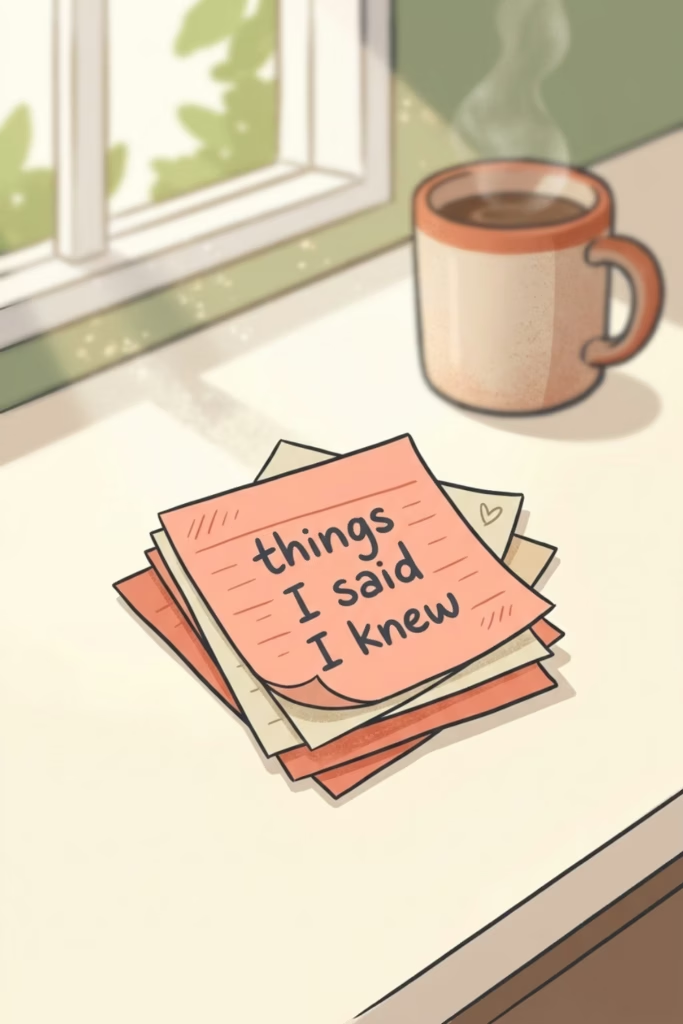
Every confident performance you put on that isn’t backed by actual skill is a debt you’ll have to pay later, usually at the worst possible moment, in front of the worst possible audience.
The gap between what you’re projecting and what you actually know doesn’t close on its own. It just gets harder to hide.
Three Honest Alternatives to Fake It Till You Make It
1. Face it until you ace it.
Forbes Coaches Council calls this a principle-based swap: instead of performing confidence, you confront the thing directly and build skill against it. It’s less cinematic than “fake it,” but it’s the version that actually sticks.
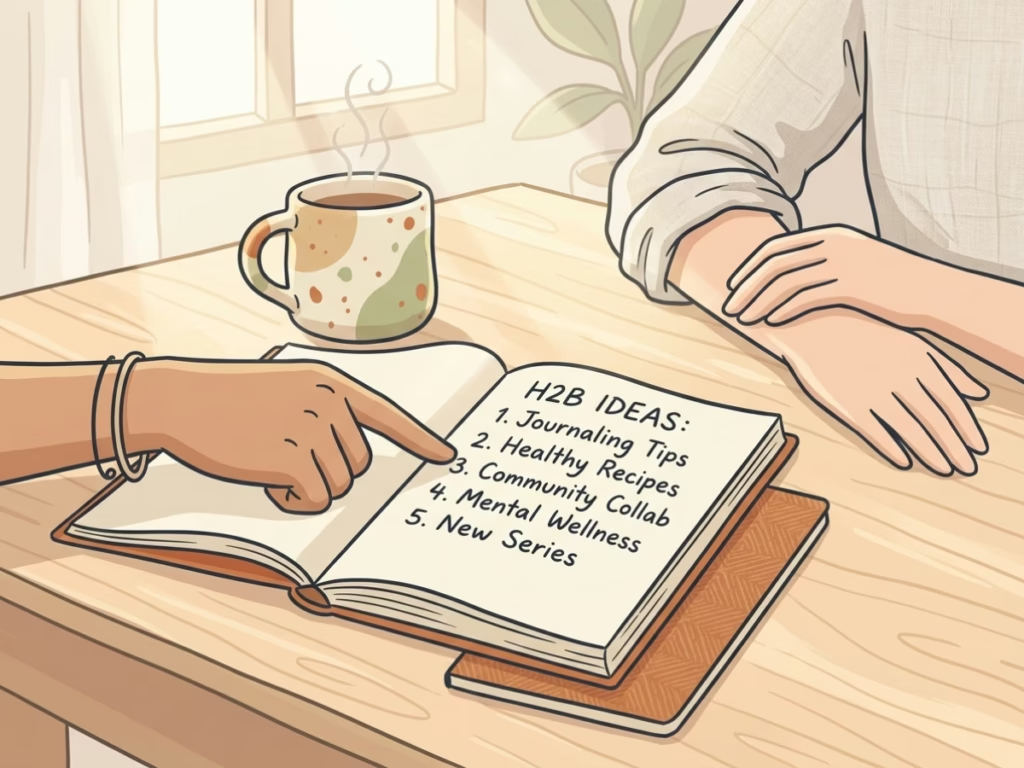
2. Flag it, ask it, communicate it.
Career Culture recommends turning your unknowns into a visible list, skills or experiences you need to develop, and then taking that list to a mentor or leader. That’s not weakness. That’s a roadmap. Most managers would rather have someone who knows what they don’t know than someone who’s quietly guessing.
3. Take it until you make it.
Sam Thomas Davies frames confidence as something built through acceptance and gradual practice, not performance. You’re not pretending to have arrived. You’re showing up, doing the reps, and letting the confidence follow the competence. That’s the version worth trusting.
The through-line across all three: they fix the actual problem. Skill gap? Build the skill. Knowledge gap? Ask someone who knows. Confidence gap? Earn it one small win at a time. None of them require you to keep a story straight.

Frequently Asked Questions
Is “fake it till you make it” ever good advice?
It can help with presence and posture, walking into a room like you belong there, even when you’re nervous. The line it shouldn’t cross is competence: acting calm is fine, pretending expertise you don’t have is where it gets costly. Use it for nerves, not for skills.
What’s the best alternative to “fake it till you make it”?
Forbes Coaches Council recommends “face it until you ace it” as a memorable, principle-based replacement. It keeps the forward momentum of the original phrase without the self-deception.
How do I build confidence without pretending?
Building confidence honestly starts smaller than feels impressive. Career Culture’s framework is practical: write down what you don’t know, ask better questions, and tell someone you trust where you need development. Confidence built on actual reps doesn’t wobble the way performed confidence does.
What if admitting I don’t know something makes me look weak?
It usually does the opposite. Most people can tell when someone’s bluffing, they just don’t say so. Naming a gap and asking for help signals self-awareness, which is rarer and more valuable than a confident performance that falls apart under pressure.
One thing you can do today: write down one thing you’ve been quietly faking your way through. Not to beat yourself up about it, just to make it visible. Then pick one of the three moves above and take one concrete step toward actually closing it. That’s the whole game, really. One step at a time.
Get The Enough List — free.
Ten minutes, five areas. A short guide for figuring out what enough looks like in money, health, work, people, and time — before you go sprinting at someone else's finish line. Yours when you subscribe.