Habit stacking is the closest thing to a life-improvement cheat code that doesn’t involve lying on your CV. The idea is simple, and the habit stacking examples below prove it: bolt a new behavior onto a habit you already do automatically, and the old habit does the remembering for you.
You don’t need motivation. You don’t need a five-year plan. You need coffee and thirty seconds.
Key Takeaways
- Habit stacking works by pairing a new behavior with an existing automatic routine, so the old habit acts as a built-in reminder.
- The Cleveland Clinic recommends anchoring new habits to routines you already do ‘rain or shine’, the more automatic, the better.
- James Clear’s published example: ‘After I pour my cup of coffee, I will meditate for one minute’, small enough to actually happen.
- The American Heart Association recommends habit stacking for movement, suggesting toe touches during morning news or slow breaths after buckling a seat belt.
- Habit stacking works for relationships too. BetterUp cites asking family members about their day at dinner as a valid, repeatable stack.
What “habit stacking” actually means
Cleveland Clinic recommends starting with habits you already do “rain or shine”, the ones that happen whether you feel like it or not. Brushing your teeth. Making coffee. Putting on your shoes. These are your anchors.

Once you’ve got an anchor, you attach one small new behavior right after it. James Clear’s published example is a good one: “After I pour my cup of coffee each morning, I will meditate for one minute.” Not twenty minutes. Not a whole journaling practice. One minute. Small enough that your brain doesn’t negotiate its way out of it.
The formula is just: After [anchor], I will [new thing].
That’s it. (I know. You were expecting a twelve-step framework and a worksheet. Sorry to disappoint.)
Real habit stacking examples that actually work
The American Heart Association recommends weaving movement into existing transitions, think toe touches while the morning news runs, or marching in place before you sit down for evening TV. They also suggest taking slow, deep breaths after you buckle your seat belt, before you start the car. Twelve seconds. Zero equipment.
BetterUp points out that stacking isn’t just for productivity nerds, it works for relationships too. Something like “After we sit down for dinner, I’ll ask everyone about one thing from their day” is a legitimate stack. It builds connection the same way it builds a workout habit: repetition tied to something that already happens.

A few more that work as starting points:
- After I take off my work shoes, I change into gym clothes. (You’re not committing to the gym. You’re committing to pants.)
- After I sit at my desk, I write one sentence toward whatever I’m working on.
- After I brush my teeth at night, I put my phone across the room.
The best stack isn’t the most ambitious one. It’s the one attached to an anchor you genuinely can’t skip.
How to pick your anchor
Scan your day for the habits that happen on autopilot. Peloton’s research highlights getting out of bed, making coffee, and brushing teeth as especially reliable low-friction anchors, exactly because they’re boring and automatic. That’s the point. If you want more habit stacking examples organized by context, the sections above cover movement, relationships, and work transitions.
If you’re trying to build a shutdown ritual at the end of your workday, this five-minute shutdown routine is a solid place to anchor it. And if the new habit feels too big to stick, the do-it-badly method is a useful read for getting out of your own way.
Frequently Asked Questions
What is habit stacking in simple terms?
Habit stacking is pairing a new behavior with an existing automatic one so the old habit triggers the new one. You’re not relying on willpower, you’re borrowing the momentum of something your brain already does without thinking. The simpler the anchor, the better.
What are good anchor habits for beginners?
The most reliable anchors are the ones that happen every single day regardless of mood: making coffee, brushing teeth, putting on shoes, sitting at your desk. Cleveland Clinic recommends choosing habits you already do “rain or shine” as your starting point.
Can habit stacking work for fitness?
Yes, and you don’t need a gym. The American Heart Association suggests stacking small movements onto daily transitions, like doing toe touches while watching morning news or marching in place before evening TV. The movement is the stack; the TV is the anchor.
How small should the new habit be?
Small enough that your future self at 7 a.m. can’t argue with it. James Clear’s one-minute meditation after coffee is a useful reference point. If your new habit requires real decision-making energy to start, it’s still too big. A habit stacking template makes this easier: write “After [anchor], I will [new thing]” on a sticky note and put it somewhere you’ll see it during that anchor moment.
Does habit stacking work for things besides productivity?
Absolutely. BetterUp highlights relationship-building stacks like asking family about their day at dinner, same principle, different goal. Habit stacking is really just a system for making any repeated behavior easier to remember.
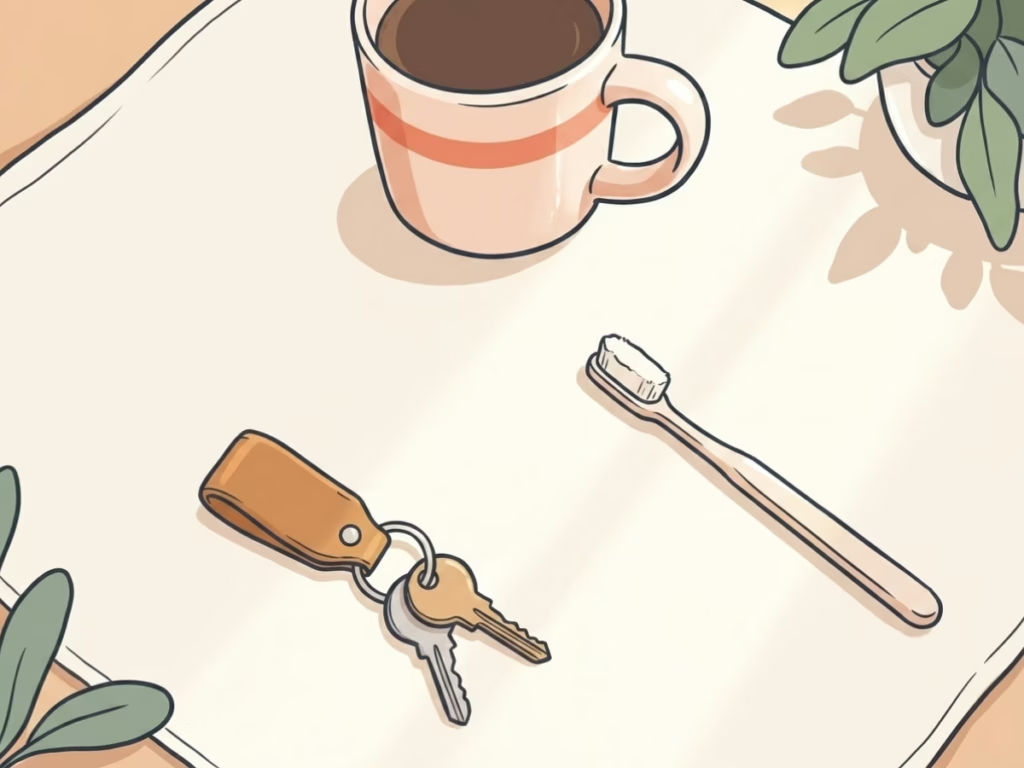
Your move today: Pick one anchor habit you already do every morning without thinking. Write down one small thing you want to do more of. Put them together using the formula: After [anchor], I will [new thing]. Do it tomorrow. Then the day after. The habit is not the hard part. The decision to start is. You just made it.
Get The Enough List — free.
Ten minutes, five areas. A short guide for figuring out what enough looks like in money, health, work, people, and time — before you go sprinting at someone else's finish line. Yours when you subscribe.