
NFL teams don’t wake up Sunday morning and figure it out. Game and stadium preparation starts seven days before kickoff, which means by the time the coin flips, the hard thinking is already done. That’s the part most life-planning advice skips. Not the motivation. The structure.
That’s the core of how to apply sports strategy to life: do the thinking before the moment, not during it.
Key Takeaways
- NFL game and stadium prep officially begins seven days before kickoff, per NFL Football Operations, a model for building a full-week personal plan instead of improvising Monday morning.
- Bill Belichick’s weekly install structure reserved Wednesday specifically for first- and second-down work and drive starters, proof that elite preparation means one focused block per day, not everything at once.
- Sports psychology research shows pregame mental prep works best when you rehearse decisions and then focus on execution rather than outcomes.
- Life-skills research confirms that skills acquired through sport transfer directly to non-sport contexts when intentionally practiced.
The NFL Doesn’t Improvise. Neither Should You.
Most of us treat big moments the same way: we know they’re coming, we think about them vaguely all week, and then we show up hoping vibes carry us. (They usually don’t. Ask anyone who winged a job interview.)
NFL coaches do the opposite. A game plan takes months of foundational work, built from the playbook outward. Then, within the game week itself, Bill Belichick’s staff used a tight daily structure: Wednesday was reserved for first- and second-down installs and drive starters, one focused block, one purpose. Not “do everything.” One thing per day, done right.
You don’t need a dynasty to borrow that logic. You need a calendar and about fifteen minutes.
How to Apply Sports Strategy to Your Own Week
Here’s the translation, no playbook required:
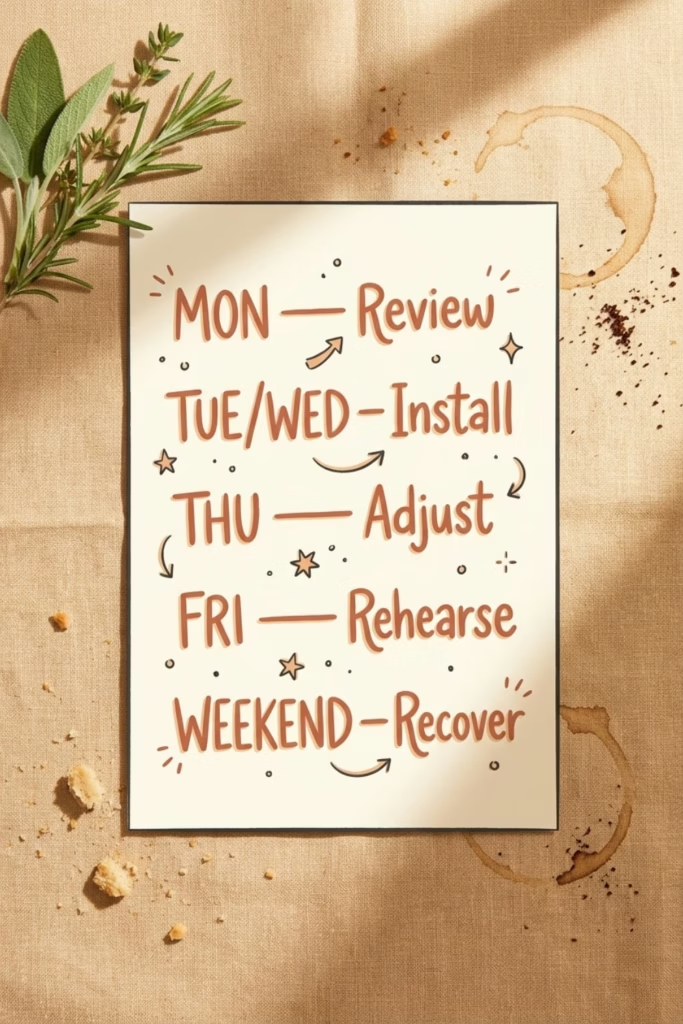
- Monday = film review. What happened last week? What worked, what flopped, what do you want to fix? (This is the part most people skip because it’s uncomfortable. Do it anyway.)
- Tuesday/Wednesday = install. Break your biggest goal this week into one focused chunk per day. Not the whole thing. One chunk.
- Thursday = adjust. Check in on what’s working. If something’s off, fix it now, not Sunday night at 11 PM in a panic.
- Friday = mental rehearsal. Pregame mental prep research recommends rehearsing the performance, then shifting focus to execution rather than outcomes. Picture the meeting, the conversation, the deadline. Walk through it. Then let it go.
- Weekend = recovery, not void. Preparation includes rest. That’s not a cheat day, it’s the plan.
The goal isn’t perfection. It’s showing up already having done the thinking, so the moment itself isn’t where you figure it out. (That’s how you wire yourself to actually perform instead of just perform-adjacent.)
If you want to go deeper on pre-committing to a plan before pressure hits, this piece on if-then planning is worth a read.
Frequently Asked Questions
How do NFL teams actually structure their game week?
NFL game and stadium preparation officially begins seven days before kickoff and runs continuously through the end of the game. Within that week, elite coaching staffs like Belichick’s divided preparation into specific daily installs rather than trying to cover everything at once. It’s staged, deliberate, and boring in the best possible way.
Does sports-style preparation actually transfer to everyday life?
Yes. If you want to know how to apply sports strategy to life, research on sport and life-skill transfer confirms the process works when skills are acquired in sport, intentionally transferred, and applied in non-sport contexts. The keyword is intentionally, you have to actually try to make the connection, not just hope it osmoses over.
Research on sport and life-skill transfer confirms this.
What’s the mental side of a pregame plan?
Sports psychology guidance recommends rehearsing your performance and game plan, then shifting focus to execution rather than outcomes. In plain terms: think it through beforehand, then trust the prep and stop trying to control the result in real time. Easier said than done, but that’s the actual move.
How small should I break the weekly blocks?
Small enough that you’d feel slightly embarrassed telling someone how small they are. That’s usually about right. One email thread. One section of a report. One conversation you’ve been avoiding.
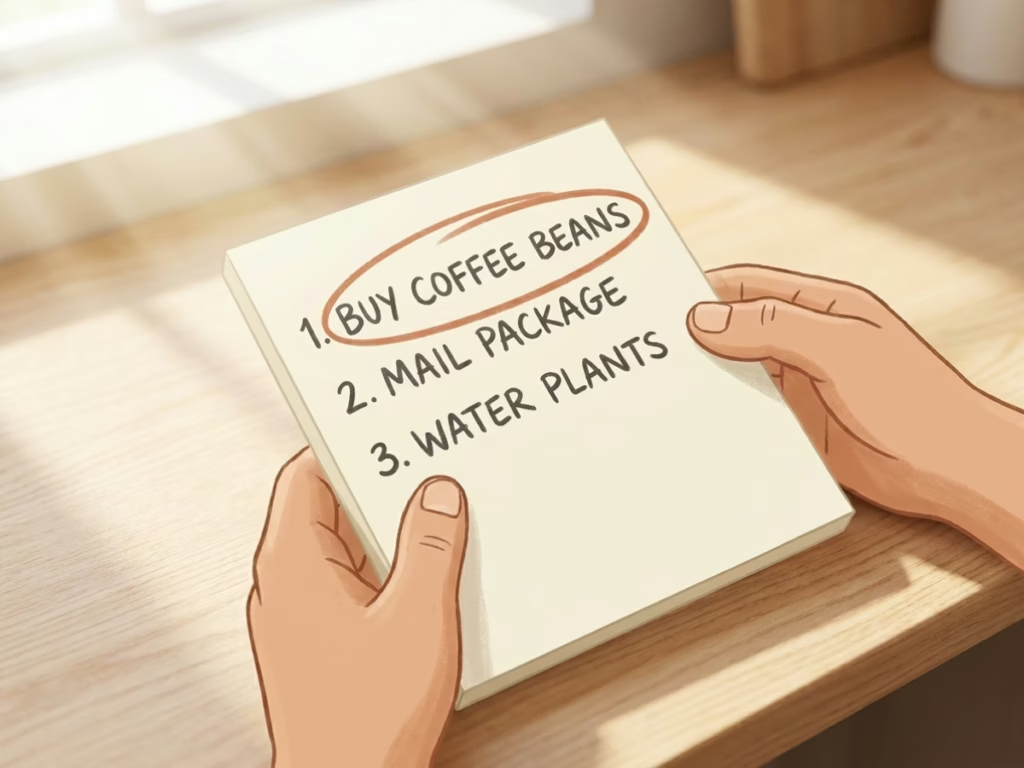
Coaches script the first fifteen plays, not the whole game. You plan the first move, not the entire outcome.
Today’s action: Block fifteen minutes right now and write out what your “game week” looks like for the next seven days. Monday review, one focused task per day, a check-in Thursday. That’s the whole system. You don’t need a whiteboard or a coaching staff. You just need to stop figuring it out on the day.
Get The Enough List — free.
Ten minutes, five areas. A short guide for figuring out what enough looks like in money, health, work, people, and time — before you go sprinting at someone else's finish line. Yours when you subscribe.

Thoughts?