
The life you’re quietly embarrassed about is one someone else would trade for in a heartbeat. That’s not toxic positivity. It’s just true, and it’s worth sitting with for a second.
Learning how to appreciate what you have doesn’t mean pretending everything is fine or hanging a “Good Vibes Only” sign on a dumpster fire. It means training yourself to see what’s actually there, even when what’s also there is hard, boring, or not what you pictured. And it turns out that skill has real weight behind it: people with the highest gratitude scores had a 9% lower risk of dying over four years than those in the lowest third, according to a 2024 study highlighted by Harvard. Nine percent. For noticing what’s good. That’s not nothing.
Key Takeaways
- People with the highest gratitude scores had a 9% lower risk of dying over four years compared to those in the lowest third, per a 2024 Harvard-cited study.
- Appreciation isn’t forced positivity, it means acknowledging difficulty and noticing what is still going well at the same time.
- A simple savoring exercise (pause, look around, name what’s good) is one of the most evidence-backed gratitude practices available.
- Listing what you have and writing about why it matters to you is a concrete first step to building lasting contentment.
- Defining ‘enough’ on your own terms is the foundation, without a personal finish line, gratitude has nowhere to land.
How to Appreciate What You Have Without Faking It
Here’s where most gratitude advice loses me. It either asks you to smile through genuinely terrible circumstances (pass), or it comes bundled with a journal that costs $40 and smells like lavender (also pass).
Real appreciation, as Psyche puts it, starts with explicitly acknowledging that life includes difficulty.
You’re not pretending the hard stuff away. You’re looking at the full picture and noticing what’s still standing. That’s a different skill, and a harder one, and it’s worth learning.
A deeper version of this is being able to notice what’s going well even when other parts of life aren’t. Which, candidly, describes most of adult life most of the time. (You can quote me on that. I’ll be here.)
A Simple Practice That Actually Works
Harvard calls it a savoring exercise, and it’s one of the most practical ways to appreciate what you have without turning it into a whole thing. The name is a little precious but the thing itself is not: pause, look around, and take in what is good in your current setting. That’s it. No app required, no subscription tier, no incense.
The version I’d add: ask yourself “What am I taking for granted that I could be thankful for?” It’s the kind of question that sounds cheesy until you actually try it, at which point it feels a bit like getting quietly ambushed. In a good way.
A more structured approach from Psyche’s guide: list what you have, then write or talk through why you value each thing. Not what it is. Why it matters. That second step is where the practice actually lands.
If you’re still not sure what “enough” even looks like for you before you try appreciating it, this piece is a useful gut-check. And if you suspect you’ve been chasing a version of success someone else defined, this one’s worth a look too.
Frequently Asked Questions
Does appreciating what you have mean settling or giving up on goals?
No. The two aren’t opposites. Appreciating what you have is about recognizing current value, not abandoning future ambition. You can be genuinely content with where you are today and still want more tomorrow, that combination is actually more sustainable than grinding from a place of constant dissatisfaction.
What is the savoring exercise and how do I do it?
Pause wherever you are, look around, and consciously take in what is good in your immediate situation. Harvard describes it as one of the simplest and most effective gratitude practices. It takes about sixty seconds, which makes it hard to claim you don’t have the time.
Is gratitude actually good for your health, or is that just a saying?
There’s real research here. A study cited by Harvard found that people in the highest gratitude group had a 9% lower risk of dying over four years compared to those in the lowest group, a meaningful difference for something that costs nothing to practice.
What if life is genuinely hard right now, can I still practice gratitude?
Yes, and this is where appreciation is actually most useful. Psyche’s approach starts with acknowledging difficulty explicitly, not skipping past it. Noticing what’s good while something else is genuinely bad isn’t denial. It’s perspective, and it’s a skill that gets stronger with practice.
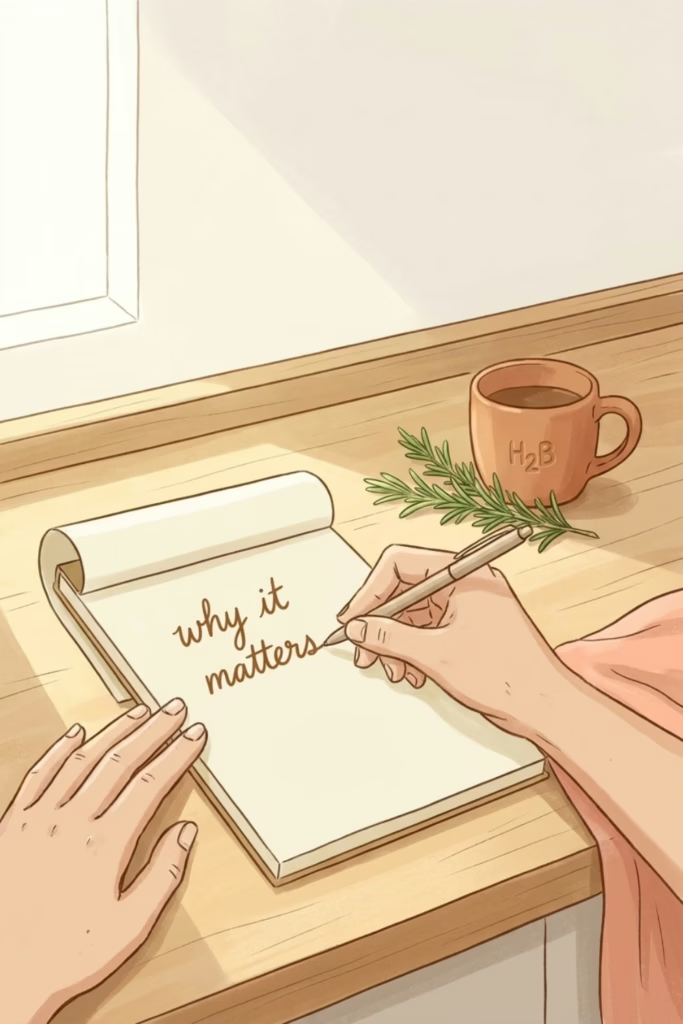
Today’s move: pick one thing you’ve been taking for granted and write two sentences about why it actually matters to you. Not what it is. Why it matters. Do it before you open anything else. That’s the whole exercise, and it’s enough.
Get The Enough List — free.
Ten minutes, five areas. A short guide for figuring out what enough looks like in money, health, work, people, and time — before you go sprinting at someone else's finish line. Yours when you subscribe.

Thoughts?