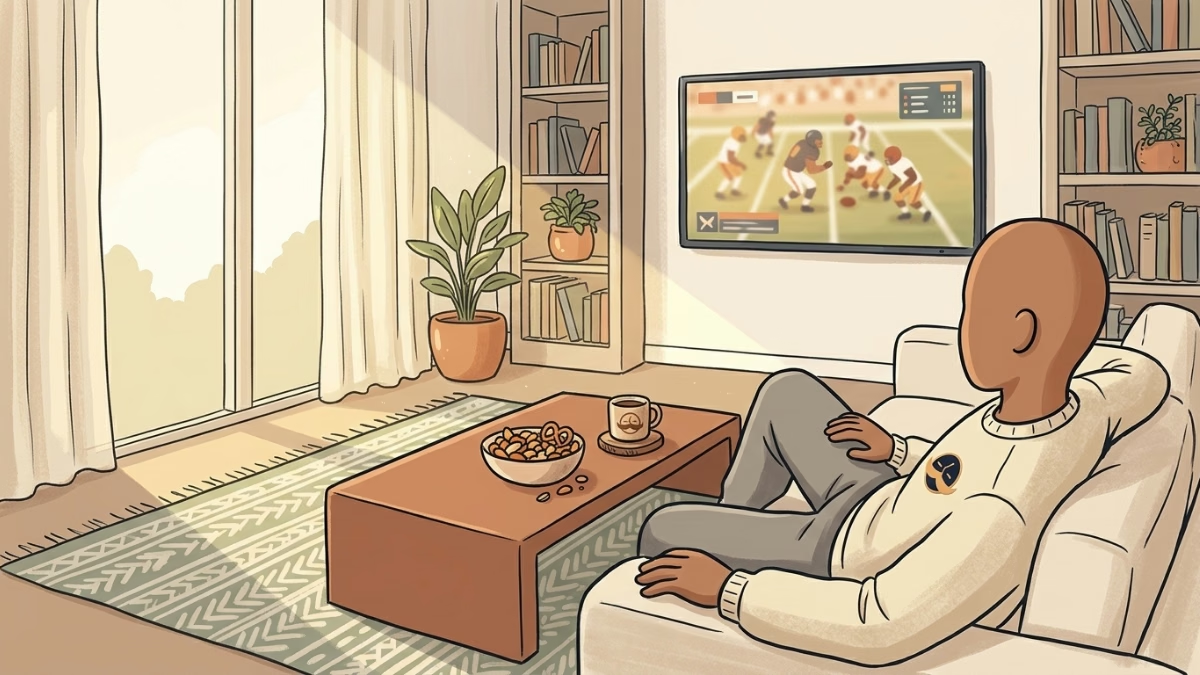
Football is great. Football plus four hours of pregame coverage, a fantasy lineup refresh, two score-alert spirals, and a RedZone subscription is how Sunday disappears and you greet Monday slightly dazed and vaguely guilty. You can love the sport without surrendering the whole day. It just requires a little intentionality, which sounds boring, but stick with me.
The short version: pick your game, set a start and end time, silence the apps, and let everything else be background. That’s it. The rest of this is just how to actually do that when the NFL is actively trying to prevent you. That’s the whole game of learning how to balance hobbies and life, honestly. Pick the thing, enjoy the thing, then stop doing the thing.
Key Takeaways
- Treating football as a defined time block rather than an open-ended vibe is the core fix for a day that keeps slipping away.
- The real culprit is usually content creep, fantasy updates, highlight apps, and score notifications, not the game itself.
- Choosing one intentional game window per Sunday is the practical version of “enough football.”
- Building buffer time between activities keeps a single game from absorbing the entire afternoon.
- Defining what “enough football” means to you in advance is what separates a hobby from a second part-time job.
The Real Problem Isn’t Football
Nobody sits down to waste a Sunday. What actually happens is death by a thousand notifications. Fantasy lineup alert at 10 a.m. A score update at noon. A “your player is INJURED” push at 12:47 that sends you into a five-tab research spiral (this is a real thing that has happened to me). Then the afternoon game bleeds into the evening game, and suddenly you’re watching a team you don’t care about in a timezone you’ve never visited.
The game is not the problem.
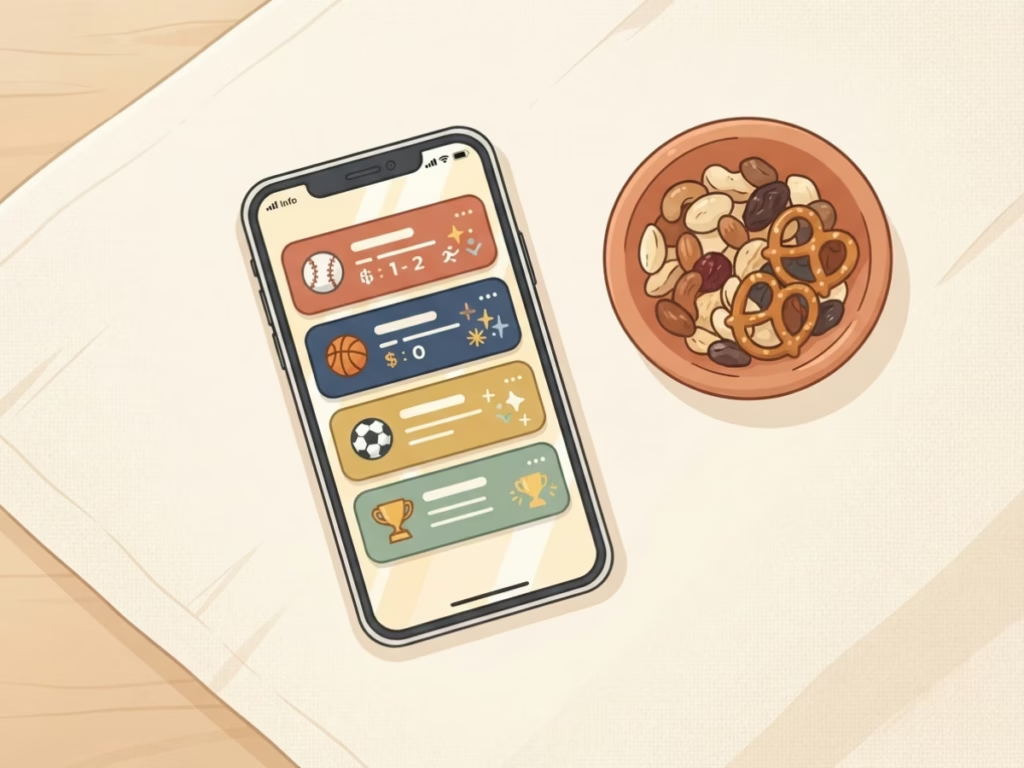
The content creep around the game is the problem. Apps, social media, highlight reels, Twitter/X takes, and fantasy dashboards are all engineered to keep you inside them longer than you planned. That’s not a criticism, it’s just useful to see the pattern clearly before it eats your Sunday.
The One-Game Rule
Here’s the framework. Before the season starts (or right now, honestly), decide what “enough football” looks like for you. Not what the NFL schedule offers. Not what your fantasy app suggests. What YOU actually want.
For a lot of people, that’s one game. Watch it fully, enjoy it genuinely, then close the laptop. That’s a complete Sunday football experience.
You don’t need to consume every game plus every recap to be a real fan. Finishing last doesn’t make you less invested, either, knowing where your floor is actually lets you enjoy the ceiling more.
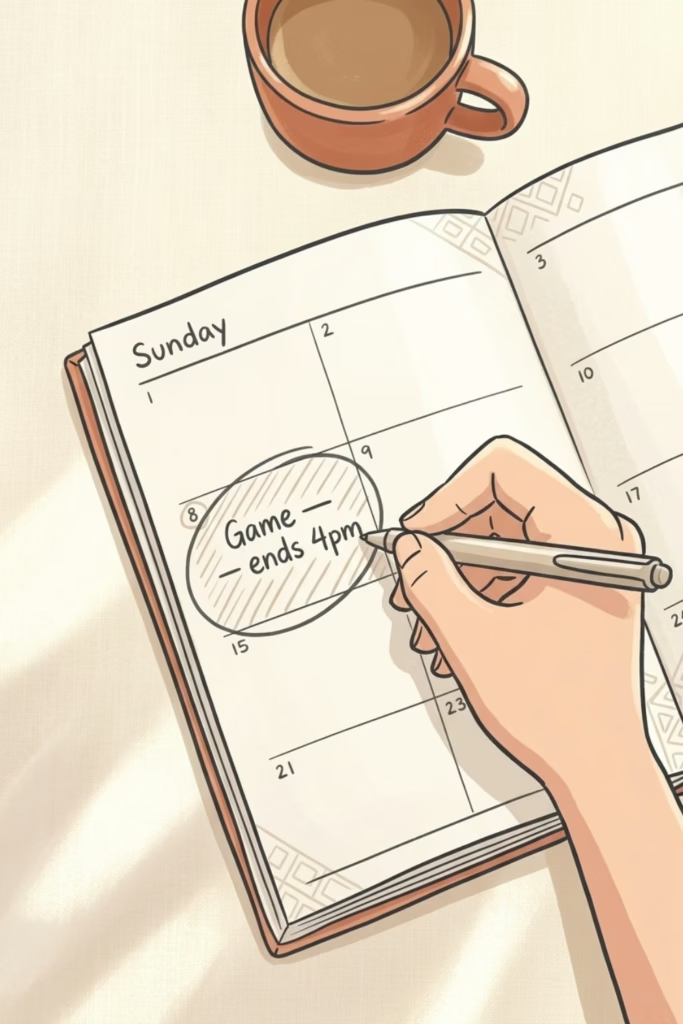
Practically: pick your game the night before. Put a hard end time on it. If the game runs long, you can choose to stay. But you chose, consciously, instead of just… staying because it was on.
Build a Buffer, Not a Block (This Is How You Balance Hobbies and Life)
Weekend hobby time blocking sounds like corporate productivity theater, but for sports fandom time management it’s actually just: put the game on the calendar, put an end time next to it, done.
One underrated scheduling move: don’t schedule anything immediately after the game. Build 30 minutes of buffer, go for a walk, make something to eat, exist briefly without a screen.
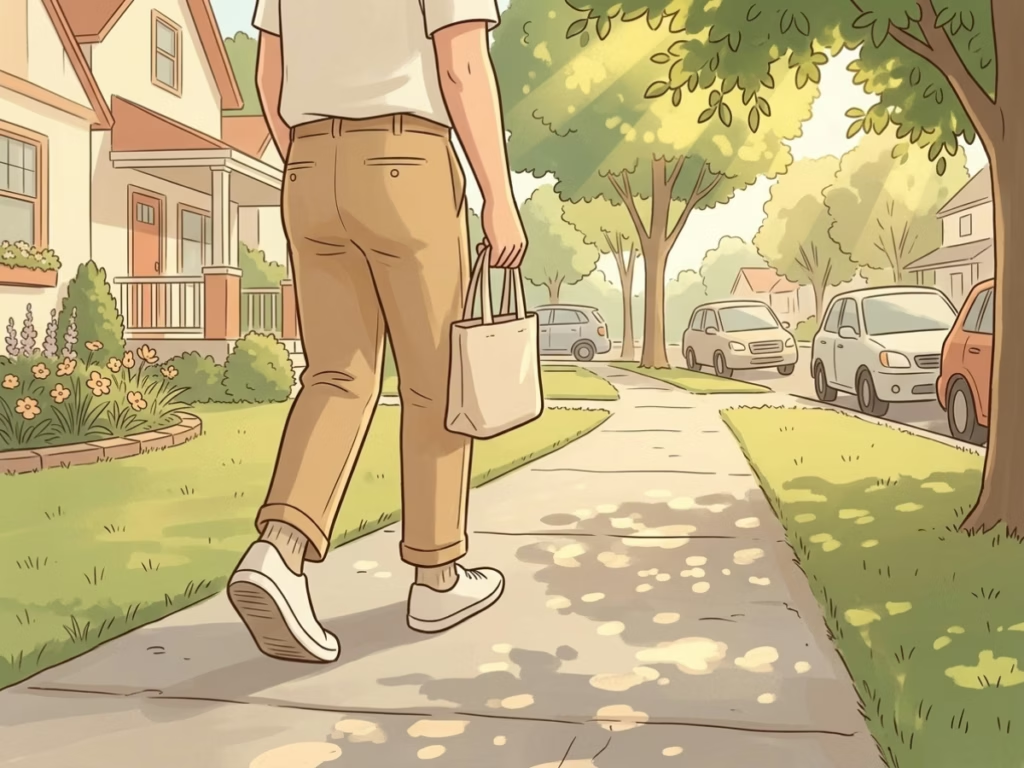
This sounds minor and is weirdly effective. It breaks the inertia that turns the afternoon game into “I may as well watch the night game too” (the sentence responsible for more lost Sundays than any other).
Anthony Bourdain had a version of this philosophy: show up fully, be present for the thing, then leave. Football works the same way. You’re allowed to be a fan who watches one game and then does something else. That’s not a failure of fandom. That’s just knowing what you actually came for.
Frequently Asked Questions
How do I balance watching football with other weekend responsibilities?
Treat football like any other scheduled activity, give it a defined time slot with a real end time, not just “whenever it’s over.” Building even a short buffer between the game and your next activity helps prevent one thing from bleeding into everything else. The goal is a Sunday that includes football, not a Sunday that is football.
Is fantasy football making it harder to just casually watch games?
Almost certainly, yes. Fantasy football turns every game into relevant content because your lineup is always somewhere on the field. If fantasy is making Sundays feel like work, consider whether the format you’re playing (season-long vs. daily, one league vs. four) still matches what you actually want from the hobby.
How much football watching is too much?
There’s no universal number, but a useful gut-check is this: does football feel like a thing you’re enjoying, or a thing you’re just inside? If you’re refreshing score apps between plays and can’t tell what you actually just watched, that’s the creep. Define your enough before Sunday, not during it.
Can I enjoy football season without watching every game?
Yes, fully and without guilt. Watching every game is not a requirement for caring about the sport. Pick the matchups that actually interest you, follow the rest through highlights or a box score, and call it a day. The 2025 L.E.K. sports survey notes younger audiences are actively reshaping how and where they consume sports, there’s no single right way to be a fan.
What if my friends or family watch all day and I feel left out?
You can show up for a game and leave after it. Seriously. “I’m heading out after the early game” is a complete sentence that requires no further justification. Your friends will survive and will still invite you to the next one.
Here’s the action for today: open your calendar and block exactly one game for this coming Sunday. Write down a realistic end time next to it. That’s the whole thing. You’re not swearing off football, you’re deciding what football actually looks like for you, which is how you balance hobbies and life without resenting either one.
Get The Enough List — free.
Ten minutes, five areas. A short guide for figuring out what enough looks like in money, health, work, people, and time — before you go sprinting at someone else's finish line. Yours when you subscribe.