
If your phone dies in a waiting room and your first instinct is mild panic, that’s worth sitting with for a second.
Most of us aren’t busy because we’re crushing it. We’re busy because being still feels genuinely uncomfortable, and filling every gap is easier than asking why. Learning how to be comfortable with doing nothing isn’t about becoming a monk who stares at walls. It’s about recognizing that compulsive productivity is sometimes just avoidance wearing a very respectable disguise.
Key Takeaways
- Doing nothing is a learnable skill, not a character flaw, the discomfort is real but trainable.
- The Guardian recommends starting with just two minutes of sitting still for readers who find unstructured time anxious-making.
- Psychology Today notes that ‘doing nothing’ doesn’t require total inactivity, walking, reading, or sitting by water all count as restorative rest.
- Scheduling rest like a real appointment, not as a reward for finishing everything else, is the key habit shift.
- Alternating boring and engaging tasks can prevent boredom from dragging down your overall productivity, per APA Monitor research.
Why Stillness Feels Like a Threat
The problem isn’t boredom. It’s what boredom implies. When everything goes quiet, your brain serves up the full inbox: the stuff you’re avoiding, the goals you’re not chasing, the question of whether you’re doing enough. Busy-ness, ironically, is the easiest way to never have to answer that.

Psychology Today points out that scheduling rest like any other important meeting, rather than waiting until you’ve “earned” it, is one of the core shifts. The idea that rest is a reward for finishing everything else is the trap. Everything else never finishes. You know this.
Two Minutes Is Enough to Start
Here’s the part nobody puts in the headline: doing nothing is hard and uncomfortable, and that’s completely fine. The Guardian recommends starting with just two minutes of sitting still for people who get anxious with longer stretches of unstructured time. Two minutes. That’s barely enough time to regret opening a political comment section.
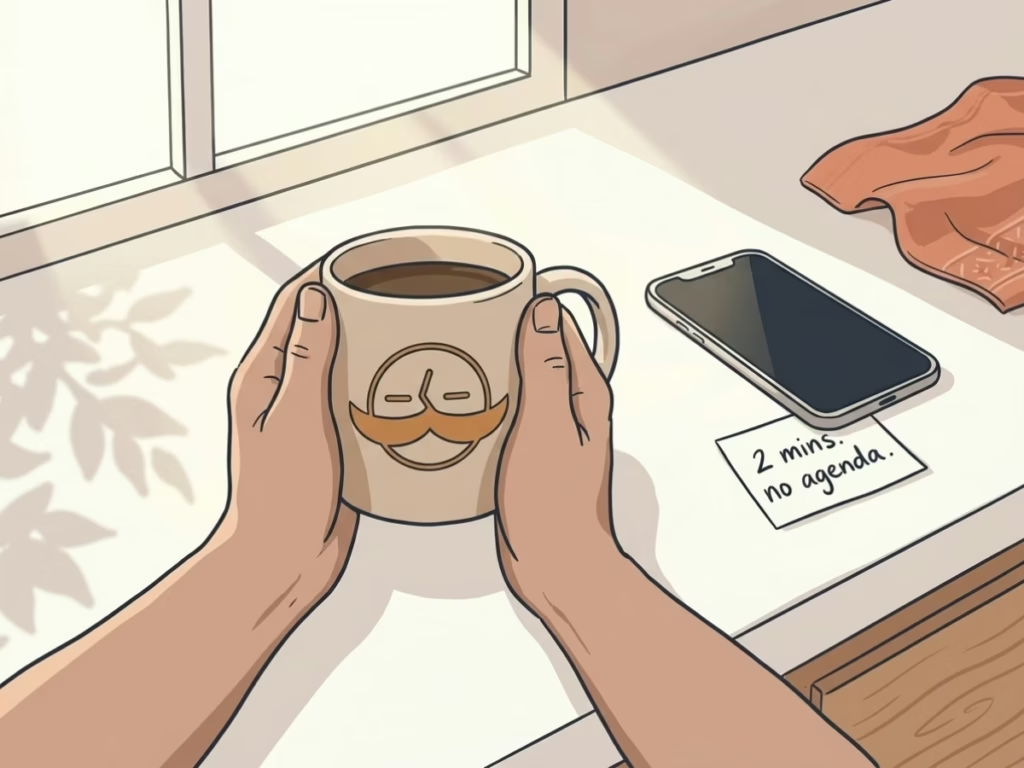
The goal is microdoses: a phone-free moment in a checkout line, sitting with your coffee before you open anything, 20 minutes in the evening with no agenda. You build tolerance the same way you build any other tolerance, small, repeated exposure until it stops feeling like you’re doing something wrong.
And before you write off anything short of total inactivity as “cheating”, Psychology Today also notes that walking, listening to music, reading, or sitting near water all count as genuine restorative rest. You don’t have to stare at the ceiling. (Results may vary on the ceiling staring anyway.)
Doing Nothing Is Not the Opposite of Progress
If you’re the kind of person who feels guilty the moment you stop moving, this is the reframe: rest is not a detour from the plan. It’s maintenance for the person doing the plan. APA Monitor research even shows that alternating boring and engaging tasks can prevent boredom from dragging down your overall output, which means the strategic pause isn’t slacking, it’s actually just sensible.

You can be genuinely driven and know when to stop. Those aren’t opposites. They’re the same skill, applied at different moments. If that framing helps, there’s more along those lines on the good enough day.
Frequently Asked Questions
Why is doing nothing so uncomfortable?
Stillness forces you to sit with your own thoughts without any distraction buffering them, and for most people, that backlog is genuinely uncomfortable. It’s not a flaw; it’s a tolerance you haven’t built yet. The Guardian describes it plainly: doing nothing can feel “hard and uncomfortable,” especially at first. That’s normal, and it does get easier.
Does “doing nothing” mean I have to sit completely still?
No, and this is where a lot of people get stuck. Psychology Today is clear that walking, listening to music, reading, or sitting by water all qualify as restorative downtime. The point is stepping off the productivity treadmill, not achieving perfect blankness.
How do I stop feeling guilty for resting?
Try scheduling it instead of waiting to earn it. When rest is on the calendar like any other commitment, it stops feeling like you’re stealing time from something more important. The guilt usually comes from treating rest as optional, something you do after the real stuff is done. It never is, so it never gets done.
Where do I actually start?
Two minutes. No phone. Sit somewhere you like. That’s the whole thing. Build from there once two minutes stops feeling like a personal failure.
Tonight, before you reach for anything, the phone, the remote, the next task, just sit for two minutes. No agenda. If it’s uncomfortable, good. That’s the work.
Get The Enough List — free.
Ten minutes, five areas. A short guide for figuring out what enough looks like in money, health, work, people, and time — before you go sprinting at someone else's finish line. Yours when you subscribe.

Thoughts?