
“Good enough” has a PR problem. It sounds like a white flag. It’s not. Choosing good enough deliberately, before you’ve spent three more hours on something that was already done, is one of the smartest moves a person can make. Economist Herbert Simon named it satisficing: you define your criteria upfront, pick the first option that clears the bar, and move on. No white flag. Just an exit ramp from the optimization spiral that most of us don’t realize we’re on until it’s too late.
If you’re trying to figure out how to be happy with good enough, you’re already asking the right question.
Key Takeaways
- Herbert Simon’s concept of satisficing, selecting the first option that meets your criteria rather than endlessly optimizing, is a recognized, effective decision strategy, not a consolation prize.
- A 2024 Berkeley Psychology report found that worrying too much about being happy can make people feel less happy and more depressed.
- A 2024 systematic review of preregistered happiness experiments found stronger evidence for social connection than for many widely recommended self-improvement tactics.
- A 2024 Psychology Today piece recommends making your ‘good enough’ standard personal, process-oriented, and flexible to make success more sustainable.
- “Good enough” is not about lowering standards; it is about setting realistic ones that allow completion and reduce constant self-criticism.
The Science Side (It’s Not Just You Being Tired)
Here’s the part that gets overlooked in every “just try harder” pep talk. A 2024 Berkeley Psychology report found that worrying too much about being happy can actually make people feel less happy and more depressed. The same report says accepting that negative emotions are a normal part of life, not a sign you’re failing at happiness, is what actually protects your mental health. The irony writes itself. The harder you chase contentment, the more you trip over it.

And the self-help industry would prefer you didn’t know this part: a 2024 systematic review of preregistered happiness experiments found surprisingly little support for many widely recommended strategies. What showed stronger evidence? Social connection. Boring, un-monetizable, can’t-sell-it-in-a-course social connection.
So the next time your brain insists you need to optimize more to feel better, it’s lying. Classic brain.
What “Good Enough” Actually Looks Like (And How to Be Happy with It)
Here’s where people get it wrong: they think good enough means low standards. It doesn’t. A 2026 university wellness post puts it cleanly, good enough is about setting realistic standards, allowing yourself to finish things, and cutting the constant self-criticism. That’s a higher bar than “meh, whatever.” It just doesn’t punish you for clearing it.
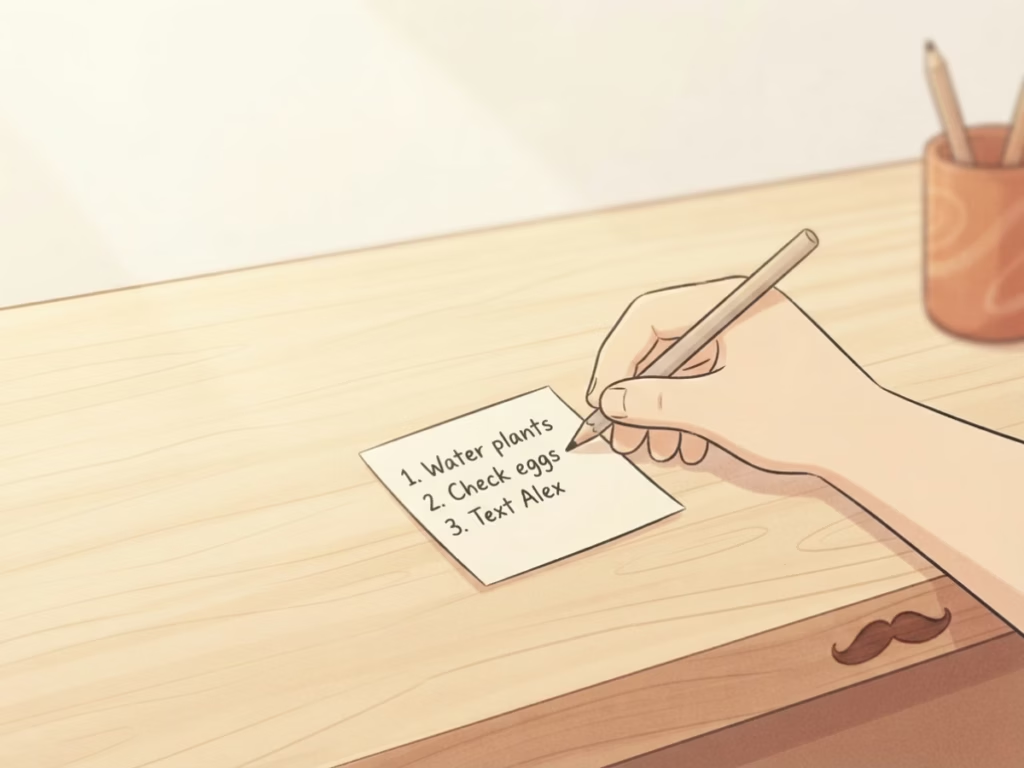
The practical version, per Psychology Today:
- Make it personal. Your good enough isn’t your colleague’s, your dad’s, or some LinkedIn stranger’s. Define it for you. (What does “done well” mean for this thing?)
- Tie it to process, not comparison. Did you do the thing with real effort? Good enough. Did you hit some theoretical ceiling someone else set? Irrelevant.
- Keep it flexible. Good enough for a Tuesday night meal is different from good enough for a job interview. Adjust accordingly. Rigidity is where this all falls apart.
A good enough mindset isn’t about being content with mediocrity. It’s about setting realistic goals, finishing things, and not letting decision fatigue push you into endless loops you never asked for.
If you’ve been wrestling with what “good” even looks like for you, that’s actually the right question to start with, before you decide whether you’ve cleared the bar.
Frequently Asked Questions
What is satisficing and why does it help with happiness?
Satisficing is a decision strategy coined by economist Herbert Simon that means choosing from a limited set of options and picking the first one that meets your criteria, then moving on. It conserves mental energy by ending the search when the bar is cleared rather than when some theoretical perfect option appears. Think of it as installing an exit ramp on a highway that otherwise has no offramp, you stop when you’re where you need to be.
Can accepting “good enough” actually make you happier?
It can, and the research points in that direction. A 2024 Berkeley Psychology report found that over-pursuing happiness is itself a risk factor for feeling worse. Accepting that some days feel bad, rather than treating every negative emotion as a problem to solve, is part of what protects mental health long-term.
Doesn’t “good enough” mean settling for mediocrity?
No, and this is the most common mix-up. Good enough means setting a realistic, personal standard and actually completing things to that standard, not aiming low. The alternative (endlessly raising the bar) usually just means never finishing anything. Completion has its own compound interest.
What’s the difference between good enough and giving up?
Giving up means abandoning the goal before the bar is cleared. Good enough means defining the bar deliberately and stopping once you’ve cleared it. One is quitting; the other is deciding that two more hours on a presentation that already landed well is a bad trade. Fantasy teams, business plans, workout programs, the line is the same.
How do I figure out what MY good enough looks like?
Start with the behavioral economics framing: what criteria actually matter for this decision? List them, then ask what “meets” each one, not “maxes out.” Once something clears all the criteria, you’re done. Over time, this gets faster and the relief of actually finishing things adds up.
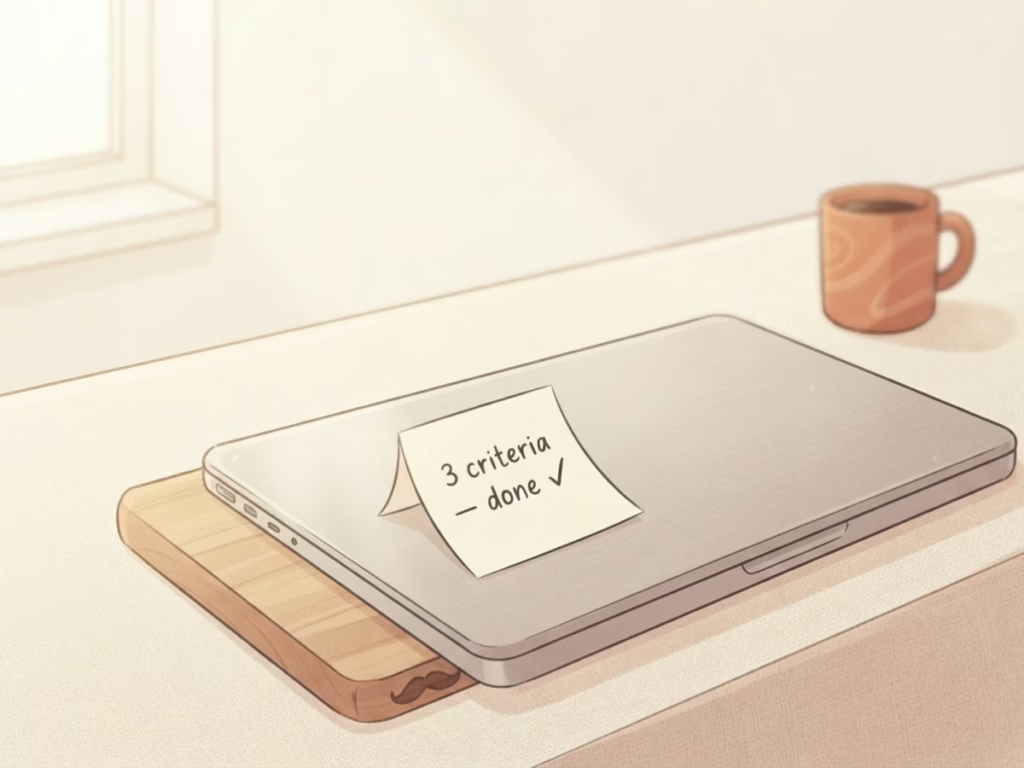
Today’s action: Pick one thing you’ve been tinkering with past its useful life, a plan, a project, a decision you keep re-opening. Write down three criteria it needs to meet. If it already meets them, call it done and close the tab. That’s it. That’s satisficing.
Get The Enough List — free.
Ten minutes, five areas. A short guide for figuring out what enough looks like in money, health, work, people, and time — before you go sprinting at someone else's finish line. Yours when you subscribe.