

If your idea of the good life sounds suspiciously like someone else’s LinkedIn bio, it might be worth five minutes to check whose script you’re actually running off of. That five-minute check is really just how to define your own success, on your terms, before someone else’s version takes root.
That’s not a dig. Most of us absorb a definition of success before we’re old enough to question it: earn more, own more, look busier. The problem isn’t ambition. The problem is chasing a finish line someone else planted. You get there, and the payoff goes to them, not you. The fix isn’t to stop caring about progress. It’s to make sure the progress you’re chasing is actually yours.
Positive psychology actually has a name for what a good life looks like, and money isn’t the headline. The PERMA model breaks flourishing into five components: positive emotions, engagement, meaningful relationships, meaning, and accomplishment. Notice what’s not on that list.
Key Takeaways
- UPenn’s PERMA model defines flourishing as positive emotions, engagement, relationships, meaning, and accomplishment, not income or status (per Positive Psychology).
- Berkeley’s life-crafting method recommends listing your deepest values separately from what you most enjoy doing, then writing goals, obstacles, and a tracking plan around them.
- The most common trap is adopting a borrowed goal, a career, a lifestyle, a milestone, that looks like success from the outside but costs you things you actually care about.
- A five-year plan is the wrong starting point; a ‘what does my ideal ordinary Tuesday look like?’ question gets you closer to your real answer.
- Aligning actions with personal values, not external benchmarks, is what positive psychology links most directly to a genuinely good life.
The One Question That Cuts Through It
Skip the five-year plan for a second. Instead, ask yourself: what does a good ordinary Tuesday look like?
Not a vacation. Not a highlight. Tuesday. Where are you? Who’s around? What are you doing at 2pm, and how does it feel?

This is a version of what Berkeley’s Greater Good in Action calls life crafting, and it’s more useful than it sounds. Their method has you list your deepest values separately from what you most enjoy doing, then write down goals, obstacles, and a plan to track progress. The writing-it-down part isn’t optional. Putting it on paper makes it real in a way that vague intention doesn’t. (I feel I answer this every time I’m in a job interview and the interviewer drills down into why I really left my last company.)
The gut check is simple: does your Tuesday answer match how you’re actually spending your weeks? If it doesn’t, that gap is worth sitting with.
What to Do With the Gap: Define Your Own Success
You don’t need a life overhaul. You need to know which goals are actually yours.
Berkeley’s life-crafting exercise recommends writing values and enjoyments as two separate lists before you touch goals at all. That order matters.
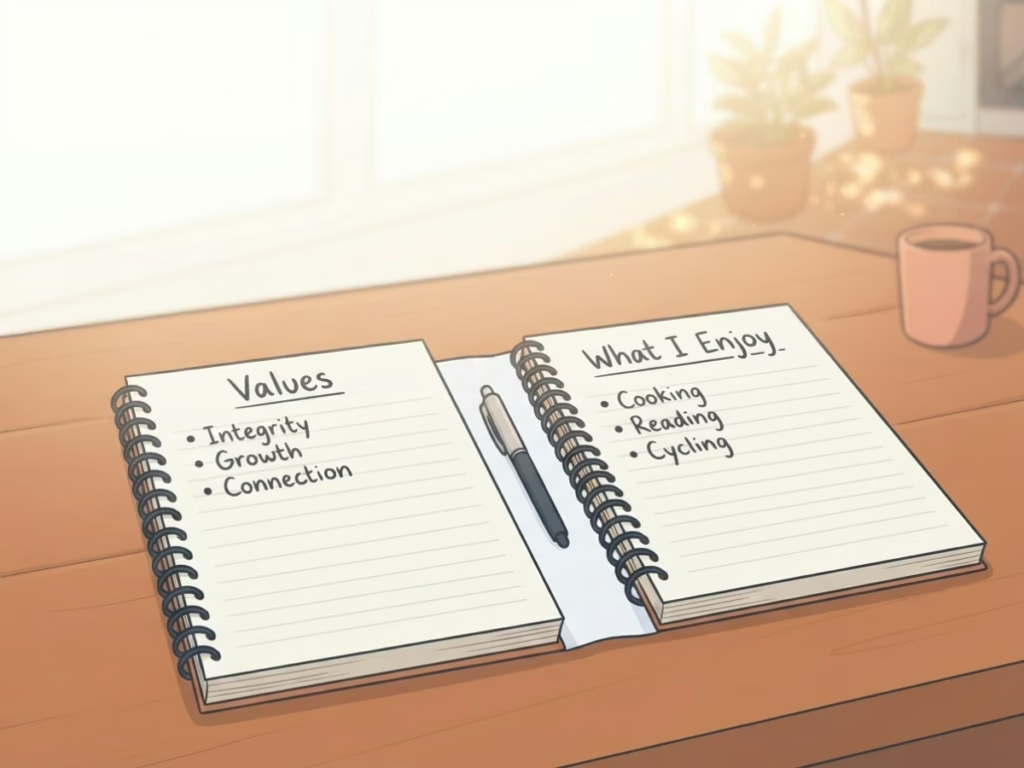
Most people do it backwards, they pick a goal (usually one that sounds impressive at dinner parties) and then try to convince themselves they care about it. Some people call the written result a personal vision statement. The label doesn’t matter much. What matters is that it’s yours and it’s on paper.
If you want a longer framework for figuring out what to keep and what to cut, the life trade deadline post is a good next read. And if you’re worried that not having a burning passion means you’re doing it wrong, you’re probably not.
Frequently Asked Questions
How do I define my own success without just copying what I see online?
Defining your own success starts with values, not goals. Write down three things you’d refuse to trade away, time, health, a certain kind of work, relationships, and only then look at what you’re chasing. If a goal costs you something on that list, it’s probably borrowed, not yours.
What is the PERMA model and how does it relate to a good life?
PERMA stands for positive emotions, engagement, relationships, meaning, and accomplishment. University of Pennsylvania’s Arts & Sciences uses it to define flourishing, and it’s a useful gut check because none of the five components require a specific income level or job title.
What is life crafting?
Life crafting is an exercise developed at Berkeley’s Greater Good in Action that has you write down your core values, what you enjoy most, your goals, the obstacles in the way, and a plan to track progress. The full practice is free and takes about 20 minutes.
Does financial stability belong in a definition of a good life?
Yes, as a foundation, not a scoreboard. Living within your means and avoiding debt that creates constant stress frees up space for the things that actually show up in PERMA. It’s a supporting condition, not the finish line.
Today’s action: Write down your ideal ordinary Tuesday in one paragraph. Be specific about the time, the people, the feeling. Then look at your calendar for this week and count how many hours point toward that picture. The gap between those two things is your actual to-do list.
Get The Enough List — free.
Ten minutes, five areas. A short guide for figuring out what enough looks like in money, health, work, people, and time — before you go sprinting at someone else's finish line. Yours when you subscribe.

[…] so you get to cross it instead of watching it move. We dig into exactly how to do that over at Are You Chasing Someone Else’s Good Life?, worth a read if this is […]