
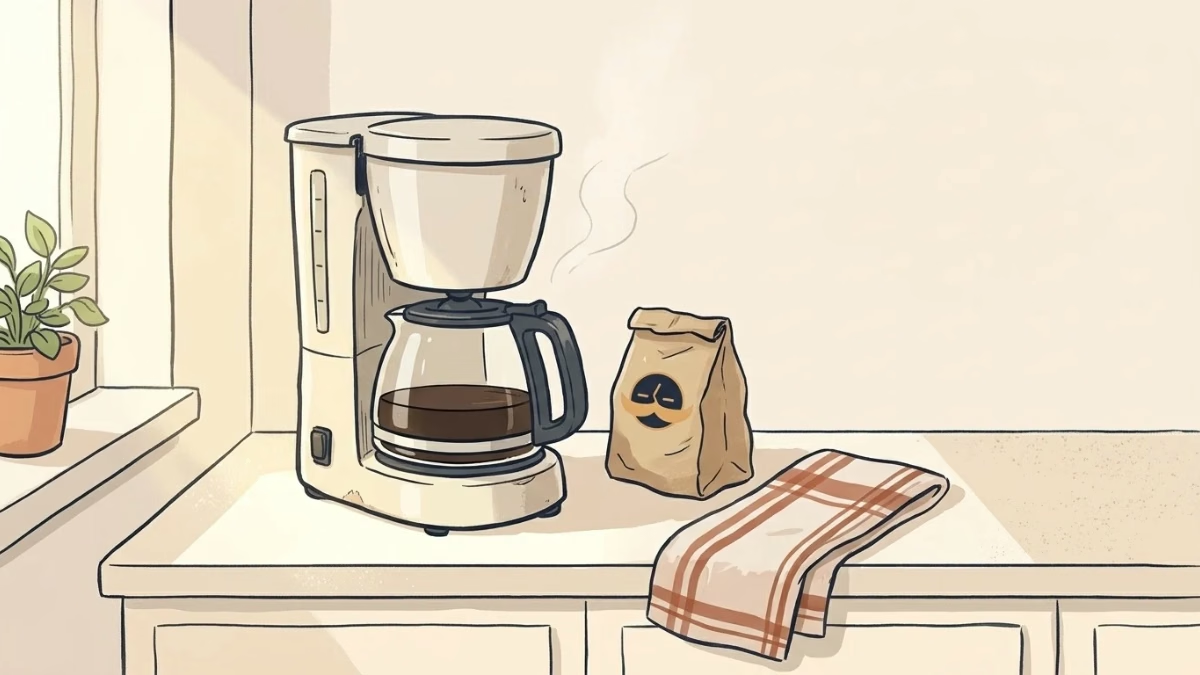
The best home coffee setup is probably already sitting on your counter. Here is how to actually use it.
If you have been wondering how to get into making coffee at home, not just surviving the morning but actually enjoying the ritual, the answer is not a new machine. It is a number: 60 grams of coffee per liter of water. That is your starting line. Everything else is tuning.
Key Takeaways
- 82% of past-day coffee drinkers already prepared coffee at home in 2025, per the National Coffee Association, most people are closer to a great cup than they think.
- A repeatable coffee-to-water ratio of 60 grams per liter of water is a reliable starting point before buying any new equipment.
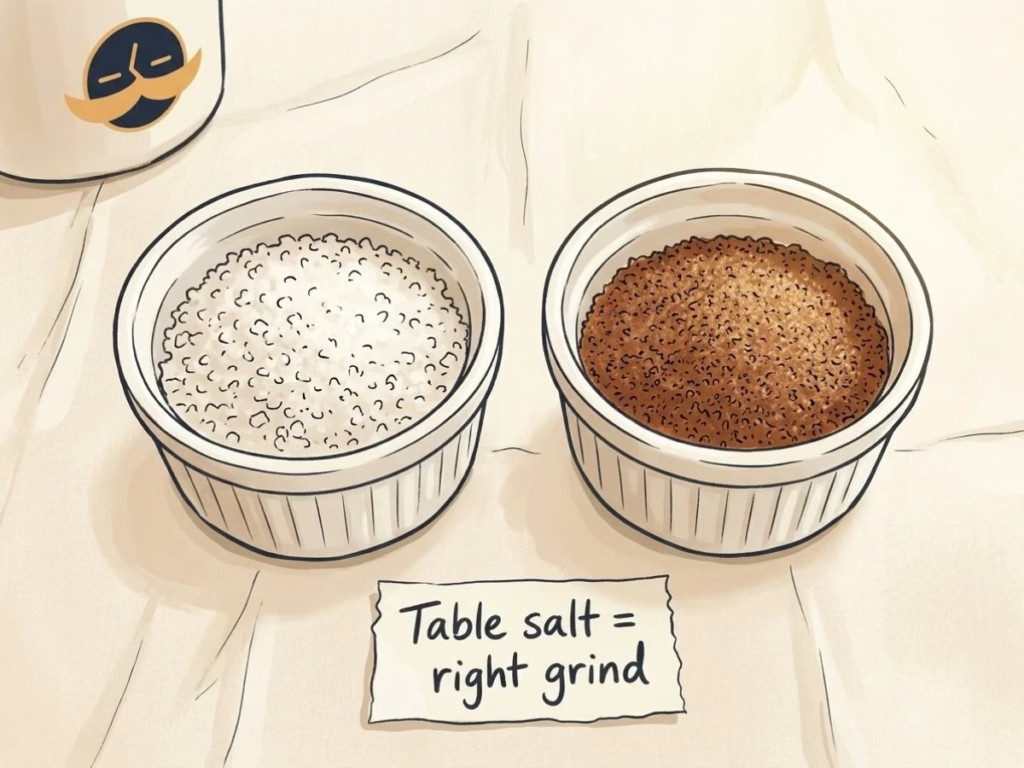
- For drip brewers, grinding beans to a table-salt texture is a concrete, beginner-friendly target.
- Drip brewers were used by 38% of past-day coffee drinkers in 2025, making them the most common preparation method, the humble drip machine is a perfectly defensible home setup.
- Better home coffee is usually a measurement problem, not a gear problem.
You Already Have What You Need to Make Great Coffee at Home
In 2025, 82% of past-day coffee drinkers prepared coffee at home, and the most popular method was not some hand-crafted pour-over situation. It was the plain drip brewer, used by 38% of past-day drinkers. The same brewer 62% of American adults owned in 2025. The one sitting behind the toaster that you wipe down twice a year.
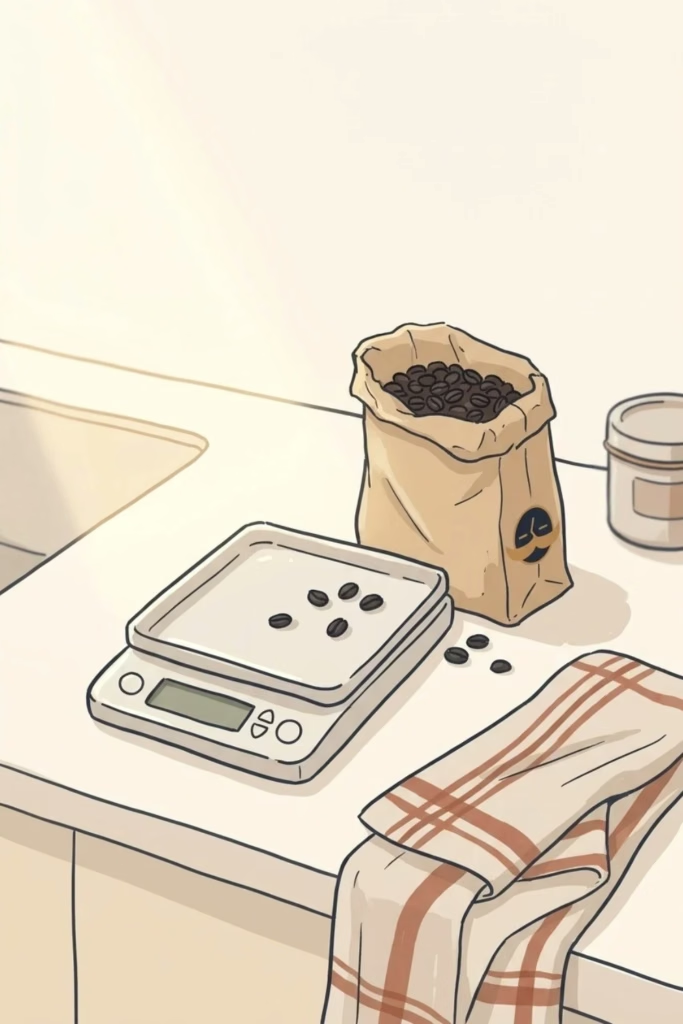
That machine is not the problem. Inconsistency is. The question of how to make better coffee at home almost always comes back to those three things: what you measure, how fresh your beans are and water temperature. All three are easy to fix without spending a cent.
This is a lot like learning to cook. You don’t need a chef’s knife and a carbon-steel pan to make a great meal for yourself. You need a recipe and a little attention. (Related: the simple joy of cooking a good meal for one follows exactly the same logic.)
Two Variables That Actually Matter
The ratio. Start with 60 grams of coffee per liter of water. That is roughly two tablespoons per six-ounce cup if you are measuring by volume, but a cheap kitchen scale is worth the five-minute hassle of finding one. Once you have a baseline, you can go stronger or weaker by feel. You are adjusting, not guessing from scratch every morning.
The grind. If you are buying whole beans (and you should, because pre-ground goes stale fast), grind them to a table-salt consistency for a standard drip brewer. Too fine and the coffee tastes bitter. Too coarse and it tastes like disappointment dissolved in hot water. Table salt. You can actually look at it and compare.
Water temperature matters too: somewhere between 195 and 205°F is the sweet spot. Most drip brewers hit this range automatically, which is, genuinely, the one thing they deserve credit for.
The Gear Upgrade Trap (Skip It For Now)
French presses are in 12% of American households. Pour-over makers in 6%. They are great. They are also completely unnecessary until you have dialed in the basics and actually want to go further. Buying a new brewer before you understand your ratio is like buying a new sketchbook and fancier pencils before you have finished a single drawing. (Ask me how I know. Actually, there is a whole post on that.)
The point is: master the method you have. Gear is a reward for outgrowing the process, not a substitute for it.
Frequently Asked Questions
What is a good coffee-to-water ratio for beginners?
A standard starting point is 60 grams of coffee per liter of water. From there, adjust to taste, stronger or weaker, rather than changing your equipment. Consistency matters more than precision at first.
Do I need a fancy brewer to make good coffee at home?
No. Drip brewers were the most common preparation method in 2025, used by 38% of past-day coffee drinkers. A well-dialed drip machine with good beans and a proper ratio will outperform an expensive brewer run carelessly every time.
How fine should I grind coffee beans for a drip machine?
Aim for a texture similar to table salt. Finer than that tends to over-extract and turn bitter; coarser under-extracts and goes flat. It is a simple visual reference that actually works.
What water temperature should I use for brewing coffee?
Somewhere between 195 and 205°F. Most automatic drip brewers reach this range already, so if you are using one, you can skip worrying about it entirely.
Is cold coffee worth trying at home?
If you are curious, sure. Cold coffee was consumed by 32% of people in the past week as of 2025, and that share has grown five years running. The easiest version at home: brew a strong batch with your regular ratio, let it cool, pour it over ice. No cold-brew contraption required.
Tonight, find whatever brewer you own, grab a bag of whole beans tomorrow morning, and try the 60-grams-per-liter recipe once. Just once. See if it is better than what you are used to. It probably will be, and you will not have spent anything to find out.
Get The Enough List — free.
Ten minutes, five areas. A short guide for figuring out what enough looks like in money, health, work, people, and time — before you go sprinting at someone else's finish line. Yours when you subscribe.

Thoughts?