
The fastest way to overcome perfectionism and start is to make your first attempt intentionally terrible. Not accidentally bad. Deliberately, unapologetically bad. That’s the whole method.
Here’s why it works. Perfectionism isn’t really about standards. It’s about identity. When the work feels like a test of whether you’re smart, talented, or worth taking seriously, your brain treats “starting” and “being judged” as the same event. So it stalls. Avoidance feels safer than a verdict. The longer you wait, the more the thing looms, and the more it looms, the less you want to touch it. Classic perfectionism loop, and you can break it in about ten minutes.
Key Takeaways
- Perfectionism stalls action because the work feels like a judgment of you personally, not just a draft to be revised.
- Labeling your first attempt a ‘draft’, out loud, to yourself, is a concrete script for lowering the emotional barrier to starting.
- Breaking a big task into the smallest possible first step makes the entry point feel manageable rather than overwhelming.
- Treating mistakes as data rather than verdicts is a repeatable habit that turns every failed attempt into usable feedback.
- Self-compassion, talking to yourself the way you’d talk to a friend, is one of the most consistently recommended tools for breaking the perfectionism loop.
Give Yourself Permission to Start Badly
Boston University Questrom recommends a simple script: tell yourself “this is a draft, and I can improve it over time” before you start. That’s it. Three seconds of inner monologue that reclassifies the whole task from performance to experiment.
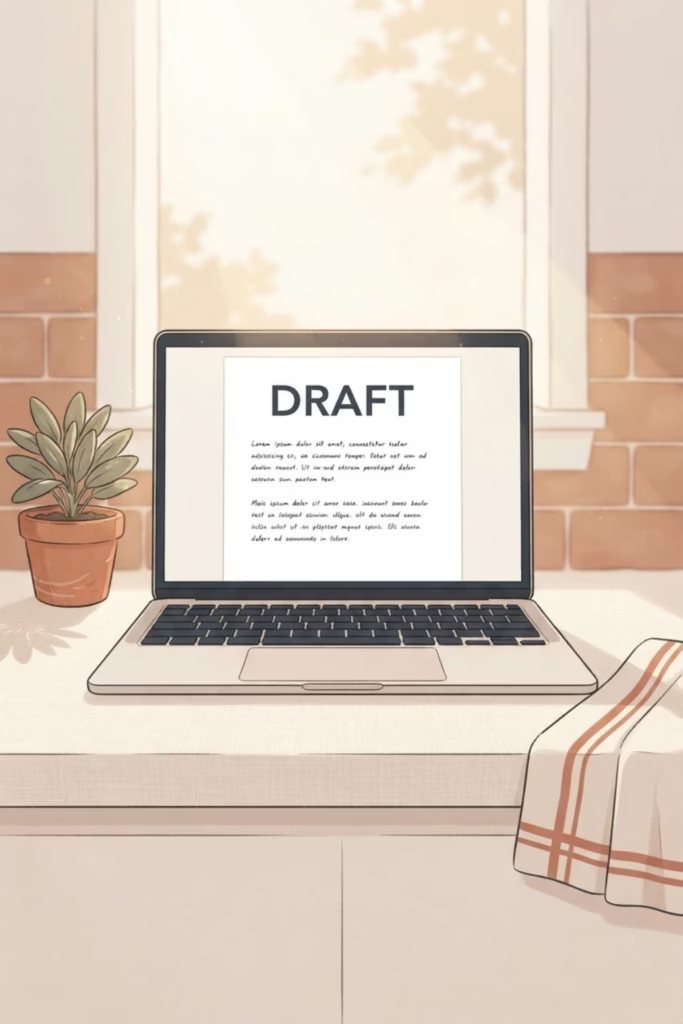
The practical version: open a document, a notes app, a sketchbook, whatever, and write “DRAFT” at the top. Now make it private. Close the door, turn off the screen share, don’t post it anywhere. The moment you remove an audience, the stakes drop and your hands start moving.
This is also why your first loaf of bread is supposed to suck. Not because you’re bad at bread. Because the first attempt is where you collect information, not where you win awards.
Break It Down Until It’s Embarrassingly Small
One reason big tasks stay undone: the first step is still too big. “Write the report” is not a first step. “Type one sentence that describes what the report is about” is a first step. Try breaking tasks into smaller pieces until the entry point feels almost too easy, because almost-too-easy is the only size that actually gets done.
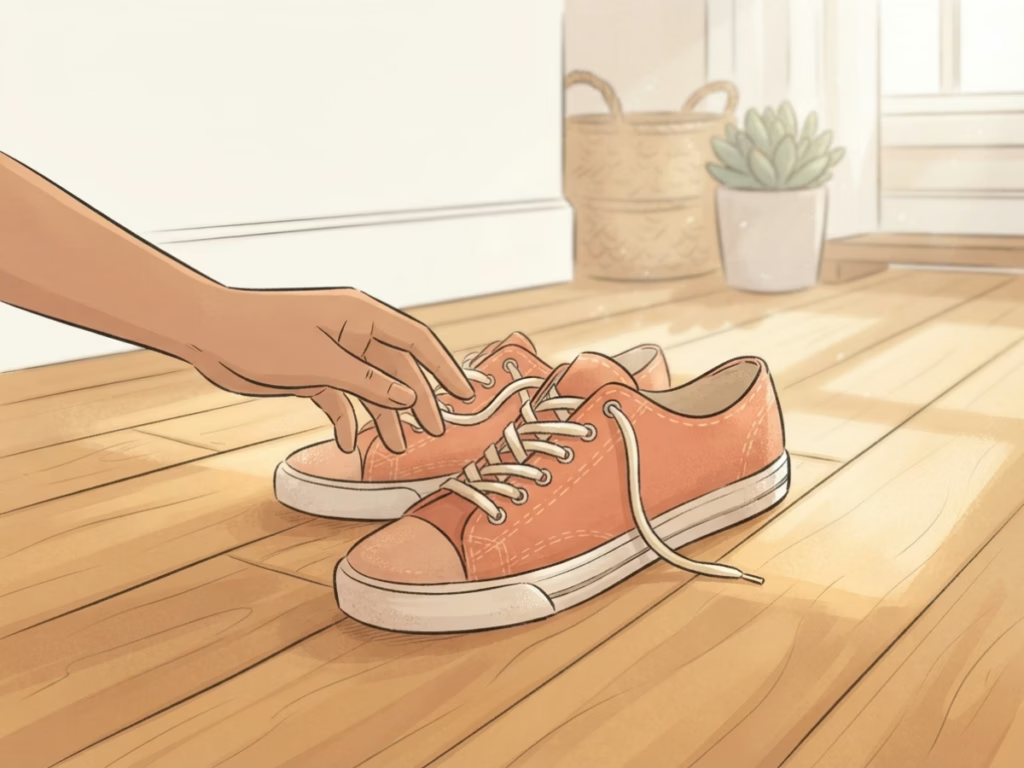
Pick the smallest possible version of starting. Not “go for a run.” Put your shoes on. Not “learn guitar.” Hold the guitar for five minutes. (I once told myself I could learn to play keyboard since I’m a pretty fast typer. I was wrong.)
Talk to Yourself Like a Normal Human
When the first draft is bad, and it will be bad, that’s the whole point, the perfectionism loop tries to restart with self-criticism. Short-circuit it. Self-compassion is one of the most consistently recommended strategies for breaking perfectionism habits: talk to yourself the way you’d talk to a friend who just showed you their rough draft. You wouldn’t tell a friend their first attempt is proof they should quit. Don’t tell yourself that either.
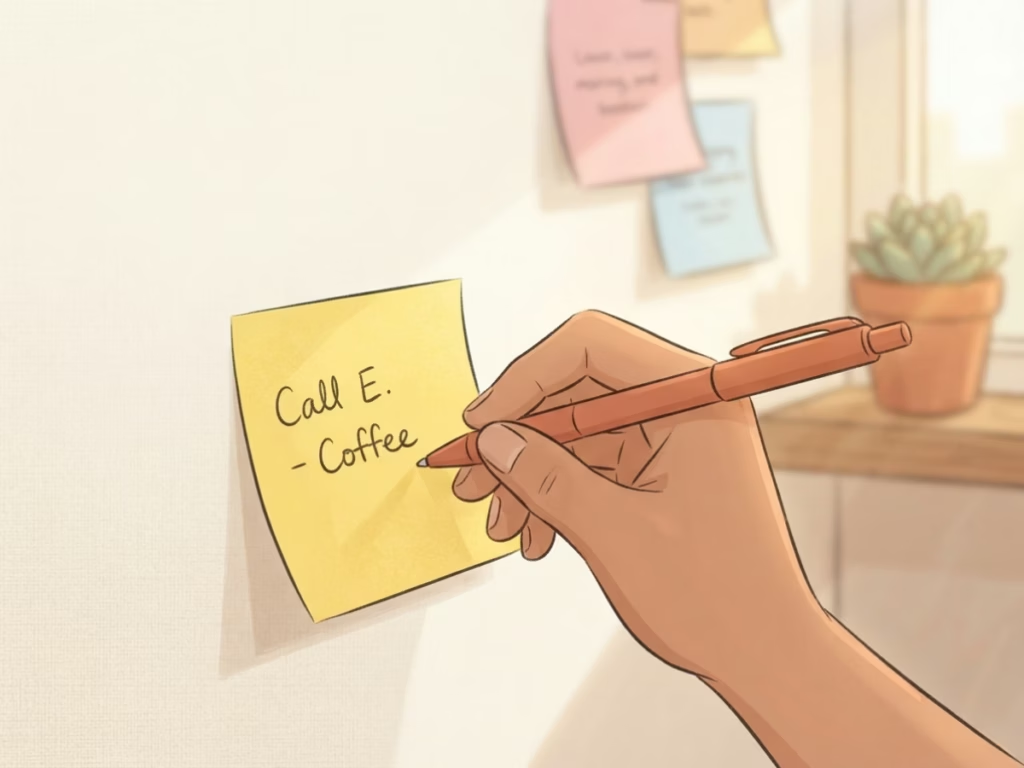
Mistakes are data. Analyze them, don’t repeat them, move on. That’s the whole feedback loop.
Frequently Asked Questions
Why does perfectionism cause procrastination?
Perfectionism links the quality of your work to your sense of self-worth, so starting feels like opening yourself up to a verdict. Avoidance temporarily relieves that anxiety, which reinforces the habit of not starting. The longer you wait, the bigger the task feels, and the cycle continues.
What does “do it badly” actually mean in practice?
It means making your first attempt explicitly low-stakes: label it a draft, keep it private, and give yourself permission to produce something rough. Boston University Questrom recommends the literal script “this is a draft, and I can improve it over time” as a way to detach the work from your identity before you begin.
How do I stop comparing my draft to someone else’s finished product?
You’re comparing your chapter one to their chapter twenty. Mindfulness techniques, just noticing when your attention drifts to comparison and pulling it back to the work in front of you, are a widely recommended way to interrupt that pattern. The work in front of you is the only one you can actually improve right now.
What if my perfectionism feels bigger than a productivity problem?
Sometimes it is. If perfectionism is tied to significant anxiety or is affecting your daily life in ways that feel hard to manage alone, talking to a professional is a reasonable and useful next step, not a last resort.
How do I build momentum after the first bad attempt?
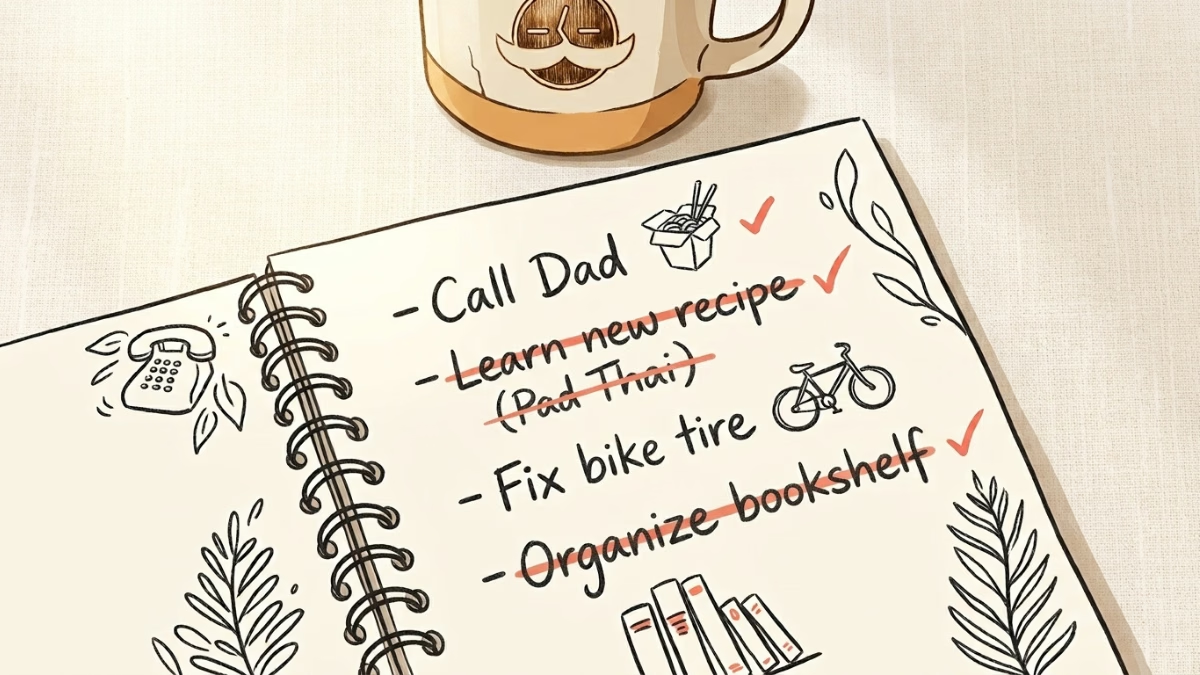
Progress over perfection is the operating principle here. Done is better than perfect, and a rough draft beats a blank page every time. Use the anti-todo list approach: instead of a growing list of everything left to do, write down just the one next smallest action. Finishing that one thing is a win. Stack enough small wins and you’ve got momentum without ever needing the whole thing to be perfect.
Today’s action: Pick the thing you’ve been putting off. Open it, write “DRAFT” at the top, and spend ten minutes making the worst possible version of it. Don’t share it. Don’t polish it. Just make something exist that didn’t exist before. You can fix a bad draft. You can’t fix a blank page.
Get The Enough List — free.
Ten minutes, five areas. A short guide for figuring out what enough looks like in money, health, work, people, and time — before you go sprinting at someone else's finish line. Yours when you subscribe.
Thoughts?