

You already know you need to rest. You’re just not very good at letting yourself do it without the background guilt track playing on loop. Here’s the short version: rest is not a reward you earn after a perfect day. It is maintenance. And you cannot think your way to feeling okay about it, you have to set it up correctly.
f you’re trying to figure out how to relax without feeling guilty, the answer isn’t a better mindset, it’s a better setup.
Key Takeaways
- Productivity guilt is usually triggered by unfinished work spillover, not laziness. A five-minute shutdown ritual, writing tomorrow’s tasks and closing the laptop, addresses the real cause.
- Even 10 minutes of mindfulness can reduce stress reactivity and improve attention, making brief recovery more realistic than waiting for a perfect free afternoon.
- Rest is not the opposite of getting things done, it is what keeps you capable of getting things done tomorrow.
- A shutdown ritual (writing unfinished tasks, closing the laptop, ending work deliberately) signals to your brain that the workday is genuinely over.
- Defining what “enough” looks like before your day starts makes it easier to stop without guilt. You need a finish line before you can cross it.
Why It’s Hard to Relax Without Feeling Guilty (It’s Not You)
The guilt you feel when you sit down to do nothing is almost never about laziness. It’s about loose ends. Your brain is a very persistent accountant, and if the workday didn’t have a clear closing bell, it keeps the books open. You’re on the couch watching TV and your brain is quietly in the background, cross-referencing the email you didn’t send and the thing you said you’d finish by Friday. Fun.
That’s the real culprit: unfinished work spillover, not some deep character flaw. The fix isn’t to try harder to relax. It’s to give your brain an actual signal that work is done for the day.
A shutdown ritual does exactly that. Before you close the laptop, spend five minutes writing tomorrow’s unfinished tasks in a notebook. Not a mental note, actual paper. Then close the laptop. Say “shutdown complete” out loud if you want (I did this once in my best robot voice, and then I kept doing it because it works (and I find it a little funny)). You’re not ignoring the undone stuff. You’re parking it somewhere your brain can trust, so it stops pinging you about it all evening.
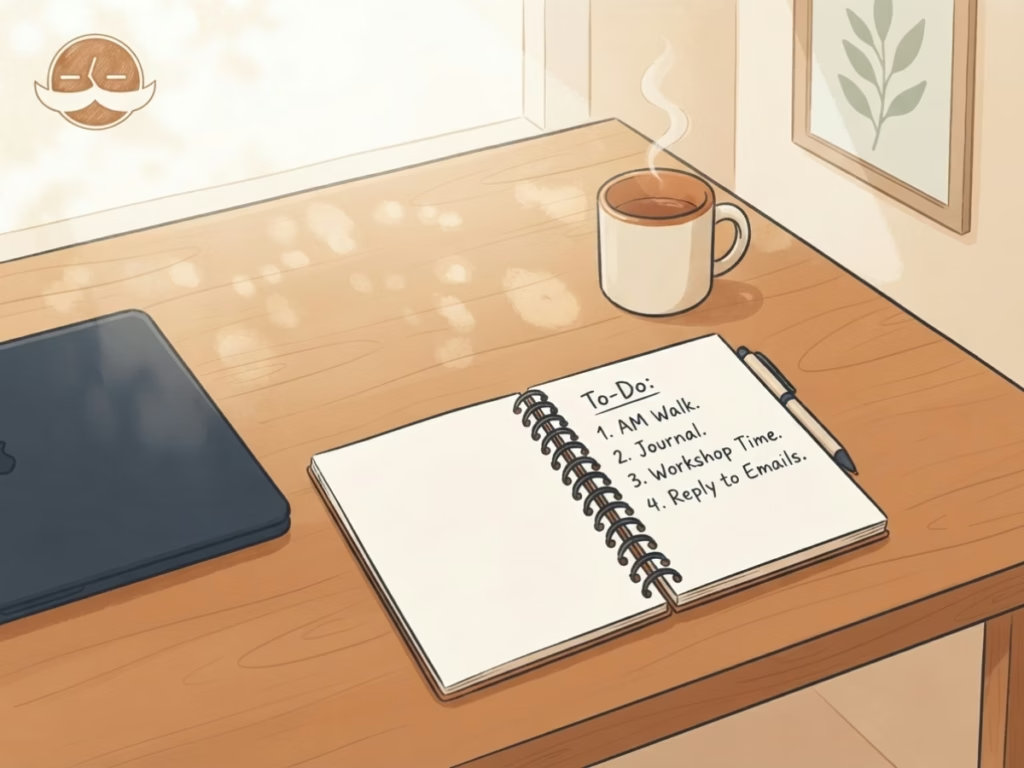
Even 10 minutes of mindfulness can reduce stress reactivity and improve attention, which means you don’t need a perfect, phone-free, candle-lit hour of meditation to get a real recovery benefit. A short reset, done consistently, beats the ambitious self-care plan you’ll do once and abandon.
The Finish Line Problem
Here’s the thing nobody tells you about productivity guilt: it doesn’t go away just because you finished everything. If you haven’t defined what “enough” looks like for a given day, there’s always more you could technically be doing. The to-do list is infinite. Your energy is not.
This is the same reason people burn out chasing goals they never planted a finish line for. You need to decide, in advance, what done looks like today, otherwise you’re just running until you collapse and calling that rest. (It isn’t. Yet, I fall into this trap at least once a quarter.)
Set a cutoff. Not a vague “I’ll stop when I feel ready,” because you never will. A real one: 6 p.m., or after these three things, or when the timer goes off. Then stop. The work will be there tomorrow. You wrote it down, remember?

For more on drawing that line without feeling like you’re quitting, The Quiet No is worth a read.
Frequently Asked Questions
How do I stop feeling guilty for resting, even when I’ve finished my work?
Your brain stays in “open loop” mode if the workday didn’t have a clear end signal. Without a deliberate shutdown, it keeps scanning for unfinished tasks even when you’re technically off the clock. A five-minute shutdown ritual, writing tomorrow’s tasks and physically closing your work, gives your brain the “we’re done” signal it’s looking for.
Is it okay to do absolutely nothing for a while?
Yes, and it’s more useful than it sounds. Rest is not the opposite of productivity; it’s what keeps you capable of being productive tomorrow. Doing nothing on purpose is different from avoiding something, one is recovery, the other is procrastination. If you’ve done your work and set your finish line, lying on the couch is a legitimate next item on the agenda.
How do I unwind after work without guilt?
It varies, but you don’t need a long window. Even 10 minutes of mindfulness can reduce stress reactivity and improve attention. The goal isn’t a perfect two-hour decompression session, it’s a consistent, short reset that actually happens, rather than an ideal one that never does. Mindful rest, even a short, intentional 10-minute reset, is more effective than waiting for a two-hour window that never comes.
What if I feel like I should be doing something productive instead?
That feeling is normal, especially if you’ve spent years treating rest as something you earn rather than something you schedule. Start by reframing: rest is on the schedule, not outside of it. If it helps, tracking small wins can make it easier to feel like you’ve genuinely earned the downtime, because you’ll actually see the evidence.
Can I learn to relax without feeling guilty, or is this just how I’m wired?
Learning how to relax without feeling guilty is a habit, not a personality trait. The guilt usually comes from a specific trigger, open work loops, undefined finish lines, or a general sense that “enough” was never reached. Address those triggers directly and the guilt tends to follow. It takes a few weeks of consistent shutdown rituals before it starts feeling natural, so give it time before you decide it isn’t working.
Tonight, before you do anything else: open a notebook, write down the three things you didn’t finish today, close whatever you’ve been working on, and call it done. That’s the whole move. Rest can start after that, and you’ve actually earned it.
Get The Enough List — free.
Ten minutes, five areas. A short guide for figuring out what enough looks like in money, health, work, people, and time — before you go sprinting at someone else's finish line. Yours when you subscribe.

Thoughts?