
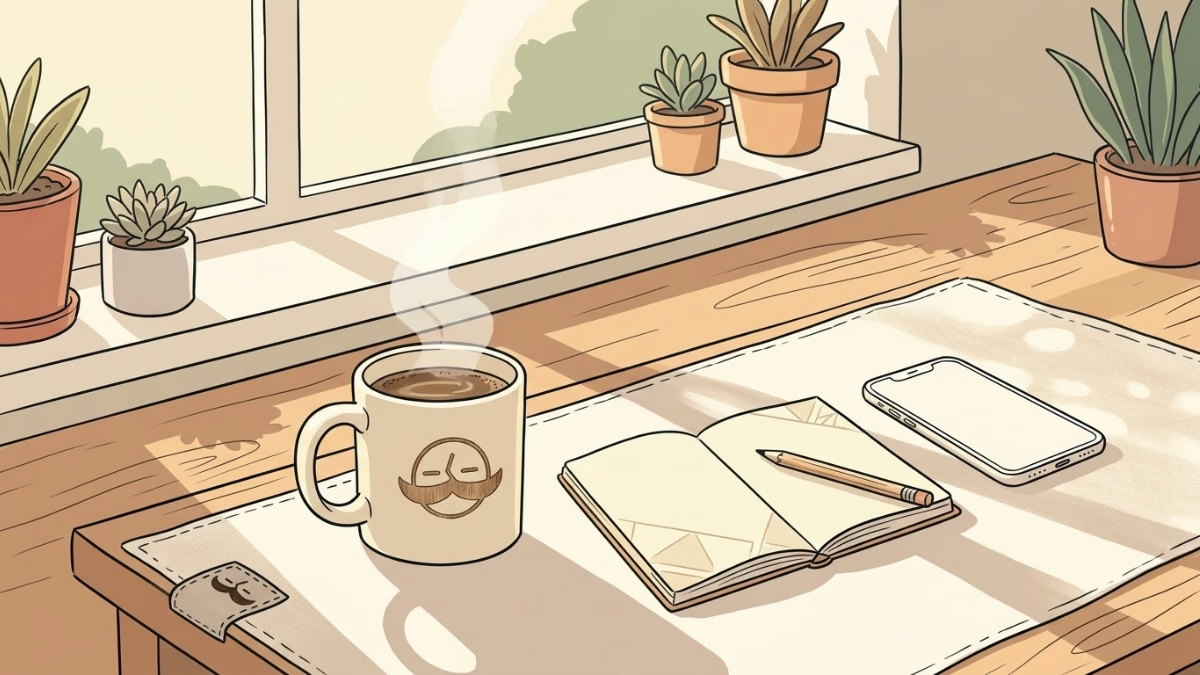
Most mornings, the first thing your brain gets is a firehose. Email, Slack, a calendar that looks like someone played Tetris in it. You’re three notifications deep before you’ve had a sip of coffee, and you’ve already lost.
A soft start fixes that. The whole idea is a brief, low-input window between “you woke up” and “you’re officially on the clock.” No inbox, no group chats, no doomscrolling through the news. Just a few minutes to let your brain come online before the demands start stacking up. If you want to know how to start your workday without stress, the answer is mostly about what you don’t do in the first ten minutes.
Here’s a sequence that fits inside 10 minutes and is grounded in what actually works.
Key Takeaways
- Skipping email for the first 10 minutes of your workday is a first-party recommendation backed by multiple workplace-wellness guides and a hospital wellness source.
- A 2026 morning-routine framework suggests light exposure, water, three slow breaths, a one-sentence intention, and a schedule glance, all inside 5 minutes.
- One to ten minutes of mindfulness before work is enough for most beginners, per Mindful.net, you do not need a 45-minute ritual to feel the difference.
- Choosing one priority instead of a full to-do list is a recurring recommendation across calm-workday guides for reducing decision fatigue before the first real task.
How to Start Your Workday Without Stress: The 10-Minute Sequence
You don’t need a gong. You don’t need a journal the size of a cafeteria tray. According to Mindful.net, one to ten minutes of mindfulness before starting work is enough for most beginners, and it works best when it’s tied to an existing cue, like after your first coffee or before you open your laptop.
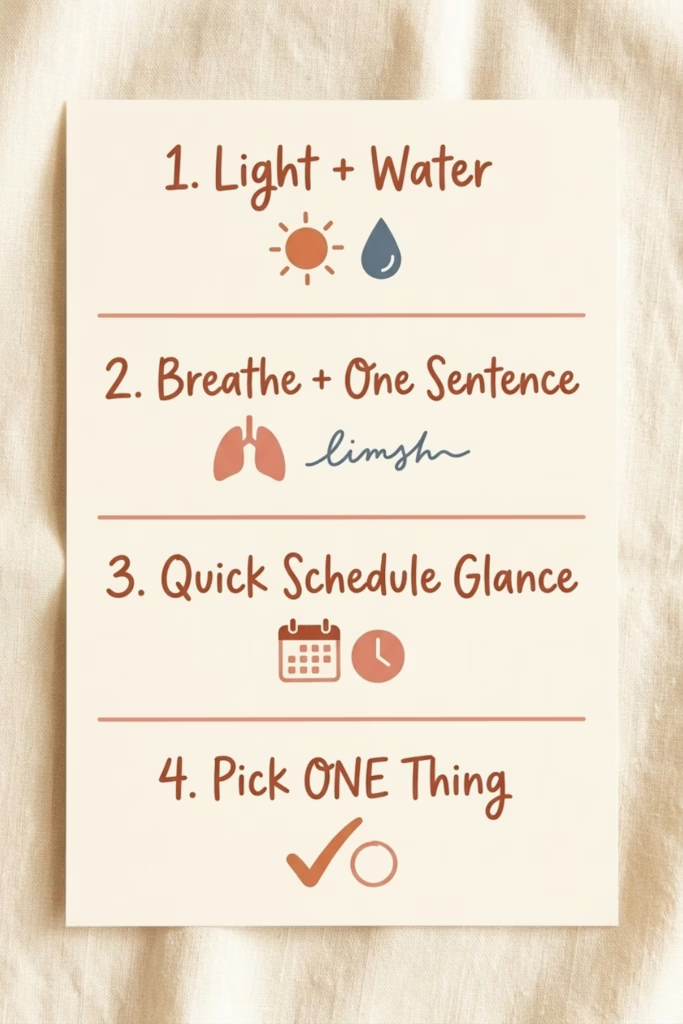
Start here:
Minutes 1-2: Light and water. Step near a window. Drink a glass of water. That’s it. A 2026 morning-routine guide from Routinery recommends natural light and 12-16 oz of water before coffee as a low-effort stress reset. Two minutes. You’ve already done the hard part.
Minutes 3-4: Three slow breaths, then one sentence. Not a paragraph. Not a manifesto. Just one sentence about what today is actually for. “I want to finish the project outline and leave work on time.” Done. The same 2026 framework suggests a one-sentence intention as a better on-ramp than a full planning session, and honestly, a full planning session at 8 a.m. is how you end up reorganizing your desk instead of working.
Minutes 5-6: Glance at the schedule. One pass, not a deep dive. You’re checking for anything that would blindside you, not rewriting the day. Multiple morning-stress guides recommend this quick scan before the first email lands, per Mindful.net.
Minutes 7-10: Pick ONE thing. A 2026 guide on calmer mornings, per The Everygirl) recommends choosing one main priority instead of writing a sprawling to-do list. One thing. Not your top five. When the inbox opens, you already know what actually matters today, and that changes everything.
Why “Delay Input” Beats “Add More Habits”
Most productivity content tries to cram the morning with rituals. Cold plunge, gratitude journal, 6 a.m. run, visualization board, five-year plan. (Good luck to us all.) The soft start goes the other direction: it’s mostly about what you’re NOT doing for 10 minutes, not what you’re adding.
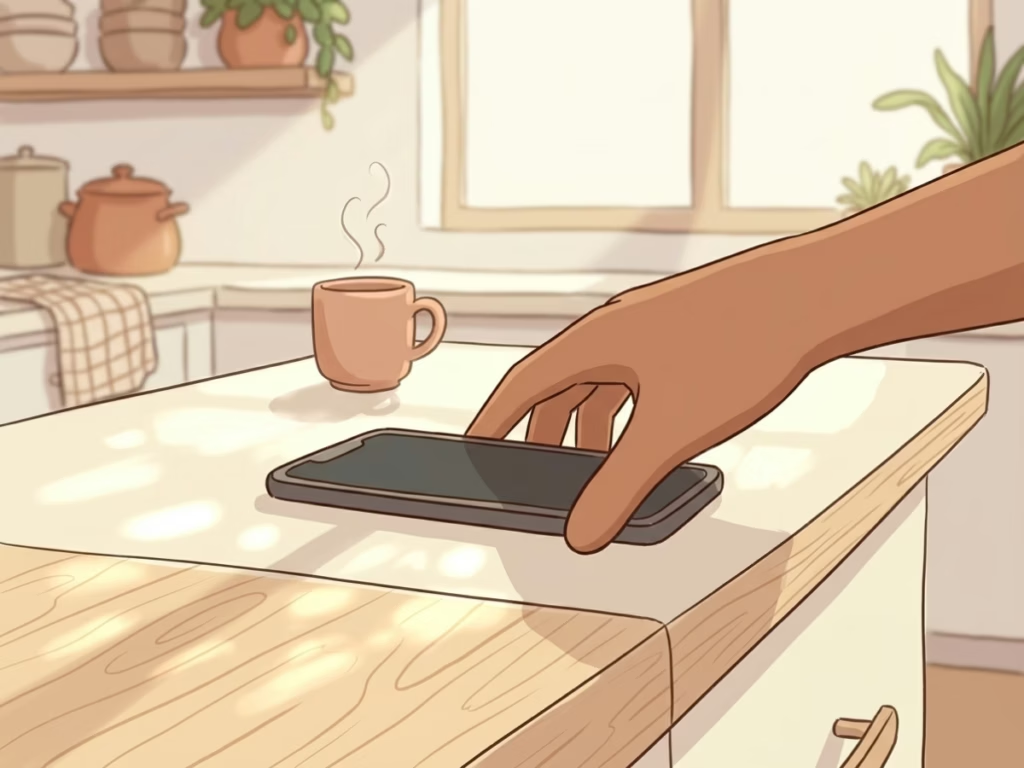
No email. No news. No phone (the hospital wellness team at SJ Medical Center puts this one near the top too). You’re just postponing the input stream long enough to form one clear thought before the world comes in with its own ideas.
If you already have a shutdown ritual at the end of the day, the soft start is the bookend it’s been waiting for. And if you struggle to start any task without your brain locking up, the two-minute rule pairs nicely with the priority you pick in minute seven.
Frequently Asked Questions
How long does a soft start actually need to be?
The short answer on how to start your workday without stress: as little as one minute is a start, but five to ten is the sweet spot for most people.
One to ten minutes is enough for most people, according to Mindful.net. If you can set a five-minute timer and stay off your phone while it runs, you’ve done it. Start there and add time only if you want to.
Do I have to meditate, or can I just sit quietly?
Sitting quietly is fine. Light movement, a slow walk, mindful breathing, or simply looking out a window all count. The point is low-stimulation, not a specific technique.
What if my job requires me to check email immediately?
Then compress the sequence. Pick one thing from the list, even just three slow breaths and one priority sentence, before you open the inbox. A 90-second soft start beats nothing.
Does this replace a full morning routine?
No, and it doesn’t need to. It’s a bridge between wherever your morning left off and the first real task of your workday. Think of it as a brief airlock between home-brain and work-brain.
What if I forget or skip a day?
Start again tomorrow. This isn’t a streak competition. It’s a repeatable habit, and repeatable beats perfect every time.

Tonight, before bed, set a single intention for tomorrow morning: no phone, no email, for the first ten minutes. Set a timer so you don’t even have to think about it. That’s your one thing. Everything else follows.
Get The Enough List — free.
Ten minutes, five areas. A short guide for figuring out what enough looks like in money, health, work, people, and time — before you go sprinting at someone else's finish line. Yours when you subscribe.
Thoughts?