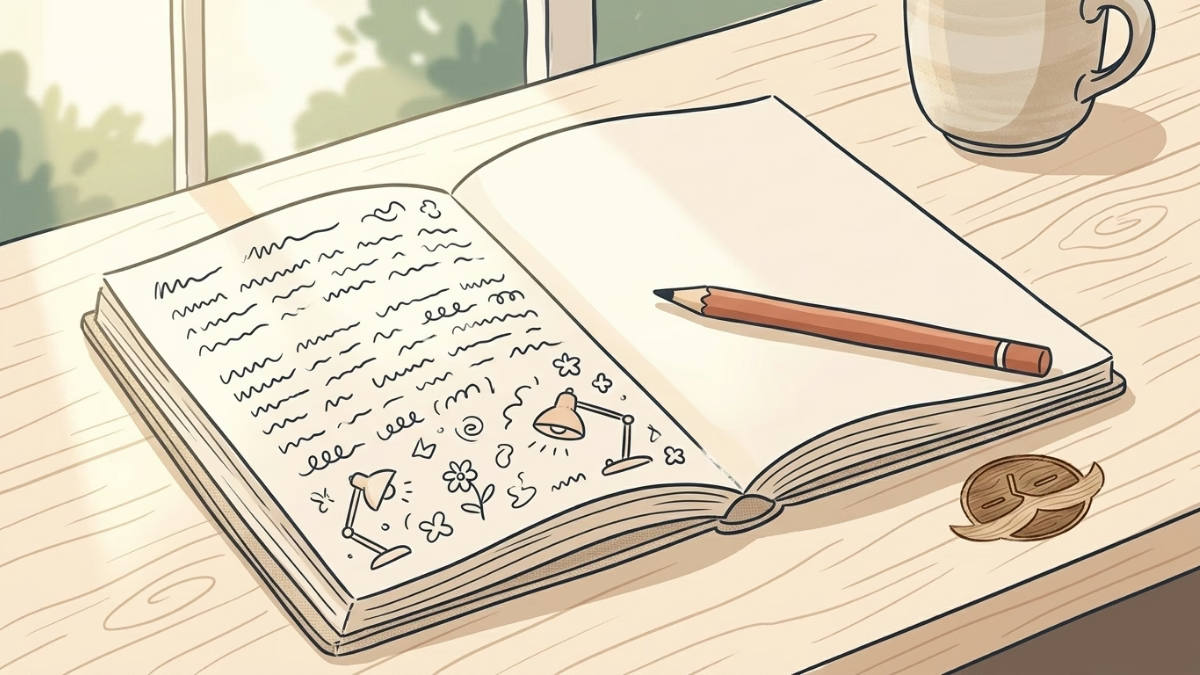
You’re a work in progress. So is everyone else. The difference is that most people are quietly pretending they’re not.
It’s okay to be a work in progress. That’s not a soft landing for people who’ve given up, it’s actually the more effective posture. Perfectionism tends to produce more anxiety and burnout than results. That much tracks with basic lived experience.
Self-compassion after failure, on the other hand, reduces fear and increases the motivation to try again. The research points the same direction the common sense does: beating yourself up is a terrible productivity strategy.
Key Takeaways
- Perfectionism is associated with higher anxiety, depression, and burnout, ‘good enough’ is a wellness strategy, not a cop-out.
- Self-compassion after failure reduces fear of future failure and increases motivation to try again, making it more effective than self-criticism for forward motion.
- Treating yourself with the same kindness you’d offer a friend is the core of self-compassion, per the American Psychological Association.
- Progress is built from small, repeatable steps, not from waiting until you’re ready.
- Comparing your chapter one to someone else’s chapter twenty is a great way to feel terrible for no reason.
Why It’s Okay to Be a Work in Progress (And Why Perfectionism Isn’t Helping)
Here’s the trap. You hold yourself to a standard that keeps moving. You hit a goal, reset the bar immediately, and never actually feel like you’ve arrived. (Spoiler: you won’t. The bar has legs.)
Perfectionism isn’t high standards. It’s the belief that anything less than perfect is failure, and that belief is expensive. It keeps you from starting things, finishing things, and enjoying the things you’ve already done. It’s the reason half-finished projects live in your drafts folder and the other half never got started at all.
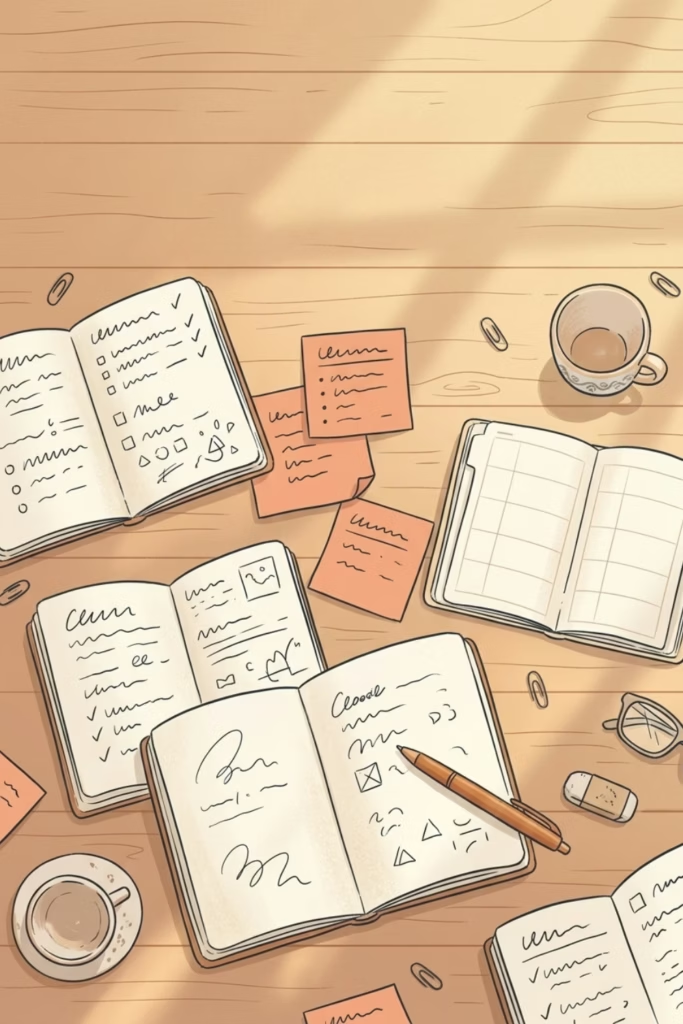
I say this as someone who has a dozen side hustle ideas that never made it out of my drafts.
The antidote isn’t lowering your standards. It’s stopping the comparison loop that makes your chapter one feel like a failure because someone else is on chapter twenty.
What Self-Compassion Actually Does
Self-compassion sounds like a spa day concept, but it’s more useful than that. The American Psychological Association defines it as treating yourself with the same kindness and understanding you’d offer a good friend. That’s it. Not letting yourself off the hook, just not being meaner to yourself than you’d be to someone you care about.
The pattern holds up: people who cut themselves some slack after failure tend to be less afraid of the next attempt, and more willing to make it. Which means being hard on yourself isn’t making you tougher. It’s just making you more afraid.
Progress compounds quietly.
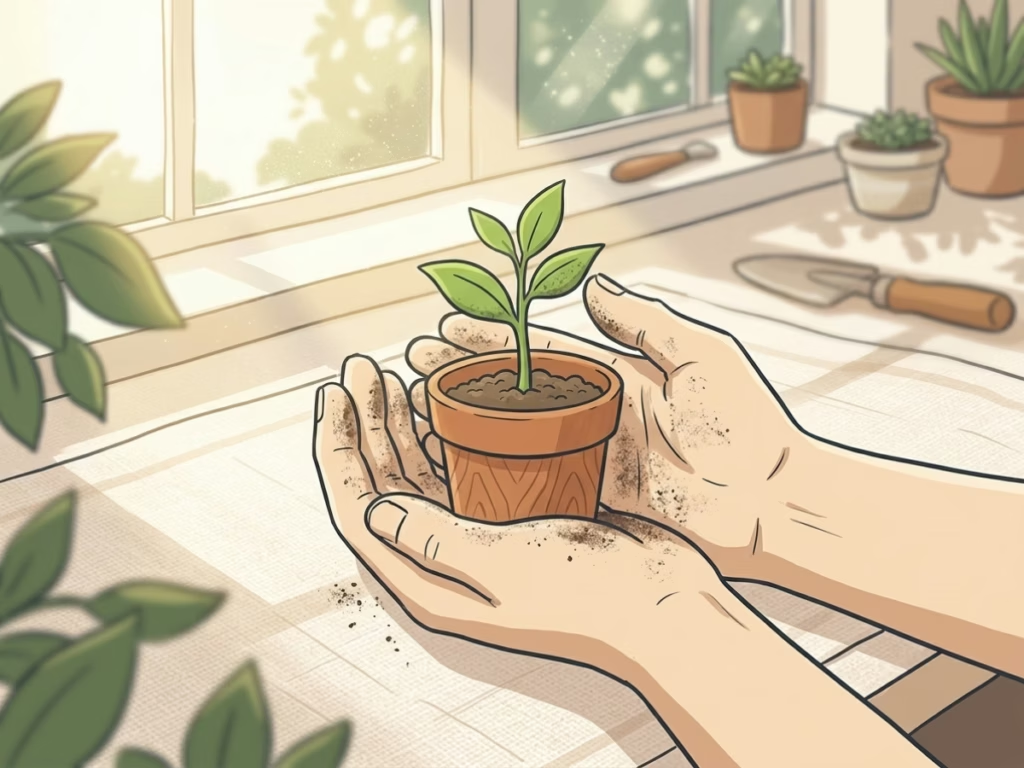
A silent win nobody sees is still a win. The person who shows up imperfectly and consistently will always outrun the person waiting to show up perfectly.
Frequently Asked Questions
Is it really okay to be a work in progress, or is that just an excuse?
It’s genuinely okay. Learning how to be okay with not being perfect starts with separating the process from the goal and embracing imperfection in the journey while keeping the destination in view. Being a work in progress means you’re still moving. Giving up means you’ve stopped. One of those is fine; the other isn’t.
Why does perfectionism cause burnout?
Perfectionism keeps you in a permanent state of “not there yet,” which means the effort never feels like enough. That gap between where you are and where you think you should be is exhausting to maintain indefinitely. Eventually the system crashes.
How do I actually practice self-compassion without it feeling fake?
Start small. When you catch yourself thinking something you wouldn’t say to a friend, notice it. You don’t have to replace it with affirmations, just pause the pile-on. That’s the entry-level version, and it works.
What if I’m genuinely not making progress?
Then something needs to change, and self-compassion is what gives you the mental space to figure out what. Self-criticism mostly just produces paralysis. You can’t problem-solve clearly when you’re in the middle of a shame spiral.
The one thing you can do today: write down one thing you’ve improved at in the last six months, something real, even if it’s small. Not where you want to be. Where you actually are compared to where you were. That’s the only comparison worth making.
Get The Enough List — free.
Ten minutes, five areas. A short guide for figuring out what enough looks like in money, health, work, people, and time — before you go sprinting at someone else's finish line. Yours when you subscribe.