
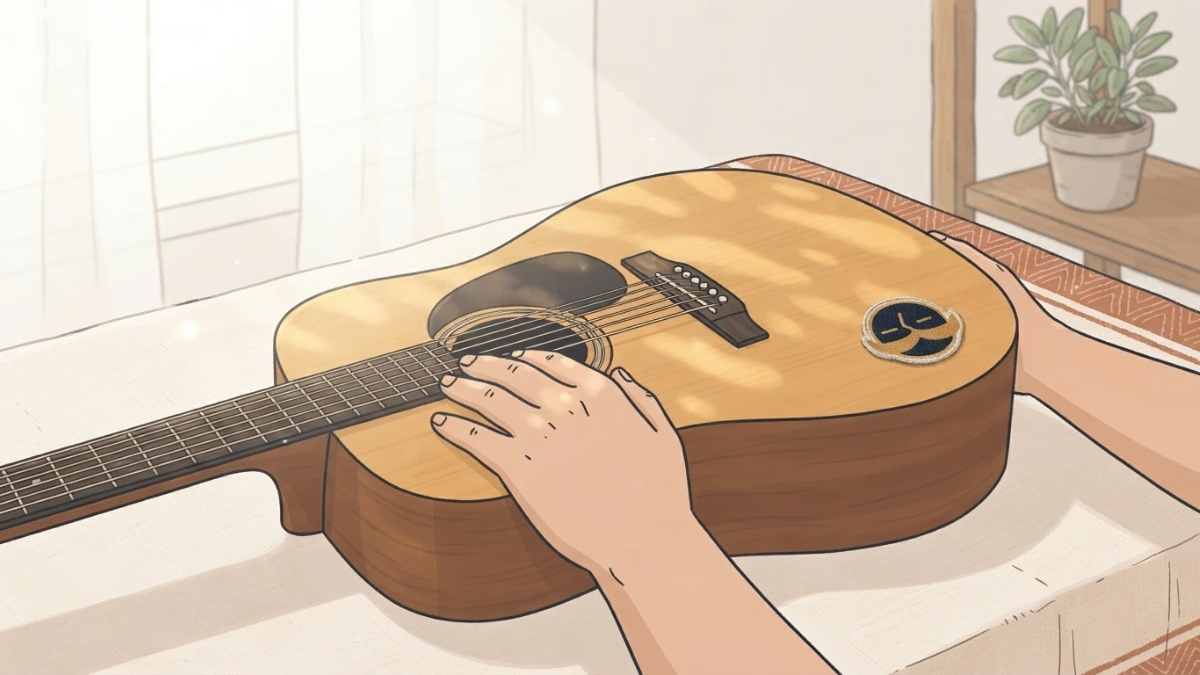
You can learn an instrument as an adult. Not “learn” in the sense of eventually becoming a session musician who tours with someone famous, but learn in the sense of sitting down six months from now and playing something that sounds like music, on purpose, because you practiced. That is completely within reach, and the research backs it up: adult beginners can play simple, recognizable pieces after about three months of regular short practice sessions, with more confident playing developing over six months to a year, per Pro Music Tuition.
The part nobody tells you is that “regular short sessions” is doing a lot of heavy lifting in that sentence. Not hours. Not a heroic Saturday-morning cram session. Short. Consistent. Boring, even. That’s the whole game.
Here’s how to actually start.
Key Takeaways
- Adult beginners can play simple, recognizable pieces after roughly three months of regular practice, with confident playing developing over six to twelve months, per Pro Music Tuition.
- Practicing 15-20 minutes four or five times a week is more effective than one long weekend session for adult learners, per Pro Music Tuition.
- Starting with just 10 minutes a day and one target song, rather than a full method book, is a practical adult-beginner approach, per Cocoro.
- With weekly lessons and 20-30 minutes of daily practice, a piano beginner can expect Grade 1 level in 12-18 months and Grade 3 in around three years, per Music UK.
- The biggest barrier to learning an instrument as an adult is not age, it is choosing an instrument that fits your space, noise tolerance, and schedule well enough to actually practice consistently.
The Real Reason You Haven’t Started Yet
It’s probably not that you think you’re too old. Most people know, at least intellectually, that adults can learn new skills. The real blocker is quieter and more practical: you don’t know which instrument to pick, you’re not sure you can carve out the time, and somewhere in the back of your head is the voice that says “I’ll sound terrible and I don’t want to deal with that.”
All three of those are solvable. But the third one, the sounding-terrible part, is the one worth naming out loud, because it’s the one that actually kills follow-through.
Here’s the thing about sounding bad: it’s not a sign you’re failing. It’s the process. Every musician you’ve ever admired spent a meaningful chunk of their life sounding like a cat discovering a violin for the first time. The difference between people who learn and people who quit is not talent. It’s tolerance for the awkward middle. If you’ve ever baked a loaf of bread that came out like a doorstop and kept going anyway, you already know how this works.
Picking an Instrument That Actually Fits Your Life
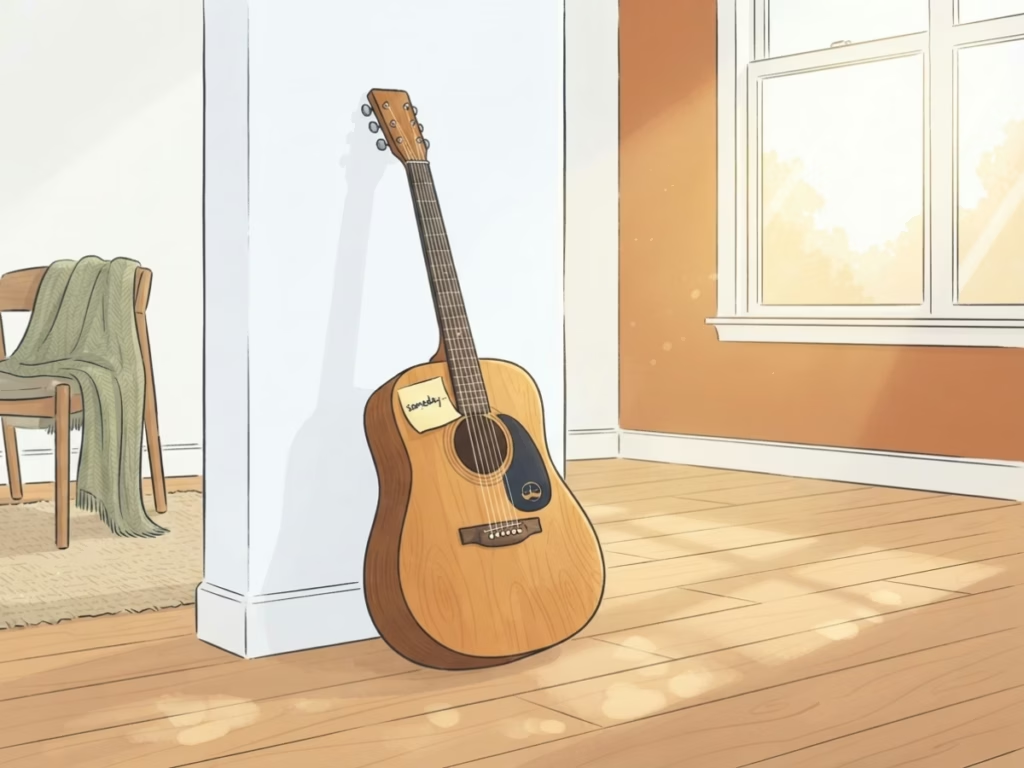
The best instrument for an adult beginner is the one you’ll actually practice. That sounds obvious until you realize how many people buy a guitar because it looks cool, keep it in the corner of the bedroom, and feel vaguely guilty about it for two years. (No judgment. Now’s a good time to pick it back up.)
A music-education guide from Villa Musica recommends choosing an instrument that fits your lifestyle, interests, and physical abilities, including, practically, a digital keyboard with headphones if you’re in an apartment and don’t want to explain your C-major scale to your neighbors at 10pm.
Here’s a rough framework for narrowing it down:
Space and noise. A drum kit in a studio apartment is a bold choice. A ukulele, a digital piano with headphones, or a classical guitar are all apartment-friendly. If you have a house and patient neighbors, your options open up considerably.
Your actual interests. If you’ve spent your whole life listening to blues, learning classical piano from a method book is going to feel like homework. Pick something that connects to music you already love. The motivation to practice is a lot easier to find when the end goal is a song you actually want to play.
Budget and commitment. Many music stores rent instruments, which means you can try before you buy without committing a significant chunk of money to something that might end up leaning against the wall next to the guitar. Starting with a rental or a secondhand beginner instrument is completely reasonable. You’re not buying a car.
Physical fit. Some instruments have real physical demands, certain hand stretches on piano, finger calluses on guitar, lung capacity on wind instruments. None of these are dealbreakers, but they’re worth knowing about upfront so the first week doesn’t feel like an assault.
What a Realistic Practice Plan Looks Like
This is where most beginner guides either get vague or get ambitious in a way that doesn’t survive contact with an actual adult’s week.
Here’s what the research actually says: 20 to 30 minutes a day is more effective than sporadic long sessions, and mistakes are an essential part of the process, not evidence that you’re doing it wrong. If even 20 minutes feels like a stretch, Cocoro’s adult-beginner guidance recommends starting at just 10 minutes a day and focusing on one song rather than working through a method book from page one.
Ten minutes. One song. That’s it.
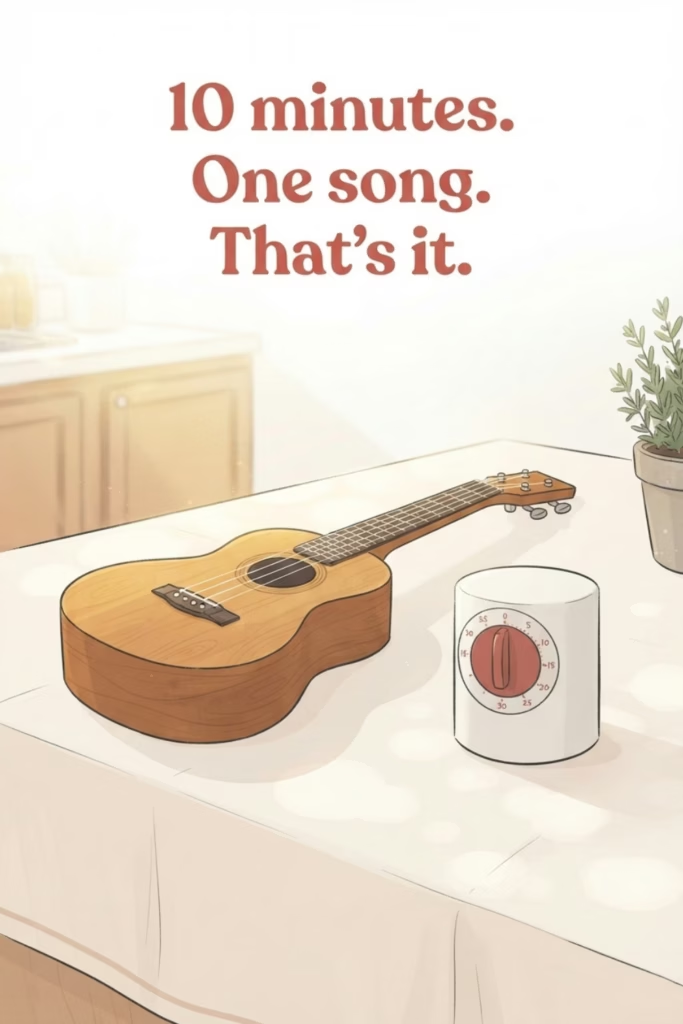
The instinct is to think that’s not enough to make progress. It is. Consistency compounds in a way that enthusiasm doesn’t. Four or five 15-to-20-minute sessions a week will outperform one two-hour Sunday session every time, according to Pro Music Tuition. The Sunday session feels productive. The short daily sessions actually are.
A few practical tips that make the habit stick:
Keep the instrument accessible. If it’s in a case in the closet, you won’t play it. If it’s on a stand in the living room, you’ll pick it up. This sounds almost insultingly simple, but it’s one of the most effective things you can do. Out of sight really is out of mind.
Set a daily alarm. Talkal Music’s teacher-led guide recommends a daily alarm as a practical anchor for a practice habit, per Talkal Music. Not because you need an alarm to remember, but because it removes the “I’ll get to it later” decision entirely.
Practice the hard part first. When you sit down with fresh focus, go straight to the section you keep fumbling. Don’t warm up on the easy bit and then run out of steam before you get to the part that actually needs work. That’s the musical equivalent of doing the easy emails first and leaving the hard one for tomorrow.
How Long Does It Actually Take?
Honest answer: it depends on the instrument, the time you put in, and what you’re measuring. But here are some real benchmarks.
For piano, a beginner roadmap from Music UK estimates that with weekly lessons and 20 to 30 minutes of daily practice, you can expect Grade 1 level in 12 to 18 months, Grade 3 in around three years, and Grade 5 in five to seven years. Grade 5 is roughly “plays recognizable classical pieces competently.” Not concert hall, but genuinely impressive at a dinner party.
For most instruments, the first milestone, playing one complete song that sounds like a song, usually lands somewhere in that three-month window if you’re practicing consistently. That’s the target worth aiming at first, not “learn music” in some abstract sense. One song. Complete. Recognizable. That’s the finish line for month three.
The trap is looking too far ahead. If you’re a week in and you’re comparing yourself to where you want to be in five years, you’re going to feel behind. You’re not behind. You’re a week in. Think smaller. Finishing last at something you just started is still finishing.
The Emotional Side Nobody Talks About
Sounding bad is genuinely uncomfortable in a way that’s hard to describe until you’re in it. You know what the song is supposed to sound like. You can hear the gap between that and what’s coming out of the instrument. It’s a little humbling, especially if you’re someone who’s competent at most things you try.
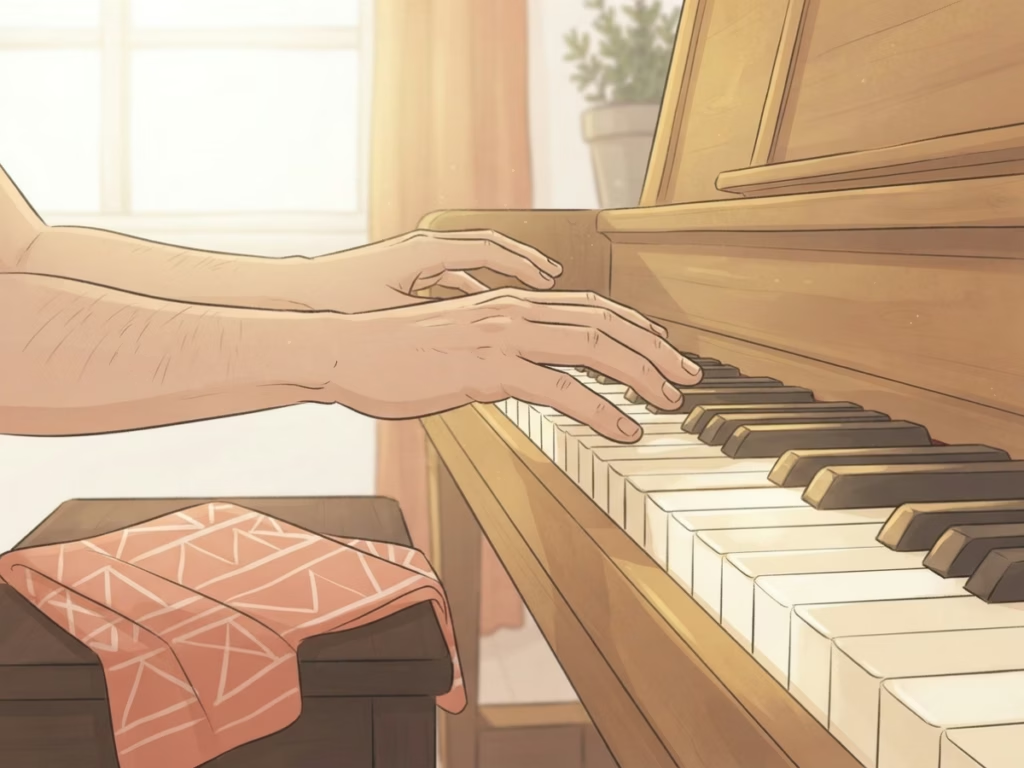
This is where adults actually have a hidden advantage over kids, though: you can contextualize the discomfort. A seven-year-old doesn’t know why they’re frustrated. You can recognize it as the gap between knowing and doing, and you can decide to sit with it anyway. That’s not a small thing.
The other move that helps: don’t perform for yourself. Practice is not a performance. You’re not auditioning. You’re building a skill through repetition, which means the wrong notes are part of the process, not evidence that you should stop. Analyze what went wrong, adjust, try again. That’s it. That’s what every failed attempt actually is if you use it right.
Should You Get a Teacher?
If you can, yes. A teacher shortens the feedback loop dramatically. They’ll catch bad habits (a weird hand position, a tension in your wrist) before those habits calcify, per Talkal Music. Online lessons have made this more accessible and flexible than it used to be, which removes the “I can’t fit it into my schedule” objection for most people.
If you do want structure, adult beginner instrument lessons are more available than ever, with most teachers now offering online slots that fit around a work schedule. That said, self-teaching is a real option, especially for guitar and ukulele where there’s a genuinely enormous library of free and low-cost online resources. The tradeoff is that you’ll need to be more deliberate about checking your own form and technique, because nobody else is watching.
If budget is the constraint, start self-teaching with good resources and budget for a few lessons every couple of months as a form of course correction. You’re not looking for someone to hold your hand every week, you’re looking for someone to tell you what you’re doing wrong before it becomes a habit.
Frequently Asked Questions About Learning an Instrument as an Adult
How long does it take to learn an instrument as an adult?
Most adult beginners can play simple, recognizable pieces after about three months of regular short practice sessions, with more confident playing developing over six months to a year, per Pro Music Tuition. For piano specifically, Grade 1 level typically takes 12 to 18 months with weekly lessons and 20 to 30 minutes of daily practice, per Music UK. The timeline shortens considerably when you aim at one specific song rather than “learning music” in the abstract.
What is the best instrument for adult beginners?
The best instrument is the one that fits your space, noise tolerance, schedule, and the music you actually like listening to. A digital keyboard with headphones works well for apartment living; guitar and ukulele are portable and have huge libraries of free online resources. There’s no universally easiest option, there’s only the one you’ll actually sit down and practice.
How much should I practice as an adult beginner?
Somewhere between 10 and 30 minutes a day, four or five days a week, is the consistent recommendation across adult-beginner guides. Ten minutes daily from Cocoro’s ultra-light starting approach, up to 20 to 30 minutes for faster progress, per Villa Musica. The specific number matters less than the consistency, four short sessions beat one long one every time.
Is it too late to learn an instrument as an adult?
No. The research doesn’t support an age ceiling on learning an instrument, and adults often progress faster than children in the early stages because they can understand instruction and self-correct more efficiently. The main obstacles are practical, time, consistency, and tolerance for sounding bad at first, not biological.
Do I need a teacher, or can I self-teach?
Both work. A teacher accelerates progress and catches bad habits early, which matters more for some instruments (piano, violin) than others (guitar, ukulele). If budget or schedule is a constraint, self-teaching with good online resources is a real option, especially if you budget for occasional check-in lessons every couple of months to catch anything you’ve drifted into.
Start Here, Today
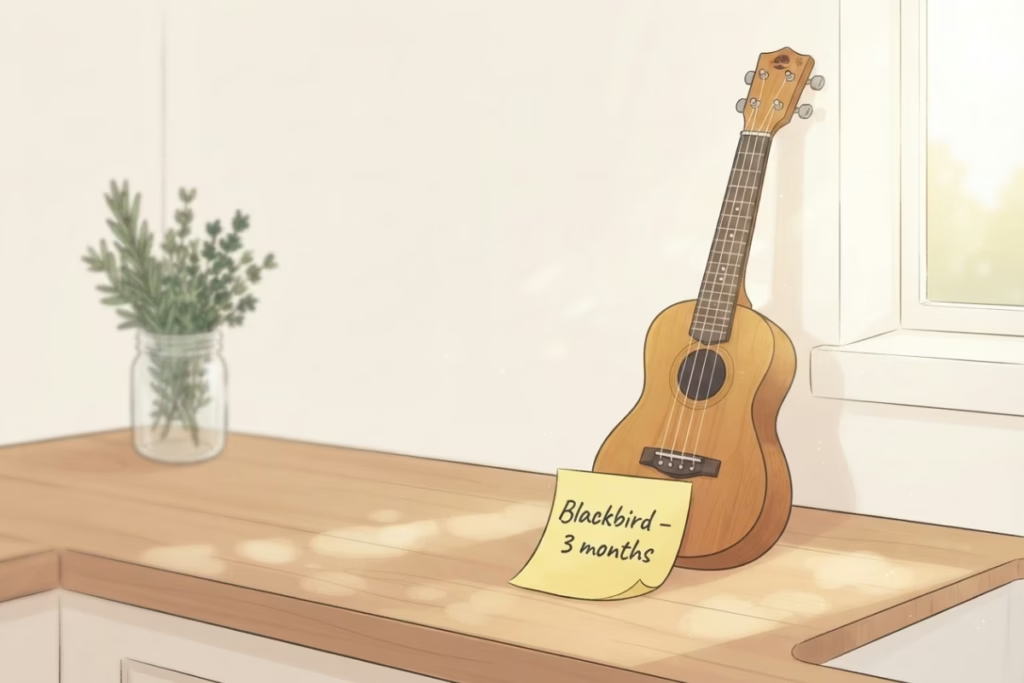
Pick the instrument you’re most excited about. Not the one that seems most practical, not the one a friend plays, not the one you think would impress someone. The one you actually want to hear yourself play.
Then do one thing today: find one song you want to learn. Not a genre. Not a style. One specific song. That’s your finish line for the next three months.
The rest, the practice schedule, the lessons, the gear, you can figure out as you go. The only real mistake is waiting until everything is perfectly set up before you start. It never is, and that’s fine. Make some noise. You’ll get better at it.
Get The Enough List — free.
Ten minutes, five areas. A short guide for figuring out what enough looks like in money, health, work, people, and time — before you go sprinting at someone else's finish line. Yours when you subscribe.

Thoughts?