
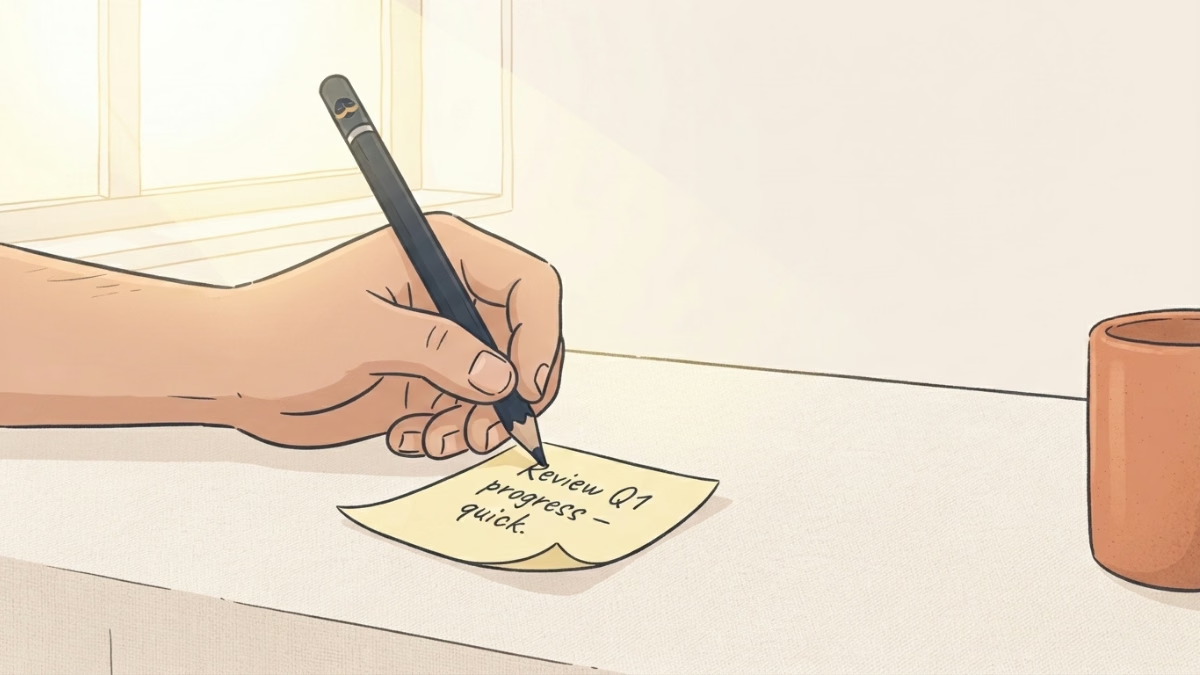
The 2-minute rule for procrastination isn’t really about time. If you’re trying to figure out how to stop procrastinating, this is one of the few tactics that actually addresses why you’re stuck, not just how to manage your calendar. It’s about making the first step so small that your brain stops treating it like a threat.
There are actually two versions of this rule, and mixing them up is where most people go wrong.
Key Takeaways
- David Allen’s GTD version of the 2-minute rule states: ‘If an action will take less than two minutes, it should be done at the moment it’s defined’, per Todoist.
- James Clear’s habit version reframes the rule as a starting tactic, make a new habit take less than two minutes to begin, not to complete, so friction drops low enough to act.
- The rule works best as a decision filter: tasks under two minutes get done immediately; tasks over two minutes get scheduled rather than forced into a false “quick win.”
- Procrastination is mostly an emotional cost, not a time problem, the 2-minute rule works because it lowers the cost of starting, not because it speeds up finishing.
The Classic Version (David Allen’s GTD)
David Allen, the Getting Things Done guy, put it plainly: “If an action will take less than two minutes, it should be done at the moment it’s defined”, per Todoist. Answer the short email. Put your shoes away. Reply to the text you’ve been “meaning to get to” for three days.
The logic is simple. It’s often more efficient to just do a small task immediately than to store it, track it, and come back to it later. Every time you defer a two-minute task, you’re paying a mental tax on it every single day until you finally do it. That’s a bad trade.
So: quick task, under two minutes, do it now. Done.
The Habit Version (James Clear’s Twist)
James Clear uses the same name for a different idea. His version says a new habit should take less than two minutes to start, not to complete, per James Clear. “Read before bed every night” becomes “read one page.” “Start going to the gym” becomes “put on your gym shoes.”
This one is sneaky good. The point isn’t to finish in two minutes. The point is that starting is the hard part, and two minutes is cheap enough that your brain stops arguing about it. Once you’ve opened the book, you usually read more than one page. Once the shoes are on, you usually leave the house. (Turns out the couch has less gravitational pull once you’re vertical.)

This is why learning an instrument as an adult feels impossible until you commit to just picking up the guitar and playing one chord. One chord. That’s your two minutes.
Where the Rule Breaks Down
The mistake is applying the two-minute rule to tasks that are not two-minute tasks. Rewriting your resume is not a two-minute task. Calling your accountant is not a two-minute task. Forcing these into “quick wins” just means you start them, panic at the size, and abandon them, which is worse than not starting at all (and more demoralizing).
Reclaim’s 2026 guide nails the fix: use the rule as a decision filter. Can it be done in two minutes? Do it now. Can’t? Schedule it properly and stop pretending otherwise.

If you’re dealing with the bigger, scarier stuff, the do it badly method pairs well here, same principle, more runway.
Frequently Asked Questions About the Two-Minute Rule for Procrastination
What is the 2-minute rule for procrastination?
There are two versions. David Allen’s GTD version says any task that takes less than two minutes should be done immediately rather than added to a list, per Todoist. James Clear’s habit version says a new habit should be scaled down until it takes less than two minutes to begin, the goal being to lower starting friction, not to finish fast.
Does the 2-minute rule actually work for big tasks?
Not if you apply it literally. The smarter use for big tasks is to define a two-minute starting step, one sentence, two push-ups, one paragraph, rather than pretending the whole task fits. Reclaim’s guide recommends treating the rule as a decision filter: if it doesn’t fit under two minutes, schedule it properly instead of forcing it.
Why does starting small help with procrastination?
Procrastination is mostly an emotional problem, not a time-management one. The resistance is to starting, not to doing. Making the entry point absurdly small, one sentence, one rep, one minute, drops the emotional cost low enough that you actually begin. What happens after that is usually fine.
What’s the difference between the GTD version and the habit version?
David Allen’s version is a task-capture rule: tiny tasks get done immediately, not logged. James Clear’s version is a habit-formation rule: make a new behavior so small it’s impossible to say no to. Same two-minute window, completely different purpose. Both two-minute rule versions are useful. Confusing them is how you end up trying to write a business plan “real quick.”
Your move today: pick one thing you’ve been putting off. Not the whole thing. Just the first two minutes of it. Write one sentence of that email, do two reps of that workout, open the tab for that thing you need to research. Start the clock. See what happens after.
Get The Enough List — free.
Ten minutes, five areas. A short guide for figuring out what enough looks like in money, health, work, people, and time — before you go sprinting at someone else's finish line. Yours when you subscribe.

Thoughts?