
Fred Rogers modeled quiet strength by treating kindness as a deliberate daily practice, validating feelings without flinching, and being comfortable with silence in a world that mistakes noise for confidence. His core lesson for adults: who you are when nobody’s performing is the only version that actually counts.
Fred Rogers was one of the strongest men in American television history. He just never looked like it.
No flexing, no hustle, no scoreboard. Just a cardigan, a quiet voice, and an almost aggressive commitment to making whoever was in front of him feel like they mattered. The lessons from Fred Rogers aren’t nostalgia, they’re a blueprint for a kind of strength most of us were never taught to want.
Key Takeaways
- Rogers believed children, and adults, have deep feelings that deserve to be taken seriously, and he responded to their fears with full presence rather than dismissal.
- He taught that love is an active noun, like ‘struggle’, meaning to love someone is to strive to accept them exactly as they are, right now.
- Rogers addressed hard topics like loss, divorce, and racism directly and with serenity, proving that calm is a skill, not just a personality trait.
- His signature lesson for adults: ‘just being you is enough’, no performance required, no highlight reel necessary.
- Quiet strength isn’t passive; Rogers used deliberate pauses and silence as tools to make people feel genuinely heard.
Calm Is a Skill, Not a Personality Type
Here’s the thing about Rogers that gets missed: his serenity wasn’t an accident of temperament. It was a practice. He addressed racism, death, divorce, and fear directly on his show, narrating difficult topics with the same unhurried pace he used to talk about crayons. That takes work. That takes intention.

Most of us have been trained to equate confidence with volume. Talk faster, fill the silence, assert yourself. Rogers ran the opposite play. He believed that being comfortable with silence, actually sitting in it long enough to hear someone else, is how you make people feel genuinely seen. Watch any clip of him interviewing a child and you’ll see it in real time. (Turns out, it’s also how you build trust faster.)
If you want a parallel from a different era, Marcus Aurelius called this same thing equanimity, and it’s worth reading what he had to say about it.
Love Is a Verb, and “Enough” Is the Point
Rogers taught that love is an active noun, like “struggle”, meaning to love someone is to strive to accept them exactly as they are, right here, right now. Not the version of them that wins more, earns more, or finally gets it together.
That’s a harder ask than it sounds. We’re wired to love potential. Rogers kept redirecting people back to the present tense.
His other big one: “just being you is enough.”
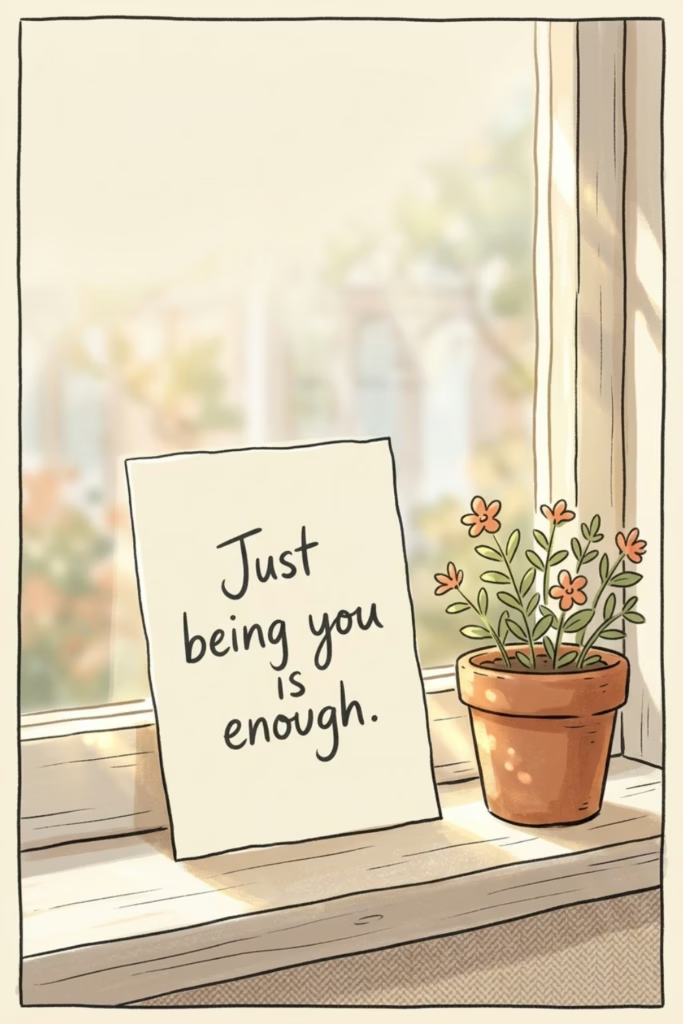
He told that to children, but honestly, a lot of adults need to hear it more. Not as a reason to stop growing, but as a foundation to grow from, instead of running away from yourself. There’s a difference, and it matters.
This is the same territory as knowing when you’ve hit your finish line instead of just chasing someone else’s. If you’ve ever wondered whether you’re doing enough, this one’s worth a read too.
Three Lessons from Fred Rogers Worth Stealing Today
His approach was specific enough to actually copy:
Validate before you fix. Rogers believed children, and adults, have deep feelings that deserve to be taken seriously, per NBC News. He responded to fears seriously rather than dismissing them. Next time someone brings you a problem, try reflecting it back before you reach for a solution. It’s uncomfortable how well it works.
Use silence on purpose. His famous pauses weren’t dead air, they were invitations. Try it in your next conversation. Stop filling the gap. Let it breathe. (You’ll feel the urge to talk immediately. That’s the point.)
Make kindness a practice, not a mood. Rogers’ signature value was human kindness, and he treated it as something you do consistently, not something you feel when conditions are right, per McKenzie Sue Makes. Kindness as a daily habit is less glamorous than kindness as an inspiration. It’s also more useful.
Rogers put it plainly: ‘The greatest thing we can do is to help somebody know that they’re loved and capable of loving.’ That’s the Fred Roger’s kindness quote most people half-remember, and it holds up.
Frequently Asked Questions
What is the main lesson Fred Rogers taught adults?
The lessons from Fred Rogers for adults come down to one thing: genuine strength is presence and consistency, not performance. He insisted that “just being you is enough”, not as an excuse to coast, but as a real foundation for showing up fully. That’s a harder standard than it sounds, and most hustle culture completely misses it.
What did Fred Rogers mean when he said love is an active noun?
He meant that love isn’t a feeling you wait for, it’s something you do, per Deseret News. To love someone is to strive to accept them exactly as they are right now, not the improved future version. It’s a daily practice, not a state you arrive at.
How did Fred Rogers address difficult topics like racism and death?
He addressed them directly and without flinching, using calm narration to create a safe space for children to process complex emotions, per Forbes. The lesson for adults: serenity in hard conversations isn’t weakness, it’s a skill you can build.
Is Fred Rogers’ approach relevant to leadership or professional life?
Yes, and more than most leadership content will admit. His leadership lessons, validating feelings before fixing, using silence intentionally, and treating kindness as a repeatable practice, are practical communication tools that work in any context where trust matters.
One thing you can do today: In your next conversation where someone brings you a problem, don’t offer a solution first. Reflect back what you heard. One sentence. See what happens. Rogers did it for decades in front of a camera, and people are still talking about it. That’s not a coincidence.
Get The Enough List — free.
Ten minutes, five areas. A short guide for figuring out what enough looks like in money, health, work, people, and time — before you go sprinting at someone else's finish line. Yours when you subscribe.