A sketchbook and a cheap pen are probably the highest-return hobby purchase you haven’t made yet. The benefits of sketching for adults are surprisingly well-documented, and none of them require you to be good at it.
That second part matters. Most of us ruled out drawing somewhere around age ten when someone’s horse looked better than ours. But the research doesn’t care about your horse. It cares about the act of drawing itself.
Key Takeaways
- Drawing engages both brain hemispheres and strengthens memory by combining spatial, visual, and motor skills, making it one of the few hobbies with measurable cognitive benefits for adults.
- Regular sketching practice correlates with improved emotional resilience and self-awareness, helping adults manage stress and anxiety.
- The process of sketching, not the finished product, is the primary driver of relaxation and joy, so ugly drawings count just as much as pretty ones.
- Consistent sketching cultivates patience, sharpens focus, and builds a growth mindset, countering the all-or-nothing pressure many busy adults face.
- A sketchbook and a pen are all you need to start, making it one of the lowest-barrier hobbies available to anyone.
The Real Benefits of Sketching for Adults
Drawing is one of the few activities that genuinely engages both hemispheres of your brain at once. According to Road Scholar, it strengthens neural connections by combining spatial, visual, and motor skills simultaneously, which encodes memories more deeply than reading or listening alone. You’re not just relaxing. You’re wiring things in.
That matters more as you get older. If you’re in your 30s or 40s and feel like your attention span has the structural integrity of wet cardboard, this is one of the few hobbies that actively pushes back on that.
The other angle is stress. Francesca Sciandra’s research on drawing in the digital age links regular drawing practice to improved emotional resilience and self-awareness, which is a clinical way of saying it helps you feel less like you’re going to lose it by Thursday.
The Ugly Sketch Is the Point
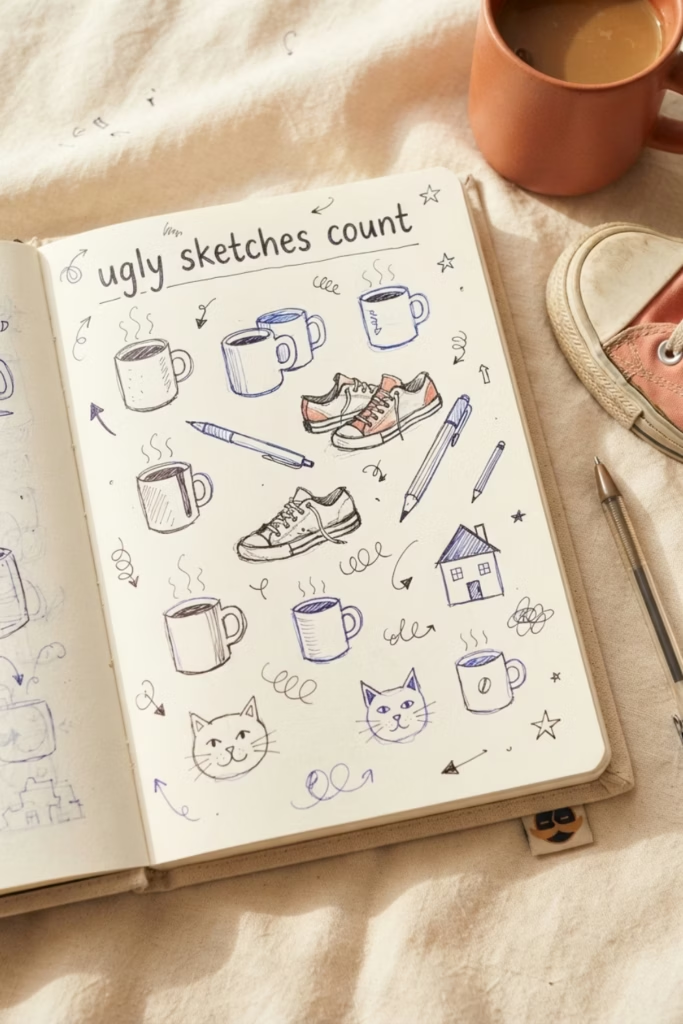
Here’s the part most people miss: the process is the benefit, not the product. Invaluable’s overview of sketch drawing makes this explicit, the joy and relaxation come from getting lost in the act, not from producing something gallery-worthy.
This is genuinely good news. You don’t need to make something beautiful. You need to make something. A lopsided mug. A window frame. Something that kind of resembles your own hand. The brain doesn’t grade on aesthetics.
The Knowledge Academy’s breakdown of drawing benefits adds that consistent sketching builds patience, sharpens focus, and encourages a growth mindset, which is the opposite of the all-or-nothing pressure that stops most people from picking up a new hobby in the first place. If you’ve ever abandoned a side project because it wasn’t immediately great, sketching is a quiet corrective for that. (Guilty.)
The Cost Argument Is Almost Embarrassing
A decent sketchbook runs about $5 and a pack of pens another $3. That’s it. No subscription, no equipment, no gym bag.For a low-cost hobby for adults, the barrier to entry is almost insultingly low and the cognitive and emotional payoff is real.
Compare that to the hobbies most of us actually pursue, golf, cycling, home brewing, and sketching starts to look less like a hobby and more like a cheat code. It also pairs well with knowing which things in your life are actually worth keeping, because a sketchbook asks almost nothing of you in return for what it gives.
And if you’ve ever quit a hobby before finishing anything, that’s not the failure it feels like.
Frequently Asked Questions
Do I need artistic talent to get the benefits of sketching for adults?
No. The cognitive and emotional benefits of sketching come from the process itself, not the quality of the result. Research shows that getting lost in the act of drawing is the primary driver of relaxation and joy, your skill level is irrelevant to that mechanism. Ugly sketches count.
How long do I need to sketch each day to see benefits?
Even short, consistent sessions build the neural pathways associated with better memory and focus. The key word is consistent, a few minutes daily beats an hour once a month, because the brain responds to repetition, not duration.
What should I draw if I have no ideas?
Anything in the room. Your coffee mug, your hand, the window, a shoe. The subject genuinely does not matter, you’re training your eye and your focus, not producing content. Start with objects that hold still and don’t have feelings about how they’re rendered.
Is sketching actually useful for stress and anxiety?
Research on sketching for mental health links regular drawing practice to improved emotional resilience and self-awareness in adults. It’s not a replacement for therapy or medication, but as a daily reset that costs nothing and asks nothing of you, it’s hard to argue with.
Today’s move: find any pen and any piece of paper, set a five-minute timer, and draw something on your desk. Don’t aim for good. Aim for done.
Get The Enough List — free.
Ten minutes, five areas. A short guide for figuring out what enough looks like in money, health, work, people, and time — before you go sprinting at someone else's finish line. Yours when you subscribe.