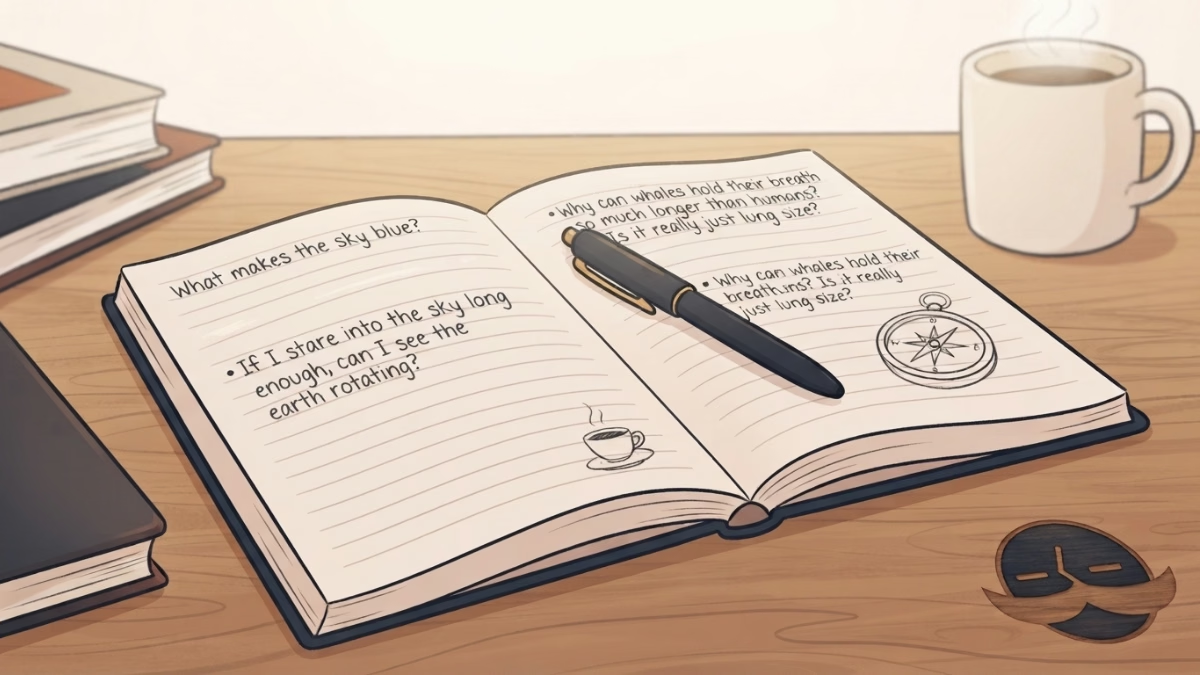
The lessons from Leonardo da Vinci’s notebooks aren’t about being a genius. They’re about what happens when you treat curiosity like a habit instead of a mood.
Leonardo da Vinci’s to-do lists included questions like “what causes people to yawn” and “methods for squaring a circle.” Not deliverables. Not KPIs. Questions. That’s the whole lesson right there, if you want to stop reading. But stick around, because the how is the useful part.
The core takeaway from the lessons in Leonardo da Vinci’s notebooks is this: curiosity wasn’t something he felt and then acted on randomly. He built it into a repeatable system. His notebooks contain observations, sketches, scientific ideas, and lists of questions, evidence that organized wonder beats vague inspiration every single time.
Key Takeaways
- Da Vinci’s notebooks contained hundreds of questions spanning the mundane and mathematical, including ‘what causes people to yawn’, showing curiosity was directed by asking better questions first.
- His method was to observe in stages, beginning with details and not moving on until each step was fixed in memory, a process Thinkers50 describes as observe, interpret, demonstrate, articulate.
- The notebooks were portable working tools, not polished final products, unfinished drafts and fragments were features of the process, not failures.
- A key lesson from Leonardo is that curiosity and usefulness are not the same thing; some knowledge is worth pursuing for its own sake.
- A 2026 summary of Leonardo’s approach frames better ideas around staying open longer and resisting quick certainty, the direct opposite of today’s productivity-first mindset.
What Leonardo da Vinci’s Notebooks Actually Teach Us About Questions
Most of us do it backwards. We jump to solutions before we’ve actually looked at the problem. Leonardo’s move was to write the question down first and let it sit. His notebook lists reportedly covered hundreds of subjects, both marvelous and mundane, the kind of range that only happens when you stop filtering your curiosity through “but is this useful?”
That last part matters.
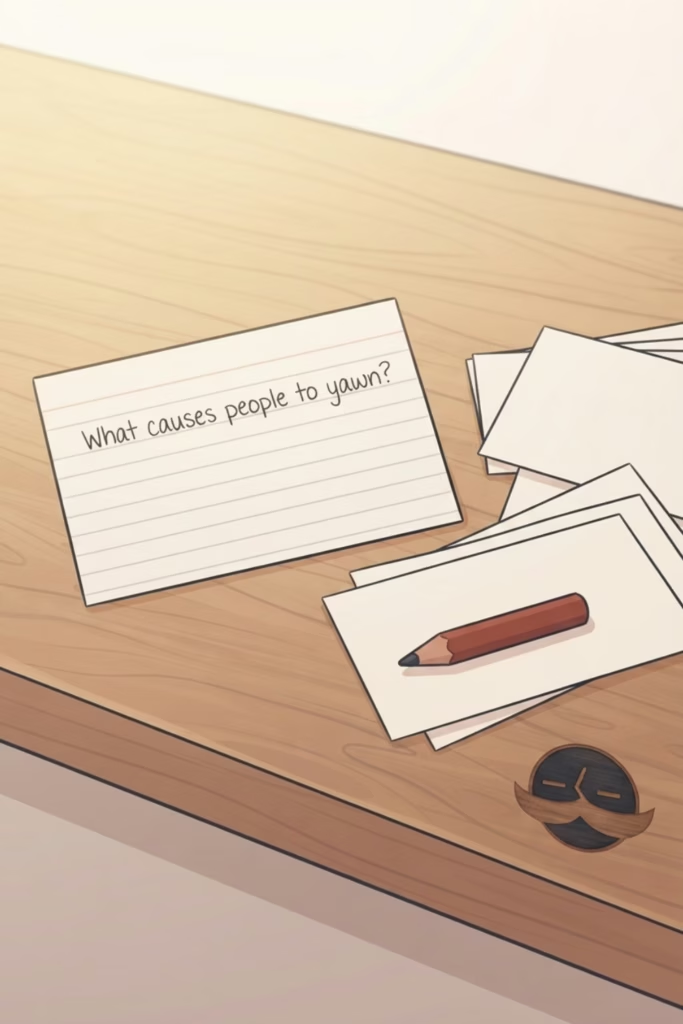
One of the clearer lessons drawn from Leonardo is that curiosity and usefulness aren’t the same thing, some knowledge is worth chasing purely for its own sake. Which is a genuinely radical idea in a world where every hobby is supposed to become a side hustle. (Leonardo would have been terrible at monetizing his personal brand, and somehow he turned out fine.)
The Four-Step Process He Actually Used
Thinkers50 describes Leonardo’s method as moving through four stages: observe, interpret, demonstrate, articulate. In plain terms: look carefully, figure out what you’re seeing, test it, then explain it. Repeat.
He was also specific about the observation stage. His approach was to begin with the details and not move on until the first step was fixed in memory.

That’s it. One thing at a time, fully, before the next. Which is the opposite of how most of us scroll through twelve tabs while half-watching a YouTube explainer and call it “research.”
This connects to something Marcus Aurelius was doing in his own notebooks around the same idea, if you’re curious about that parallel, the lessons from his Meditations are worth a look.
Unfinished Is Not the Same as Failed
Here’s the part that might actually change how you feel about your own half-finished projects. Leonardo’s notebooks were portable working tools, not polished final products, and that’s exactly why they still read as evidence of a real process five centuries later.
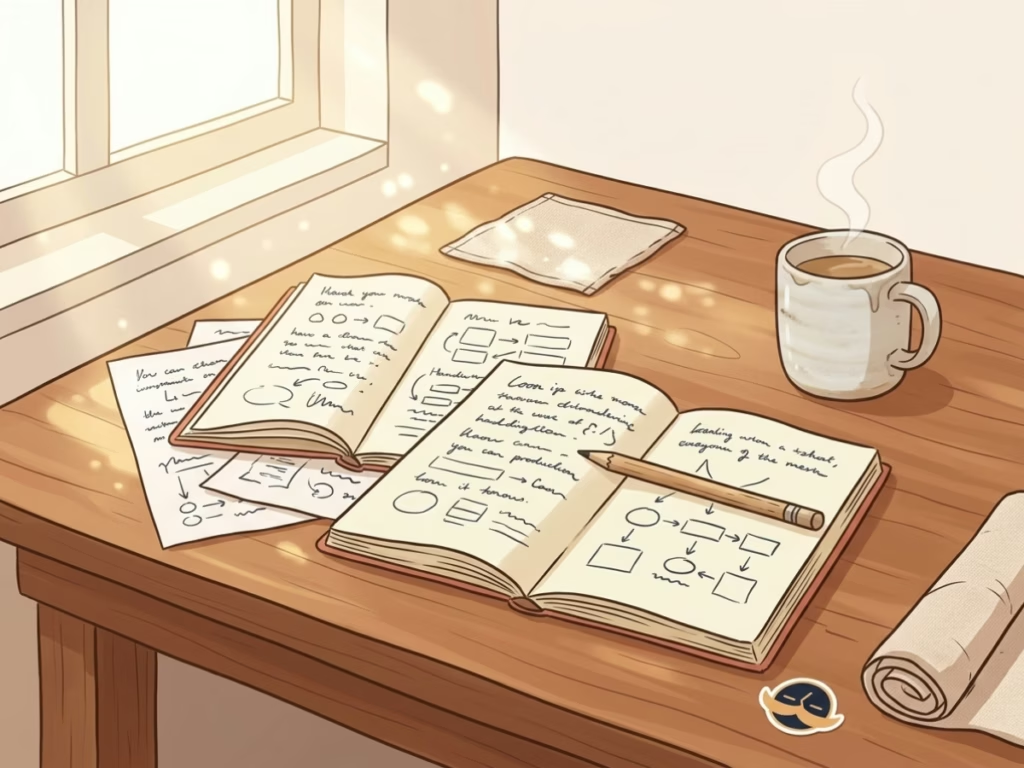
Fragments, drafts, dead ends, and questions with no answers yet. All of it counts.
A 2026 look at Leonardo’s approach to better ideas frames this as staying open longer instead of rushing to certainty. Which, again, runs directly against the productivity-first instinct to wrap things up, ship it, and move on. Sometimes the side quest IS the insight. (Your abandoned notebook from 2021 might be more valuable than you think. No promises, but still.)
Frequently Asked Questions
What did Leonardo da Vinci actually write in his notebooks?
His notebooks contained observations, sketches, scientific ideas, and long lists of questions spanning both the ordinary and the mathematical, including questions like what causes people to yawn and how to square a circle. They were working tools, not finished writing, closer to a scratchpad than a manuscript.
What is the main curiosity lesson from Leonardo da Vinci’s notebooks?
The main lesson is that curiosity works best as a habit, not a mood. Leonardo used questions to direct his attention before he tried to solve anything, and he observed in careful stages rather than jumping to conclusions, per Thinkers50.
Does being curious about useless things actually matter?
According to one reading of Leonardo’s approach, yes, curiosity and usefulness are not the same thing, and some knowledge is worth pursuing for its own sake. The practical payoff often shows up later, sideways, in a completely different context.
How do I apply Leonardo’s notebook habit today?
Keep a running list of questions, not tasks, actual questions you’re genuinely curious about. Pick one, observe it in stages (start with one detail, sit with it), and write down what you notice before you go looking for an answer. That’s the whole system. This is also where creative thinking starts. Not with a blank canvas, but with a question you actually care about.
Today’s move: open your notes app and write down three things you’re genuinely curious about right now. Not goals. Not tasks. Questions. That’s where Leonardo started, and the man painted the Mona Lisa and designed a functional helicopter five hundred years before aviation existed. Worth a try.
Get The Enough List — free.
Ten minutes, five areas. A short guide for figuring out what enough looks like in money, health, work, people, and time — before you go sprinting at someone else's finish line. Yours when you subscribe.