

Your week was fine on Sunday. By Wednesday it’s a pile-up: sick kid, blown deadline, skipped gym, dinner from a bag. The question isn’t how to avoid that week, it’s what you do next.
The next man up mentality is how good teams handle exactly this. When a starter goes down, the backup doesn’t improvise or spiral. He runs the same system, does his job, and keeps the team moving. Sports psychologists describe it as preparedness, adaptability, and resilience, being ready to perform when called upon, not just hoping you’ll figure it out in the moment, per Peak Sports. The same idea applies to your Tuesday when it’s decided to detonate.
Key Takeaways
- The next man up mentality is a sports psychology concept built on preparedness, adaptability, and resilience, not pushing harder through a bad situation.
- Weekly planning has been linked to fewer unfinished tasks and higher cognitive flexibility, though planning alone doesn’t increase engagement without the right mindset behind it.
- The strongest version of the mindset is operational, not emotional: a fallback system beats motivational hype when energy and time are both low.
- One missed workout, one bad meeting, or one sick kid is not a character flaw, treating it like one is the thing that actually derails the week.
- Identifying your three non-negotiables in advance means you always know which ‘player’ stays in the lineup when everything else gets benched.
he Next Man Up Mentality Is a System, Not a Pep Talk
Here’s the trap most people fall into: they treat a bad week as a motivation problem. They go looking for a quote, a video, something to get them fired up. But when your energy is low, your kid is home sick, and you’ve already missed two things you said you’d do, motivation is the last resource you want to depend on.
What actually works is a fallback system you built when things were calm. Think of it like a depth chart. Your ideal week is the starters. Your fallback week is the bench, not as impressive, but absolutely capable of getting the job done.
The Dallas Mavericks leaned on this exact idea in January 2025 when Luka Dončić and Kyrie Irving were both out, describing it as trusting “the next man up” in rotation, per SI. Nobody asked the bench guys to suddenly become Luka. They were asked to do their version of the job. That’s the bar. Your bench week doesn’t have to look like your best week.
Build Your Depth Chart Before You Need It
This is the practical bit, and it’s genuinely simple.
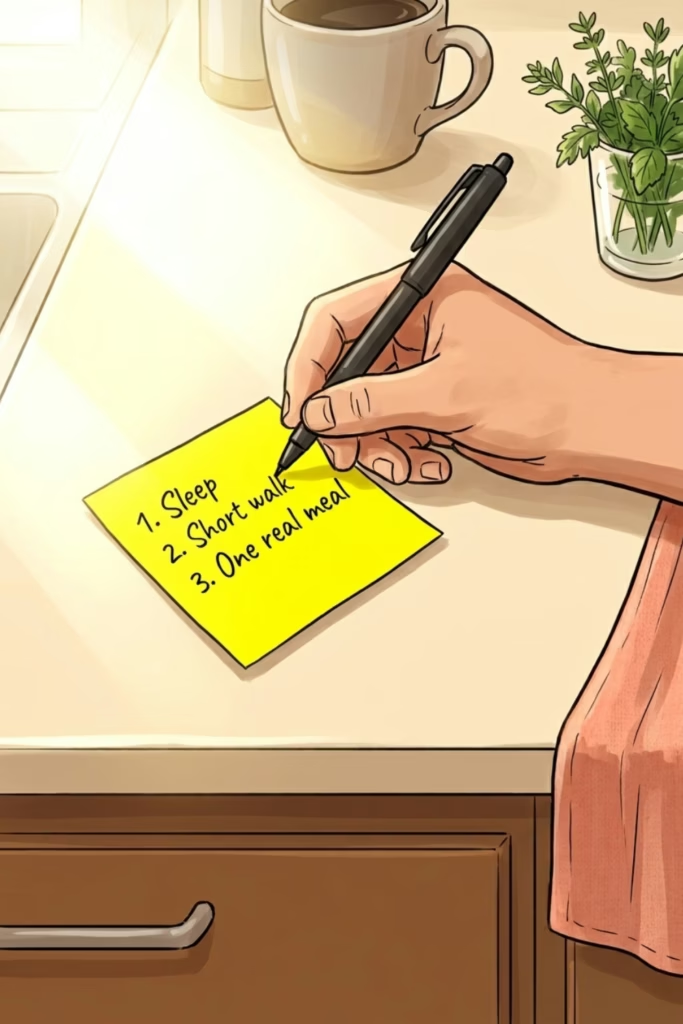
Sit down for five minutes, not in the middle of the chaos, but now, while things are relatively fine, and answer three questions:
What are my three non-negotiables? These are the things that, even on a week from hell, you protect. Sleep, a short walk, one decent meal, a phone call with someone you care about. Whatever your three are, they stay in the lineup no matter what.
What gets benched first? You have things on your ideal-week list that are good but not load-bearing. Those go on the “easy skip” list. Knowing in advance what you’ll drop means you’re not making that call under stress. (Research on weekly planning backs this up, it’s linked to fewer unfinished tasks and higher cognitive flexibility, per this PMC study.)
What’s the 20-minute version? For the things you want to keep but can’t do fully, a 20-minute workout instead of an hour, a batch of eggs instead of a proper meal prep session, having the lite version pre-decided means you actually do it. The two-minute rule and its cousins live in this piece if you want to go deeper on building that habit.
One Missed Day Is Not a Character Flaw
This is the part the hustle-bro version always skips.

The next man up mentality isn’t self-punishment in a new outfit. It’s self-compassion that happens to be operational. One bad week doesn’t mean you’re unreliable. It means you’re human, and also that your starters were unavailable. The Florida Panthers’ Seth Jones put it plainly when Aaron Ekblad was suspended: other guys would need to be “10-15 percent better,” not 300 percent better, per NHL.com. A little extra from everyone, not a miracle from one person. Apply that to yourself.
If you’re in the habit of defining what “enough” actually means for you, a bad week is just a week that ran a different lineup. You know what the finish line looks like. You’ll get back to full strength.
Frequently Asked Questions
What is the next man up mentality?
The next man up mentality is a sports psychology concept describing an athlete’s readiness to step in and perform when called upon, built on preparedness, adaptability, and resilience rather than motivation alone, per Peak Sports. Applied to everyday life, it means having a fallback system ready before your week breaks, not searching for inspiration after it already has.
How do I recover when my week completely falls apart?
Start by not treating the week as a failure that needs to be compensated for, that framing makes things worse. Identify the two or three things you’re keeping, drop the rest without guilt, and run the shorter version of whatever still matters. The goal is continuation, not perfection.
Does planning actually help when life gets unpredictable?
Yes, but with a caveat. Weekly planning is linked to fewer unfinished tasks and higher cognitive flexibility, per PMC, but it doesn’t automatically boost engagement on its own. The planning needs to include a fallback layer, not just the ideal week, but the bench week too.
How do I stop one bad day from ruining the whole week?
Treat the bad day like a starter who’s out: you didn’t lose the team, you’re just running a different lineup today. Pre-deciding what you’ll do on a low-capacity day (the 20-minute version, the easy-skip list) removes the decision fatigue that usually turns one bad day into five.
Is this just a fancier way of saying “push through it”?
No, and that distinction matters. “Push through it” implies you should force your ideal week to happen anyway. The next man up approach says: the starters are out, trust the bench, and keep the machine running at a lower but sustainable level. It’s adaptation, not punishment.
Here’s the thing you can do today: take five minutes and write down your three non-negotiables for the week. Not goals. Not habits. Just the three things that, if you do only those, the week still counts. Put it somewhere you’ll see it on a Wednesday when everything’s on fire. That list is your depth chart. Use it.
Get The Enough List — free.
Ten minutes, five areas. A short guide for figuring out what enough looks like in money, health, work, people, and time — before you go sprinting at someone else's finish line. Yours when you subscribe.

Thoughts?