

An octopus has three hearts, and one of them shuts off every time it swims. That’s not a design flaw. That’s evolution building in a hard limit.
Here’s the anatomy, fast: two branchial hearts pump blood through the gills, and one systemic heart sends the now-oxygenated blood out to the arms, brain, and muscles. The reason they need three is that octopus blood, blue, copper-based, genuinely alien-looking stuff, carries oxygen about one-quarter as efficiently as hemoglobin does. Less efficient chemistry, more hardware required. Simple as that.
Key Takeaways
- Octopuses have three hearts: two branchial hearts push blood through the gills, and one systemic heart circulates oxygenated blood to the rest of the body.
- Octopus oxygen transport is roughly one-quarter as efficient as human hemoglobin, which is why the extra pumping hardware is necessary.
- The systemic heart stops beating when an octopus swims, making swimming energetically costly, so octopuses default to crawling to conserve energy.
- The biology lesson for humans: sustainable, lower-effort modes beat heroic, exhausting bursts over the long run.
Why Octopuses Have Three Hearts (The Part Nobody Talks About)
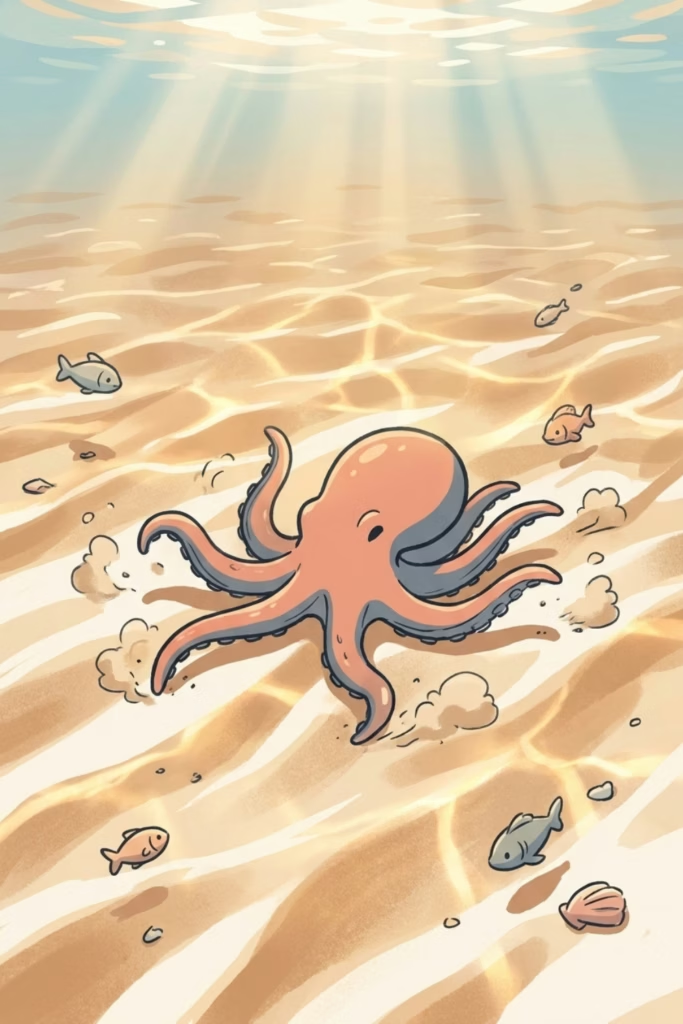
Here’s where it gets interesting. That third heart, the one running the whole body, stops beating when the octopus swims. Full stop. Which is why octopuses strongly prefer crawling along the seafloor. Swimming is expensive for them in a very literal, cardiovascular sense. They can do it. They’re not great at sustaining it.
So a creature with three hearts, blue blood, and can open a clam that’s wired shut (not making that up) has essentially built its entire lifestyle around avoiding the thing that costs the most. Not because it’s lazy. Because it’s efficient.
What This Has to Do With You
You’ve probably had a week, maybe a month, maybe longer, where you ran in sprint mode the whole time. Replied to everything, stayed late, took on one more thing. And then somewhere around day eleven, your metaphorical systemic heart just… stopped. You were still going through the motions, but nothing was actually getting pumped anywhere.
That’s not a character flaw. That’s biology making a very reasonable complaint.

The octopus figured out something we’re still bad at: swimming is exhausting, crawling is sustainable, and the animal that lasts longest is rarely the one going fastest. “More effort” is not the same thing as “more output.” Sometimes it’s just more cost.
The hustle-bro version of this story would be: “Look how hard the octopus works! Three hearts!” The actual version is: one of those hearts takes a break on demand, and the octopus built its whole approach to life around that fact.
If you’re curious about other long-game strategies hiding in unexpected places, the bristlecone pine piece covers how the world’s oldest trees get there by growing almost imperceptibly slowly. Same energy, different kingdom.
Frequently Asked Questions
Why do octopuses have three hearts instead of one?
Octopus blood uses a copper-based protein called haemocyanin to carry oxygen, which is about one-quarter as efficient as human hemoglobin. Less efficient chemistry means you need more pumping power to move enough oxygen around, so evolution added the hardware.
Why is octopus blood blue?
The copper in haemocyanin turns blue when it binds with oxygen, the same way iron in hemoglobin turns blood red. It’s not a quirk, it’s just a different solution to the same problem of oxygen transport.
Does the octopus heart actually stop when it swims?
Yes. The systemic heart, the one responsible for circulating oxygenated blood to the body, stops beating during swimming. It’s a real physiological cost, which is why octopuses default to crawling whenever they can.
Is the burnout comparison actually valid?
More than it should be. When your system runs in a mode that’s fundamentally more expensive than your default, you burn through reserves fast. The octopus handles this by choosing the cheaper mode whenever possible. Humans have the option to do the same thing, we just usually don’t until something forces the issue.
The thing you can do today: identify one thing in your week that’s swimming when it could be crawling. One commitment, habit, or routine that’s costing you more than it’s returning. You don’t have to drop it. Just notice it. The octopus noticed, and it built a whole lifestyle around the answer.
Get The Enough List — free.
Ten minutes, five areas. A short guide for figuring out what enough looks like in money, health, work, people, and time — before you go sprinting at someone else's finish line. Yours when you subscribe.

Thoughts?