Sitting at a desk for hours doesn’t just make you tired, it quietly reshapes your body into something that belongs in a Quasimodo biopic. The good news: five simple stretches for desk workers, done in under five minutes, can interrupt that process before it becomes a permanent personality trait.
The Mayo Clinic confirms these moves work seated or standing, right at your workstation. No gym bag. No yoga mat. No coworker staring at you while you do downward dog next to the printer.
Key Takeaways
- The Mayo Clinic confirms desk stretches can be done seated or standing at your workstation, no gym required.
- SafeWork NSW recommends holding a side stretch for 10 seconds and a wrist stretch for 15 seconds per side for effective relief.
- The five problem areas for desk workers are neck, chest, shoulders, wrists, and spine, one targeted stretch each covers the full damage.
- A 5-minute stretch routine works as a minimum effective dose: small movement breaks interrupt static sitting without requiring extra time or equipment.
Simple Stretches for Desk Workers: The 5-Move Reset
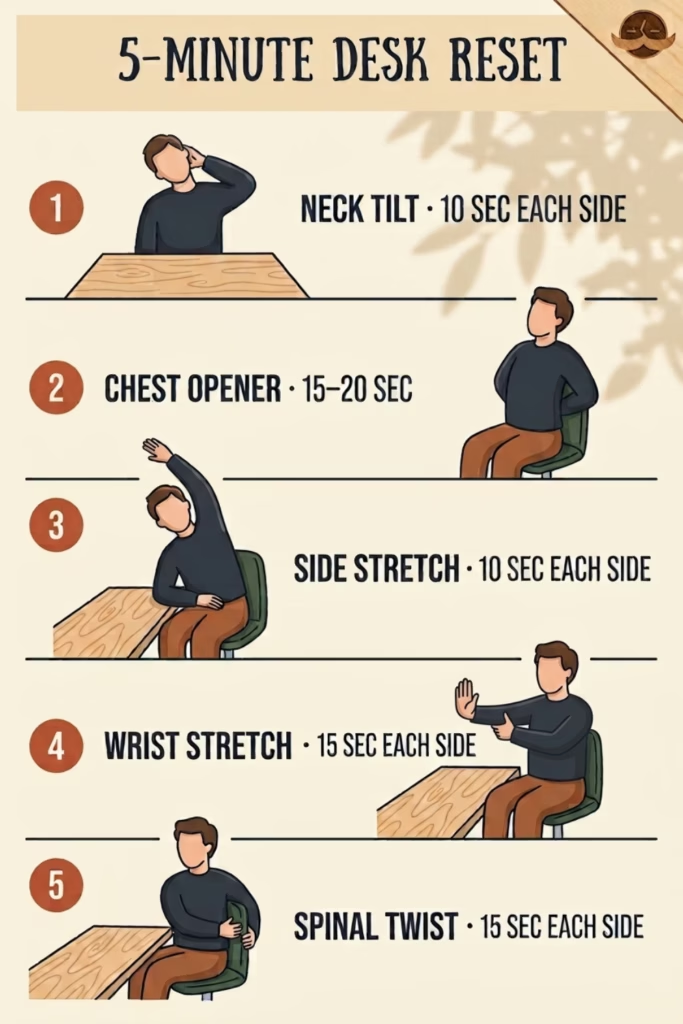
Run through these once. Top to bottom, five minutes, done.
1. Neck tilt (left + right)
Drop one ear toward your shoulder, hold for 10 seconds each side. Your neck is carrying your head all day like an overworked luggage rack. Give it a break.
2. Chest opener
Clasp your hands behind your back, squeeze your shoulder blades together, and open your chest. Hold 15-20 seconds. Counteracts the forward hunch you’ve been perfecting since the third Zoom call of the morning.
3. Side stretch
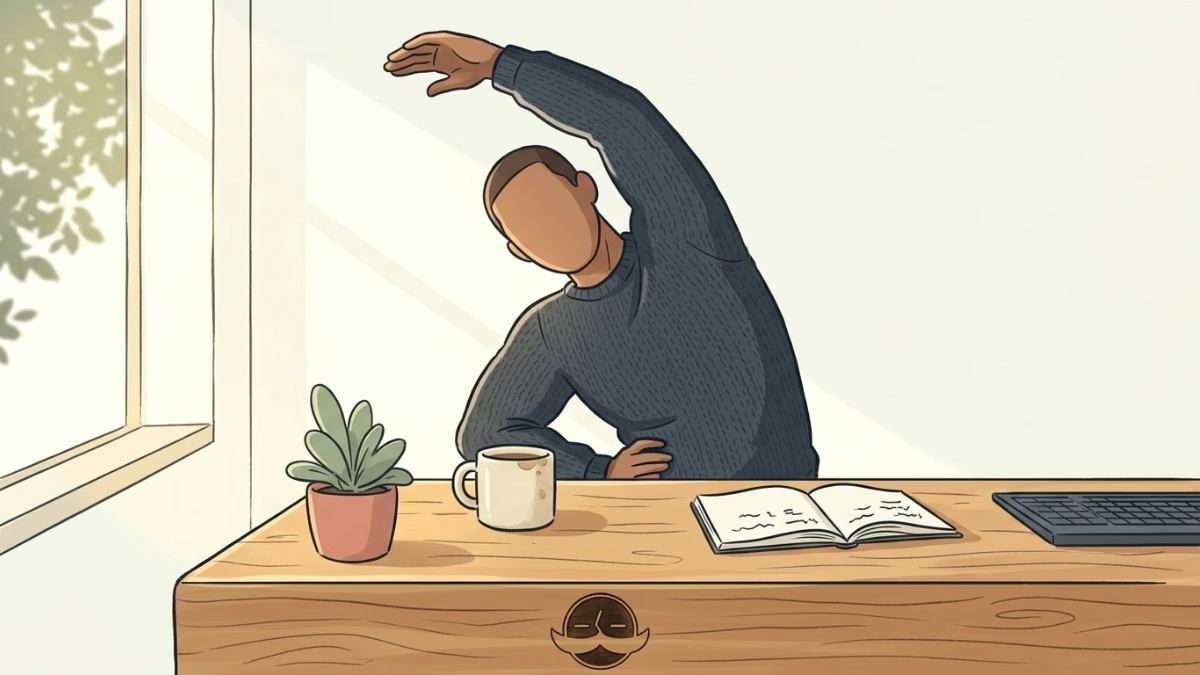
Raise one arm overhead, lean to the opposite side. SafeWork NSW recommends 10 seconds per side. Simple, effective, and you look vaguely like a tree in a gentle breeze. Worse things to be.
4. Wrist and forearm stretch
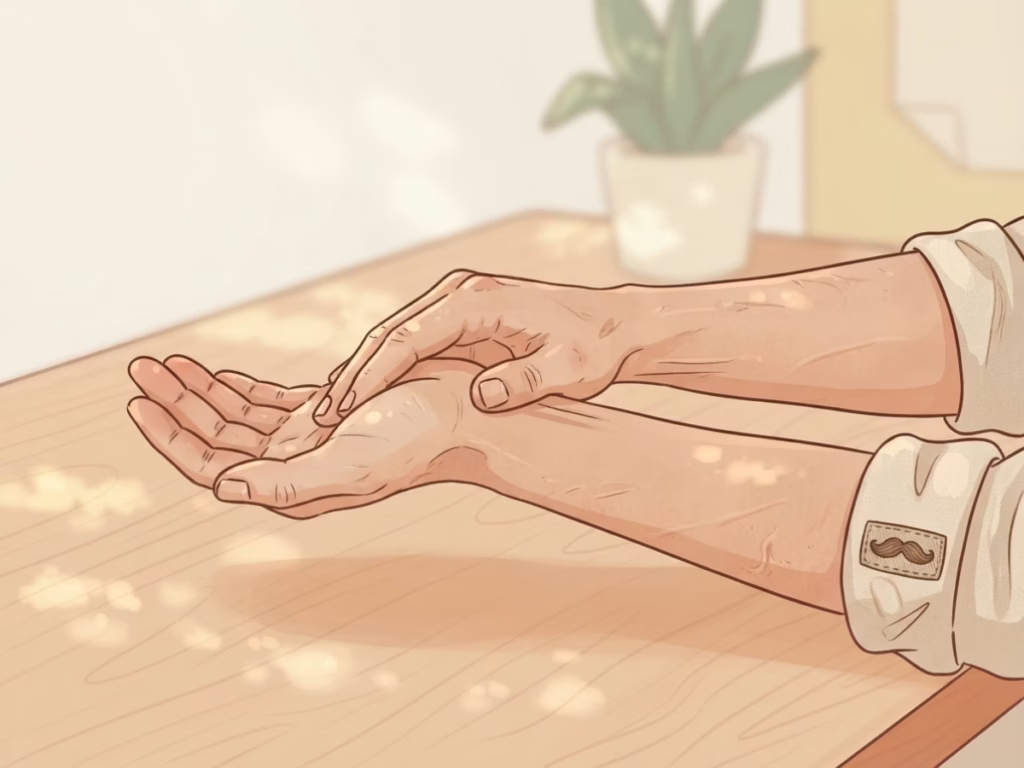
Extend one arm, pull your fingers back gently with your other hand. Hold 15 seconds per side, per SafeWork NSW. If you’ve been typing all day and skipped this one, your forearms would like a word.
5. Seated spinal twist
Sit tall, place one hand on the opposite knee, rotate gently, and hold 15 seconds each side. Your spine will make a noise it’s been saving up. You’re welcome.
When to Do It
Set a recurring calendar block, tie it to your lunch break, or use it as a reset after your phone-down walk. The point isn’t to fix your posture forever, it’s to break up long static stretches with a five-minute movement snack. Minimum effective dose. No discipline required beyond remembering you have a body.
The point isn’t to fix your posture forever, it’s to break up long static stretches with a five-minute workstation mobility routine. These are quick desk stretches you can run between meetings, no sports kit needed.
Frequently Asked Questions
How long should you hold desk stretches?
SafeWork NSW recommends holding a side stretch for 10 seconds and a forearm or wrist stretch for 15 seconds on each side, per SafeWork NSW. Most desk stretches fall in the 10-20 second range, long enough to feel something, short enough to do between emails.
Can you do desk stretches without getting up?
Yes. The Mayo Clinic notes that desk stretches can be performed while seated at your desk or standing in your workspace, per Mayo Clinic. The five moves above are all chair-friendly, no floor required.
How often should you stretch during the workday?
Once through this routine every few hours is a reasonable target for most desk workers. The goal is to interrupt long static sitting, not to train for a flexibility competition. If you only do it once a day, that’s still better than zero.
What areas does desk work affect most?
The usual suspects are your neck, chest, shoulders, wrists, and lower back, exactly the muscles shortened or compressed by hours of typing and screen-gazing. Each of the five stretches above targets one of those zones directly.
Today’s action: Do the five moves right now, in order, before you open another tab. The whole thing takes less time than reading this article did. If you want to build on the movement habit, the un-optimized morning post is worth a read next.
Get The Enough List — free.
Ten minutes, five areas. A short guide for figuring out what enough looks like in money, health, work, people, and time — before you go sprinting at someone else's finish line. Yours when you subscribe.