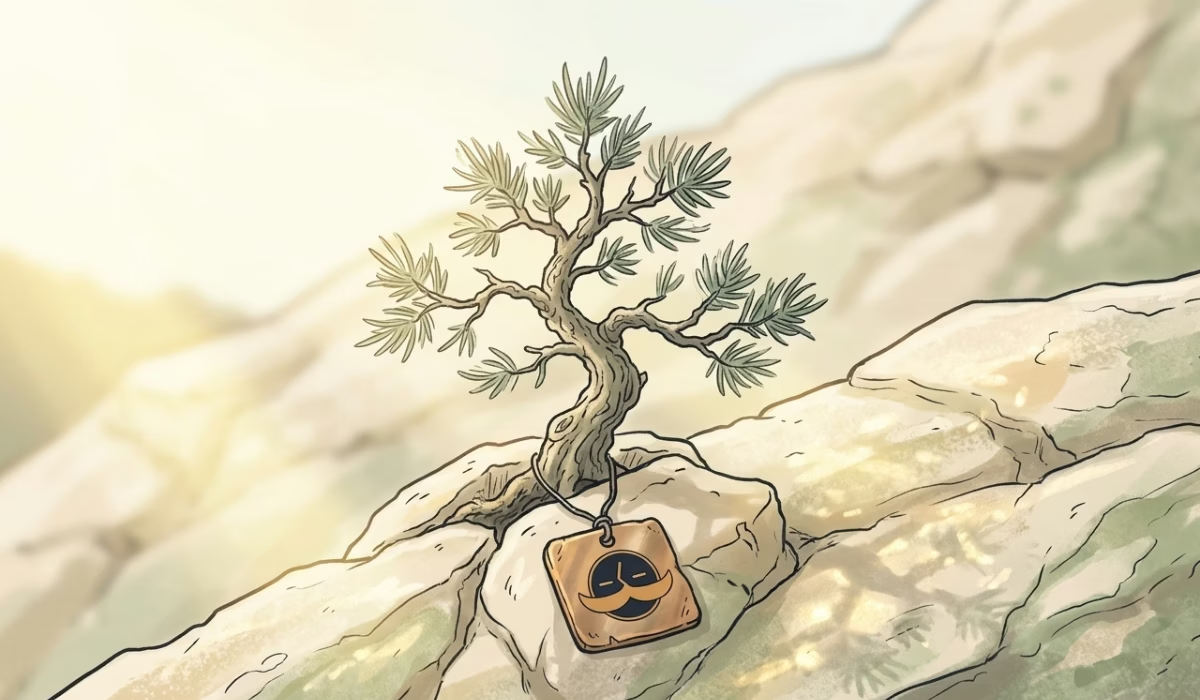
The world’s slowest growing tree is a White Cedar (Thuja occidentalis) on a Canadian Great Lakes cliffside that grew only 4 inches in 155 years, weighing just 17 grams, an average of 0.11g of wood per year, per Guinness World Records.
A 155-year-old tree in Canada holds the record for the world’s slowest growing tree, and it’s only 4 inches tall. It’s not a seedling and it’s not sick. It’s just doing its thing, very slowly, on a cliffside in the Great Lakes region. That tree, a White Cedar (Thuja occidentalis), weighs 17 grams and adds 0.11g of wood per year, which, for reference, is roughly the weight of a single paperclip. Per year. For a century and a half.
It holds the Guinness World Record for the world’s slowest growing tree. Honestly, it deserves a trophy it will never be large enough to hold.
Key Takeaways
- The record-holding White Cedar grew only 4 inches and 17 grams over 155 years, averaging 0.11g of wood annually (Guinness World Records).
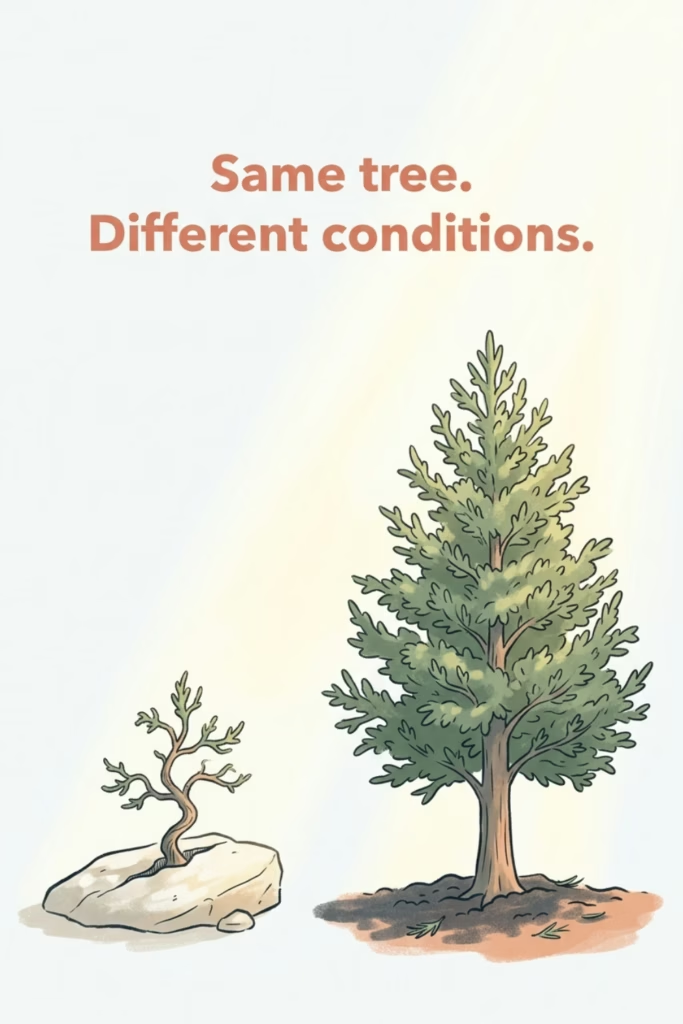
- In good conditions, the same White Cedar species can grow 13 to 24 inches per year, the cliffside environment, not the tree, explains the record.
- The Boojum tree reaches just 5 feet tall at 50 years old, adding roughly 12 inches every decade after that.
- Some slow-growing trees like the Eastern Hemlock and White Cedar can take 100 to 1,000 years to reach full maturity.
- Slow growth in harsh conditions is a survival strategy, not a failure, the same tree that inches along a cliffside can outlast faster-growing species by centuries.
Slowest Growing Tree Facts: The Conditions Explain the Record
Here’s the part competitors in the “slowest growing tree facts” space tend to gloss over: in decent soil with reasonable sun, the same White Cedar species grows 13 to 24 inches per year. The record-holder isn’t genetically defective. It’s clinging to a cliffside in conditions that would stop most things cold. The slow growth is the adaptation. It’s how the tree survives where nothing else can.
The Boojum tree pulls a similar trick. At 50 years old, it stands just 5 feet tall, barely eye-level, then adds about 12 inches every decade after that. Some Eastern Hemlocks and White Cedars take 100 to 1,000 years to reach full maturity. A thousand years. Your great-great-great-great-great-grandchildren might not see it finished.
What This Has to Do With You
Look, I’m not going to do the thing where I say “be like the tree” and leave it there. (It would make writing a lot easier though.)
But there is something real here. The cliffside White Cedar isn’t failing. It’s allocating resources to survival in a tough environment, and the result is a tree that will almost certainly outlast the fast-growers in the valley below. Speed isn’t the metric. Continuity is.

If your progress right now feels embarrassingly slow, one rep added, one page written, one slightly better habit, you’re still adding wood. The Tour de France pace piece over here makes the same case with slightly more spandex involved.
The 4-inch Cedar didn’t quit. It just picked a timeline that ensured its continuity and stuck with it.
Frequently Asked Questions
What is the world’s slowest growing tree?
The White Cedar (Thuja occidentalis) holds the record, with one specific specimen on a Canadian Great Lakes cliffside growing only 4 inches in 155 years, weighing 17 grams and averaging 0.11g of wood annually. In better conditions, the same species can grow 13 to 24 inches per year, the cliffside environment is doing most of the work here.
How slow is the Boojum tree?
At 50 years old, the Boojum tree is typically just 5 feet tall, adding roughly 12 inches every ten years after that. It’s native to Baja California and the Sonoran Desert, where slow growth is basically the local survival strategy.
Do slow-growing trees live longer?
Generally, yes. Some slow-growing species like the Eastern Hemlock and White Cedar can take 100 to 1,000 years to reach full maturity. The tradeoff for slow development is often exceptional longevity and resilience in tough conditions.
What trees grow less than one foot per year?
Several. The Bur Oak grows less than 12 inches annually, the Boojum averages around an inch a year over long stretches, and the Lodoicea palm averages just 33mm, about one inch, per year over a 40-year period. Slow is surprisingly common in the tree world.
Your one thing today: pick one area where you’ve been measuring progress in weeks instead of years. Write down what “4 inches in 155 years” would actually look like there, the smallest possible unit of real forward movement. Then do that. The cliffside is optional.
Get The Enough List — free.
Ten minutes, five areas. A short guide for figuring out what enough looks like in money, health, work, people, and time — before you go sprinting at someone else's finish line. Yours when you subscribe.