

Calvin Coolidge cut federal spending by roughly 25% in the 1920s while also lowering taxes, not by doing more, but by deliberately stopping government intervention. The lesson: knowing when to stop is a skill, not a weakness.
The lessons from Calvin Coolidge that actually stick aren’t about party politics. They’re about the harder thing: knowing when to stop. Calvin Coolidge ran the United States government the way most of us wish we ran our own lives: he figured out what was necessary, did that, and then stopped. The lessons from Calvin Coolidge that actually hold up aren’t about party politics. They’re about the harder thing: knowing when to stop.
Most productivity advice is about doing more. More systems, more habits, more optimizing. Coolidge is a useful counterweight, a reminder that the most powerful move is sometimes the one you don’t make.
Key Takeaways
- Coolidge cut federal spending by roughly 25% while lowering taxes, turning the economy around without adding new regulations (per Heritage Foundation).
- His core philosophy was that less government intervention, not more, was the highest-leverage move available to him.
- The ‘stop’ skill applies personally too: stopping unnecessary effort, spending, or over-management often produces better results than pushing harder.
- Defining your own ‘enough’ before you act is what separates purposeful restraint from giving up.
The Man Who Stopped on Purpose
Coolidge’s 1920s economic plan was straightforward: cut spending dramatically, lower taxes, and reduce the regulatory burden on businesses, per the Heritage Foundation. That’s it. No grand new programs. No sweeping interventions. The economy, largely left alone to self-correct, turned around.
The result was a federal government that spent roughly 25% less than it had before, while taxes came down alongside it, per the Heritage Foundation. Not bad for a guy whose entire philosophy could be summarized as “maybe we don’t need to do that.”
Now, this isn’t a politics post. What’s interesting about Coolidge isn’t his party affiliation, it’s the cognitive move he made. He looked at a problem, decided the right answer was restraint, and then had the discipline to actually practice it. That’s harder than it sounds. Doing nothing when you’re anxious feels like failing. It rarely is.
What the Lessons from Calvin Coolidge Look Like in Your Life
Think about the last time you over-managed something.
A project you kept tweaking past the point of improvement. A budget spreadsheet with seventeen tabs. A plan you kept revising instead of executing.
Coolidge’s lesson isn’t laziness. It’s the recognition that effort has diminishing returns, and sometimes you hit them faster than you think. The skill is noticing when you’ve crossed from “working on it” into “hiding in it.”
A few places this shows up:
- Your schedule. Adding one more commitment rarely fixes the feeling that you’re not doing enough. Usually it just buries the thing you actually needed to do. Coolidge figured out when to stop working on the government’s budget; the same question applies to your own.
- Your spending. Stopping unnecessary outflows, subscriptions, impulse buys, the gym membership you’ve visited twice (we don’t talk about it), creates more breathing room than most income bumps.
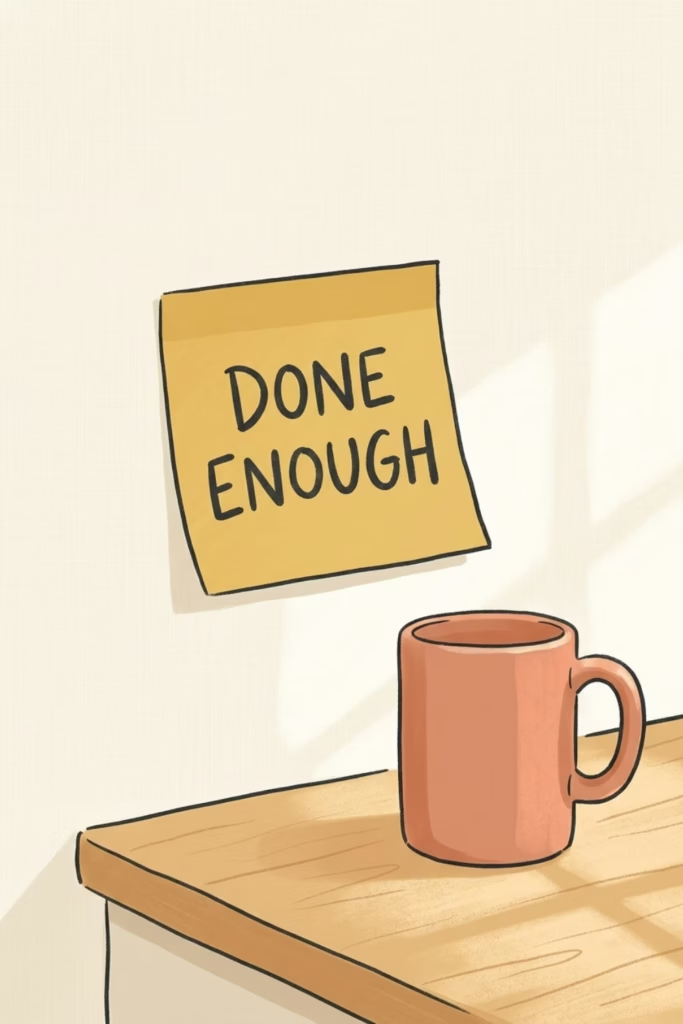
- Your goals. If you haven’t defined what “enough” looks like before you start, you’ll run past the finish line and wonder why you still feel empty.
That last one is the big one. Coolidge planted his finish line before he acted. He knew what “enough” government looked like, which meant he also knew when to stop. Most of us are sprinting without one. (This pairs well with pacing yourself like a Tour de France rider, same principle, different arena.)
Frequently Asked Questions
What is Calvin Coolidge most known for in terms of economic policy?
Coolidge is best known for cutting federal spending by roughly 25% while simultaneously lowering taxes in the 1920s, without introducing new regulations, per the Heritage Foundation. His approach was to let the economy self-correct rather than intervene.
What’s the main lesson from Calvin Coolidge for everyday life?
The lessons from Calvin Coolidge come down to one thing: knowing when to stop is a skill worth developing, not a sign you’ve given up. Coolidge’s restraint wasn’t passivity, it was a principled decision about where effort was actually useful and where it wasn’t.
How does Coolidge’s philosophy connect to avoiding burnout?
Burnout usually comes from effort without a defined endpoint. Coolidge defined his endpoint first (less government, lower spending, lower taxes) and stopped when he got there. Doing the same with your own goals, defining “enough” before you start, is one of the more underrated burnout-prevention tools available.
Is “doing less” the same as being lazy?
No, and this is the distinction Coolidge makes useful. Doing less strategically, stopping when the work is done, not when you’re bored, is different from avoiding hard things. Marcus Aurelius made a similar point about not adding unnecessary effort to what’s already complete.
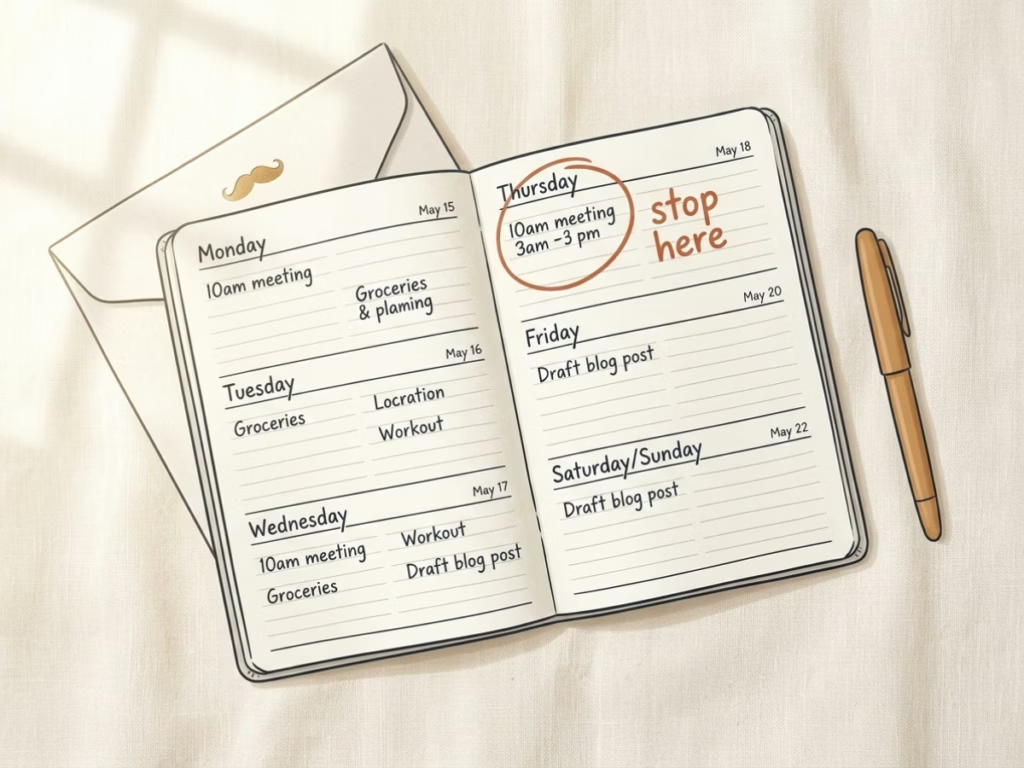
One thing you can do today: pick one area of your life where you’re still adding effort past the point of usefulness. Your schedule, a project, a habit you keep restarting. Write down what “done” actually looks like. Then stop when you get there. Coolidge would approve.
Get The Enough List — free.
Ten minutes, five areas. A short guide for figuring out what enough looks like in money, health, work, people, and time — before you go sprinting at someone else's finish line. Yours when you subscribe.

[…] This is the same territory as knowing when you’ve hit your finish line instead of just chasing someone else’s. If you’ve ever wondered whether you’re doing enough, this one’s worth a read too. […]