
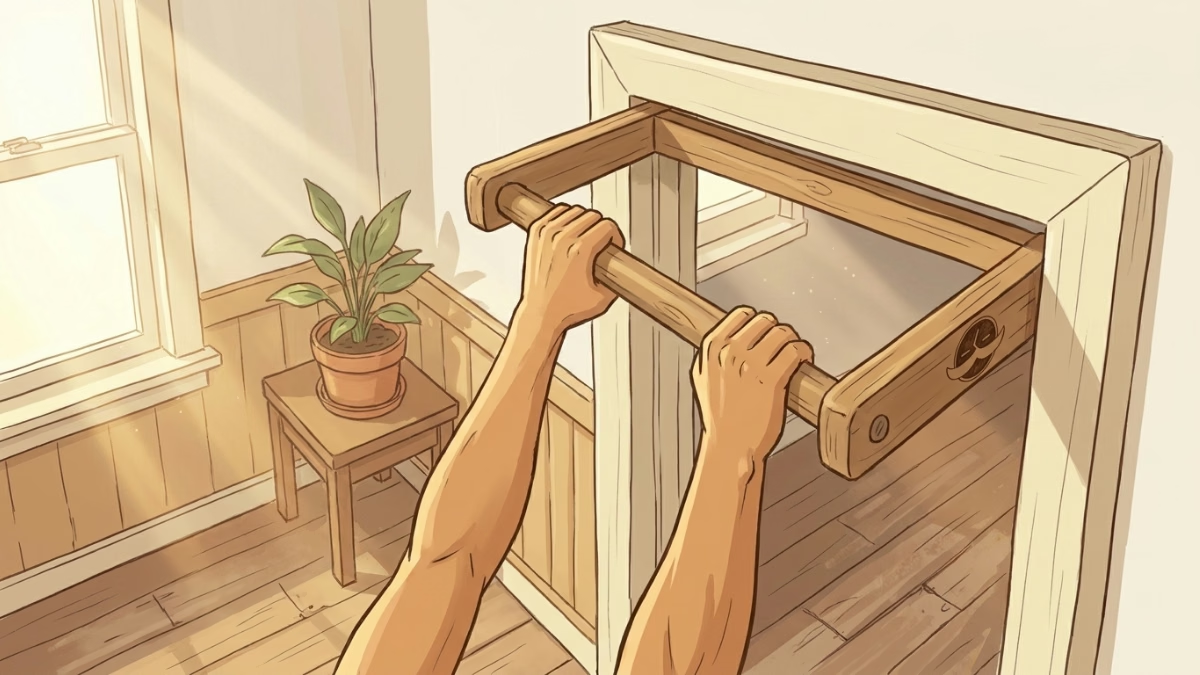
There are real strength training alternatives to the gym, and most of them cost less than a month of dues. The gym isn’t the only place strength gets built. If the whole experience, the commute, the waiting, the guy who grunts like he’s summoning a minor deity, puts you off, you’re not lazy. You’re just looking for a lower-friction path to the same result.
Good news: that path exists, and it doesn’t require a $70-a-month membership or a garage full of iron.
Experts say bodyweight exercises are a solid starting point for anyone who doesn’t feel like gym training, and a well-structured home routine can get you genuinely strong, not just “I did some pushups” strong.
Key Takeaways
- Bodyweight exercises are a legitimate starting point for building strength without a gym, according to fitness experts.
- A structured no-gym routine of 2-3 sets of 8-12 reps, done 2-3 times per week, is enough to make real progress.
- A pull-up bar and resistance bands form the minimum useful two-purchase home setup for strength training.
- A structured session can include single-leg squats to a bench, banded rows, and mini-band lateral lunges with 3 sets and short rest periods.
- Consistency beats intensity, lower-friction training at home often leads to more sessions than an inconvenient gym membership.
The Minimum Effective Dose Setup
You don’t need much. Seriously, a mat, a pull-up bar, and a resistance band. That’s the two-purchase kit that a strength-focused source calls the minimum useful setup for training without a gym. Total cost is somewhere in the “less than one month’s gym membership” range, and the pull-up bar doesn’t close early on holidays.

From there, the structure is simple. A no-gym strength routine built around 2-3 sets of 8-12 reps, or 20-30 second isometric holds, done two to three times per week is enough to make real progress. That’s it. Not five days a week, not an hour a session, not a pre-workout ritual that takes longer than the workout itself.
Three sessions. Thirty to forty minutes each. Rest days in between because your muscles actually grow during the rest (the gym guys know this too; most of them just don’t act like it).
A Starter Session You Can Do Today
If you want a concrete place to begin, this works well:
- Single-leg squats to a bench, 3 sets of 8 each side
- Banded rows (anchor the band to a door), 3 sets of 10-12
- Mini-band lateral lunges, 3 sets of 10 each side
- Push-up variation of your choice, 3 sets to near-failure
- Dead hang or isometric hold, 20-30 seconds, 2-3 rounds
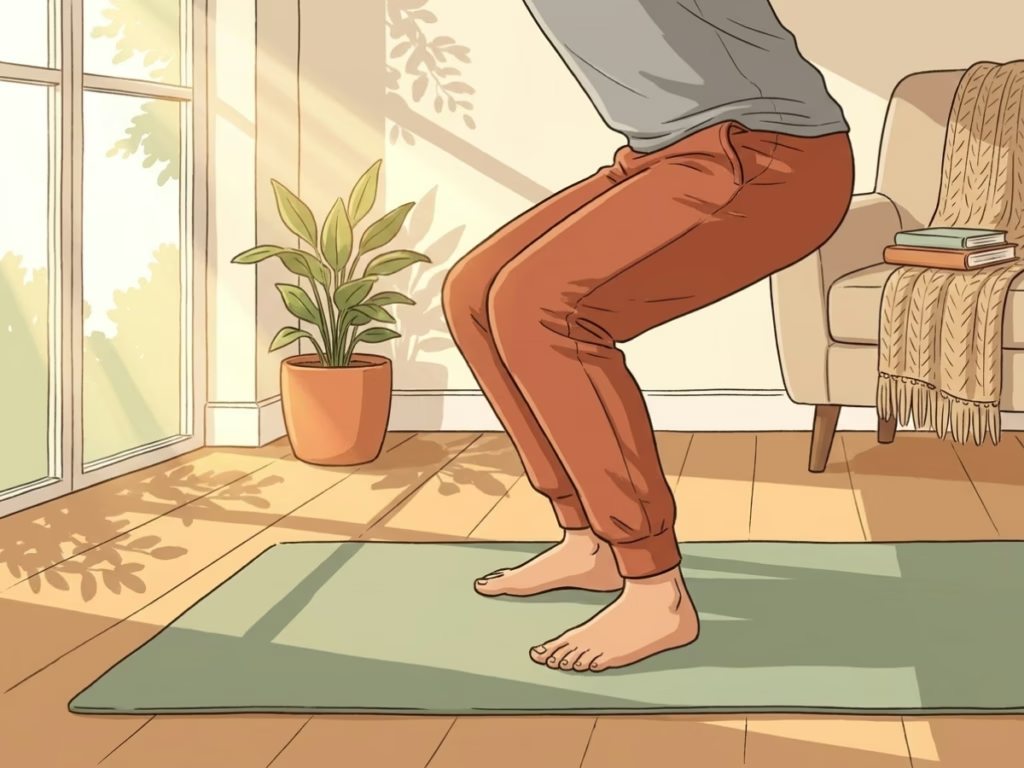
This kind of structured approach, with 30-60 seconds of rest between sets, is the difference between a real training session and random movement. Random movement is fine for a Tuesday walk. It’s not how you build strength.
The principle underneath all of this is progressive overload, you make things harder over time. More reps, slower reps, more resistance on the band, harder push-up variation. Your body doesn’t know if the resistance is coming from a barbell or a $15 band. It just knows it has to work.
Why Strength Training Alternatives to the Gym Beat Willpower
Here’s the honest reason most gym memberships die a quiet death by February: friction. The commute, the parking, the bag you have to remember, the fact that it’s raining and the gym is twenty minutes away. Every one of those is a small tax on motivation, and motivation is a finite resource (ask anyone who’s tried to build a morning routine on willpower alone).
A home setup removes most of those taxes. The bar is in the doorframe. The band is on the hook. You can train in your pajamas at 7am or 11pm, and nobody’s going to judge your form or wait for the rack.

Consistency is the actual variable that builds strength over months. Lower friction equals more sessions. More sessions equal results. It’s not complicated, it’s just inconvenient to admit that the gym was never the point.
Frequently Asked Questions
Can you actually build muscle with bodyweight exercises at home?
Yes. Bodyweight work is one of the most practical strength training alternatives to the gym for people who want consistent sessions without a commute.
Experts confirm bodyweight training is a legitimate starting point for building strength, not a consolation prize for people who can’t afford a gym. The key is progressive overload: you keep making the movements harder as you get stronger, the same way you’d add weight to a bar.
How many days a week should I train at home?
Two to three times per week is the effective range for a home strength routine, per a structured no-gym approach. Rest days matter, that’s when the adaptation actually happens. Three solid sessions beats six halfhearted ones every time.
What’s the minimum equipment worth buying?
A pull-up bar and resistance bands. That two-item setup is what a strength-focused source recommends as the starting kit for people who want real training without a gym. Add dumbbells later if you want, but you can get surprisingly far without them first.
Is home strength training good for beginners?
It’s arguably better than starting at a gym. You’re not fighting for equipment, you’re not intimidated by strangers, and you can move at your own pace. Nail the basics, push, pull, hinge, squat, and you’ll have a foundation that transfers to anything else you want to try later.
What if I travel or don’t have space?
Resistance bands fold into a bag pocket and weigh nothing. A hotel room floor and a door anchor is enough for a full session. Building strength anywhere is genuinely possible with bands and bodyweight, “I’m traveling” is a reason to modify, not to stop.
Today’s action: pick up a resistance band and a door-mount pull-up bar. You can have both for less than the cost of one month’s gym membership. Tomorrow, run through the starter session above. That’s it. You don’t need to overhaul your life, you just need to make one session easier to start than to skip.
If you want the mental side of the habit to click too, the 5-minute journal is worth a look. Small, consistent, and doesn’t require you to become a morning person.
Get The Enough List — free.
Ten minutes, five areas. A short guide for figuring out what enough looks like in money, health, work, people, and time — before you go sprinting at someone else's finish line. Yours when you subscribe.

Thoughts?