
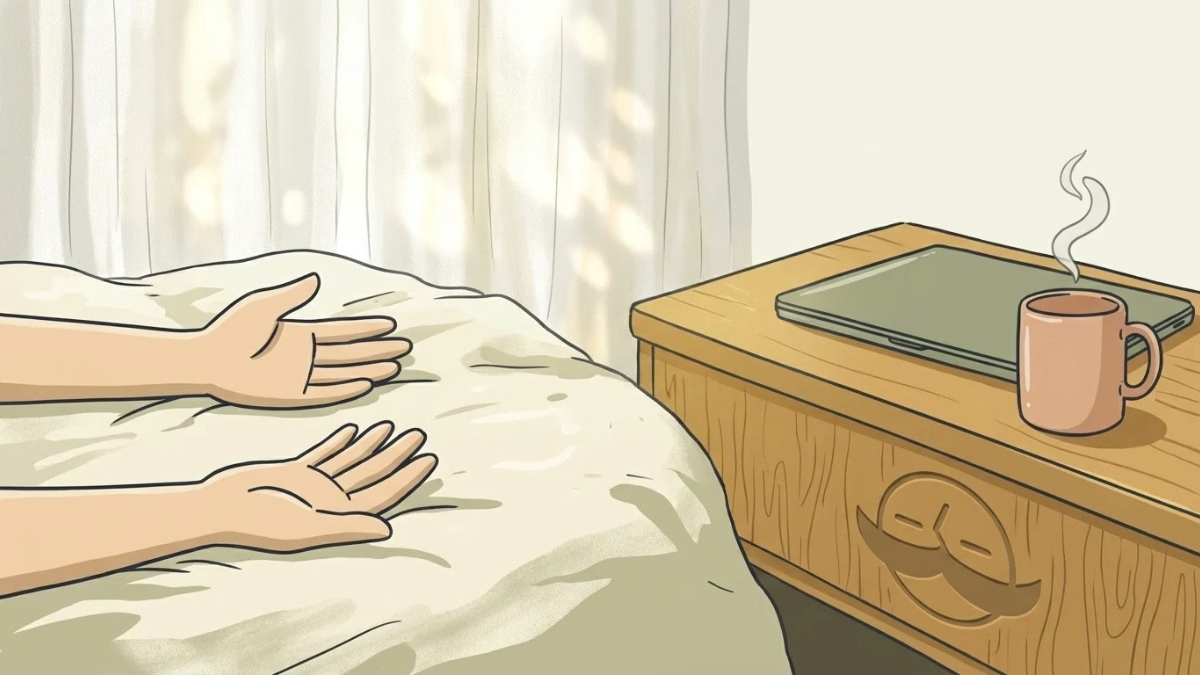
You close the laptop, lie down, and your brain starts running the same loop it’s been running for the last three hours, spreadsheet rows, Slack notifications, or yes, actual Tetris pieces spinning in the dark. That’s the Tetris effect, and if you’re trying to figure out how to stop it, the answer isn’t “just relax.” It’s about giving your brain a different last input before it goes offline for the night.
Key Takeaways
- In a classic study, 9 of 12 novice Tetris players reported seeing spinning, falling pieces as they drifted off to sleep, the effect is that common and that fast to appear.
- The imagery occurs during Stage 1 (hypnagogic) sleep, the light transition between wakefulness and sleep, not during deep or REM sleep.
- The core mechanism is memory replay during rest, which your brain uses to consolidate what it just learned, useful in theory, annoying at midnight.
- A practical fix: create a defined notification window for work pings instead of leaving alerts on all day, so your brain isn’t in a constant task loop heading into the evening.
- The same visual-memory competition that causes the Tetris effect has been studied as a potential tool for reducing intrusive memories after distressing events.
What’s Actually Happening Up There
The Tetris effect isn’t a glitch. It’s your brain doing its job, badly timed. During hypnagogia, the drowsy bridge between being awake and actually asleep, your mind drifts back to whatever task it was most recently locked onto. In a classic sleep study, 9 of 12 novice players reported seeing Tetris pieces spinning and falling as they drifted off. The imagery showed up during Stage 1 sleep, the lightest transition phase. What’s wild is that amnesic participants showed the same sleep-onset imagery even though they had no memory of playing the game. Your brain doesn’t need conscious recall to run the loop, it just runs it.
A 2024 report describes this as the unconscious mind drifting back to a repetitive waking task during hypnagogia. The mechanism underneath is memory replay during rest, which is how procedural memory consolidates, useful when you’re learning something, less useful when you’re trying to sleep and your brain is doing a highlight reel of your inbox.
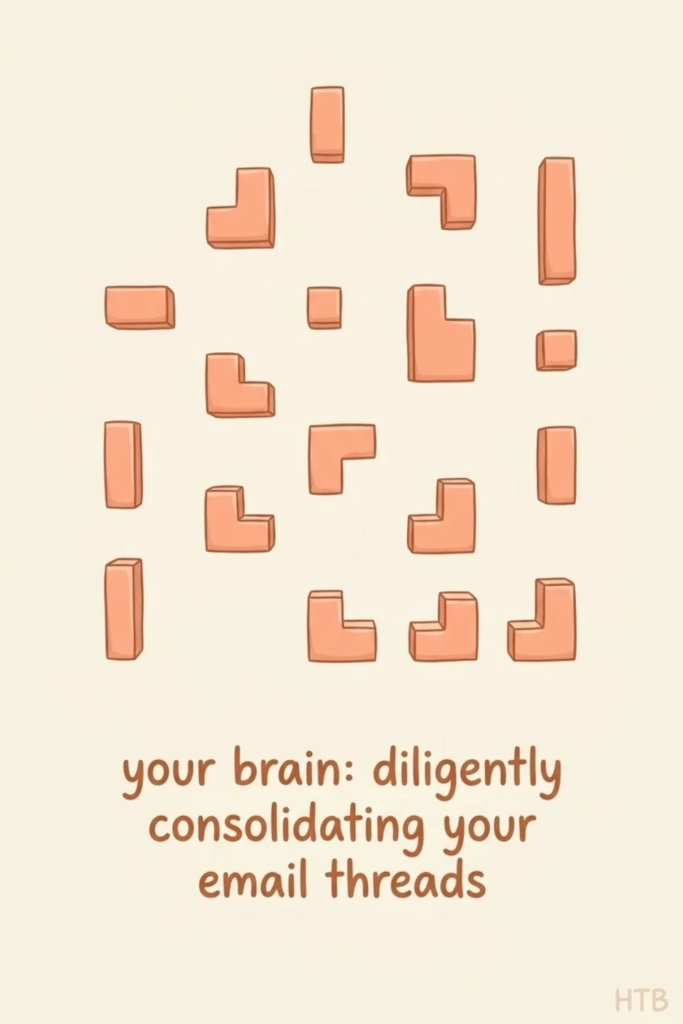
(Your brain: diligently consolidating your email threads. Truly a hero we don’t deserve.)
How to Stop the Tetris Effect Tonight
The fix is not emptying your mind. That’s like trying to stop a song from being stuck in your head by thinking really hard about nothing. What works is breaking task continuity before hypnagogia kicks in.
Give your brain a different last input. Thirty to sixty minutes before bed, switch to something visually and cognitively unrelated to whatever you were doing. If you spent the evening on a screen, reading a physical book works. A boring hobby, the kind nobody posts about, is surprisingly good at this. Your brain needs something new to chew on, not a continuation of the last task.
Cut the notification drip. Your phone’s notification habits directly feed brain replay at night, so treating your phone like a pager with office hours is one of the cheapest fixes here. Try creating a defined time window for work pings instead of leaving all alerts active all day. When your phone is buzzing you back into work mode every 20 minutes through dinner, your brain never actually leaves the task, it’s still looping when you hit the pillow. Pick a cutoff. Stick to it. The Slack message will survive the night. (Probably.)
Physical transition helps. A short walk, a shower, even cooking something simple, anything that engages your body and breaks the sitting-staring-at-a-screen posture that your brain now associates with the task. Pattern interrupt. Done.

The effect typically fades once the intensity of the activity drops or you take a meaningful break. You’re just helping it fade faster.
Frequently Asked Questions
Why does the Tetris effect happen right as I’m falling asleep?
It happens during hypnagogia, the Stage 1 transition between wakefulness and sleep, when your brain’s conscious filtering loosens and it defaults to replaying recent repetitive input, per Science.org. Think of it as your brain’s autosave function running at the worst possible moment. The good news: it’s Stage 1, not deep sleep, so it usually doesn’t wreck your rest if it passes quickly.
Is the Tetris effect actually bad for you?
Generally no. The effect is usually harmless and fades once the repetitive activity stops or intensity drops, per Science Insights. It’s your memory system consolidating procedural learning, which is a feature, not a bug, just one that shows up at inconvenient hours.
Can the Tetris effect happen with things other than games?
Absolutely. Repetitive work tasks, scrolling, coding, even long drives can trigger it. If you’ve ever lain awake with spreadsheet rows or highway lines drifting through your head, that’s the same mechanism, your brain replaying the last dominant loop.
Does it help to play a different game or do a different task before bed?
Yes, if it’s visually and cognitively different enough. The goal is to give your brain a new pattern to replay instead of the old one. Just don’t replace one repetitive screen loop with another, your brain isn’t picky about which loop it runs.
Tonight, pick a hard stop time for work notifications and do one genuinely different thing in the hour before bed. That’s it. One session won’t rewire your brain, but it’ll probably be the best sleep you’ve had all week.
Get The Enough List — free.
Ten minutes, five areas. A short guide for figuring out what enough looks like in money, health, work, people, and time — before you go sprinting at someone else's finish line. Yours when you subscribe.
Thoughts?