Archaeologists have pulled 3,000-year-old honey out of Egyptian tombs and found it still edible. That’s not folklore, that’s chemistry doing its job quietly, over millennia, without any fanfare whatsoever.
So why does honey never spoil? The short answer: it’s an extremely inhospitable place to be a microbe. Honey’s water content sits at roughly 17%, per Compound Chem, far too dry for bacteria or fungi to get comfortable. Its water activity (a measure of how available that moisture actually is) clocks in around 0.6, and most molds and bacteria can’t grow below 0.75, Compound Chem. Add an average pH of around 4, and you’ve essentially built a moat around every spoonful, per Compound Chem.
Key Takeaways
- Honey’s water activity is about 0.6, well below the 0.75 threshold most molds and bacteria need to survive.
- With an average pH of around 4, honey’s acidity actively blocks microbial growth.
- Bees contribute glucose oxidase, which produces gluconic acid and hydrogen peroxide, both antimicrobial compounds.
- ‘Use by’ dates on honey jars refer to peak quality, not food safety, properly sealed honey doesn’t have a true expiration date.
- Honey can ferment or go moldy if moisture gets in, so the seal matters as much as the chemistry.
Why Does Honey Never Spoil? It’s a Physics-and-Chemistry Trap, Not Magic
Here’s the part that gets genuinely interesting. Honey is hygroscopic, meaning it actively pulls moisture out of whatever touches it, including microbes. Bacteria land in honey and essentially get dehydrated on contact. (Rough way to go, if you’re a bacterium.)
Bees also contribute glucose oxidase to the mix, which helps produce gluconic acid and hydrogen peroxide inside the honey, Deep Green Permaculture. That’s right: hydrogen peroxide, the same stuff in your medicine cabinet, is quietly doing antimicrobial work in your pantry. Bees figured this out millions of years before we did, and they didn’t even write a paper about it.
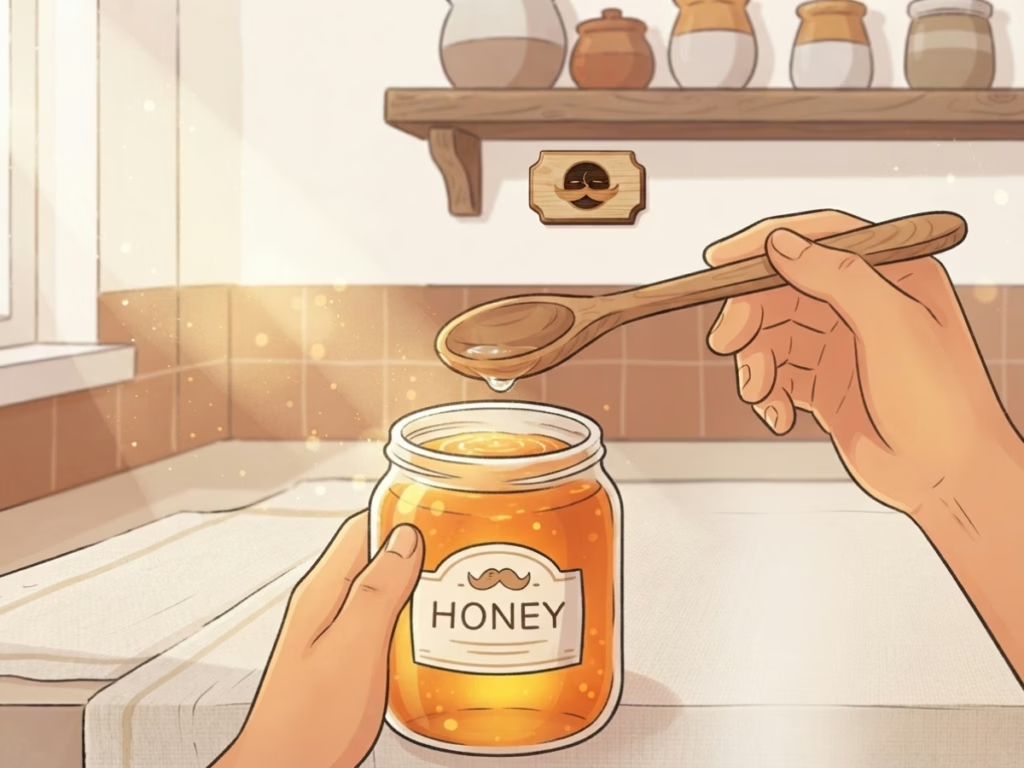
The one vulnerability? Moisture. Let water into the jar, from a wet spoon, a poorly sealed lid, or just leaving it open near the stove, and you’ve broken the system. Honey can ferment or develop visible mold if contaminated, Bee Inspired Goods. The chemistry is bulletproof; the storage is on you.
What the “Use By” Date Actually Means
If your jar has a date stamped on it, that’s a quality marker, not a safety warning, Food Network. Manufacturers print it because honey can crystallize or lose some aroma over time, not because it’s going to hurt you. Properly sealed, honey’s shelf life is indefinitely stable. That’s not marketing copy, that’s just what the chemistry does. Crystallized honey is still perfectly good.
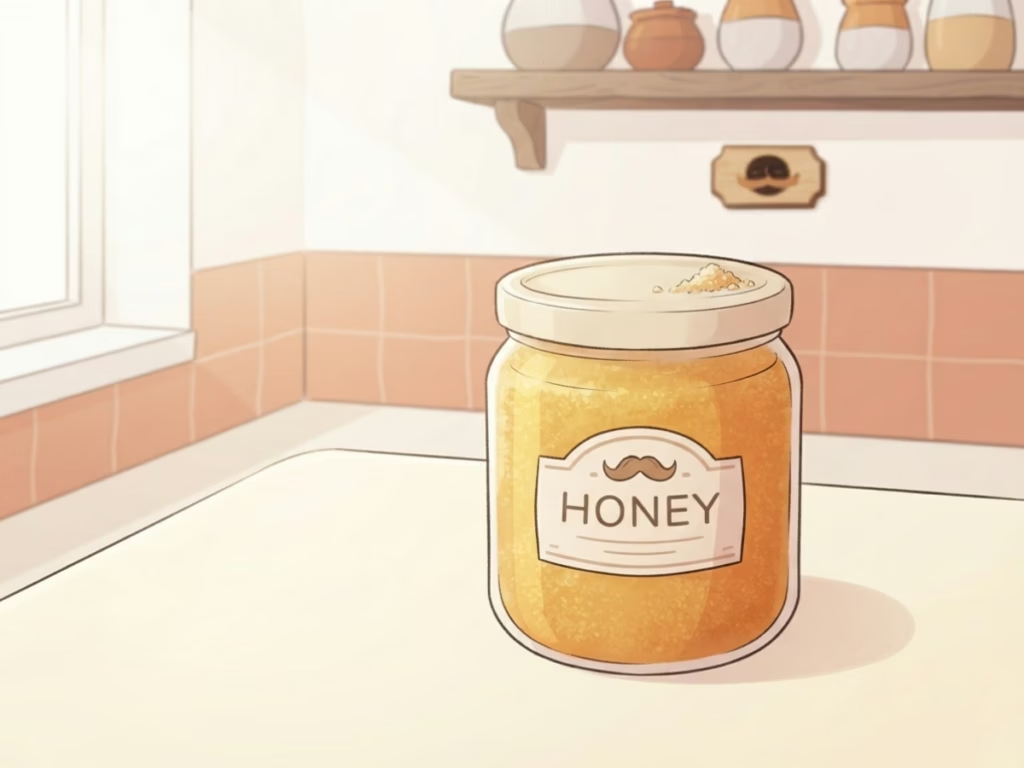
A few seconds in warm water and it’s back. (This is the rare case where the fix is genuinely that simple.)
The Patience Angle Nobody Talks About
Honey’s durability isn’t accidental. Bees engineer a system, low moisture, high acidity, antimicrobial compounds, specifically designed to protect the harvest long after the work is done. The result lasts thousands of years not because of luck, but because the conditions were right from the start.
That’s a useful frame for anything worth building slowly. The bristlecone pine does something similar, grows almost imperceptibly, but survives for millennia because it’s adapted to exactly its environment. Durability is engineered, not stumbled into.
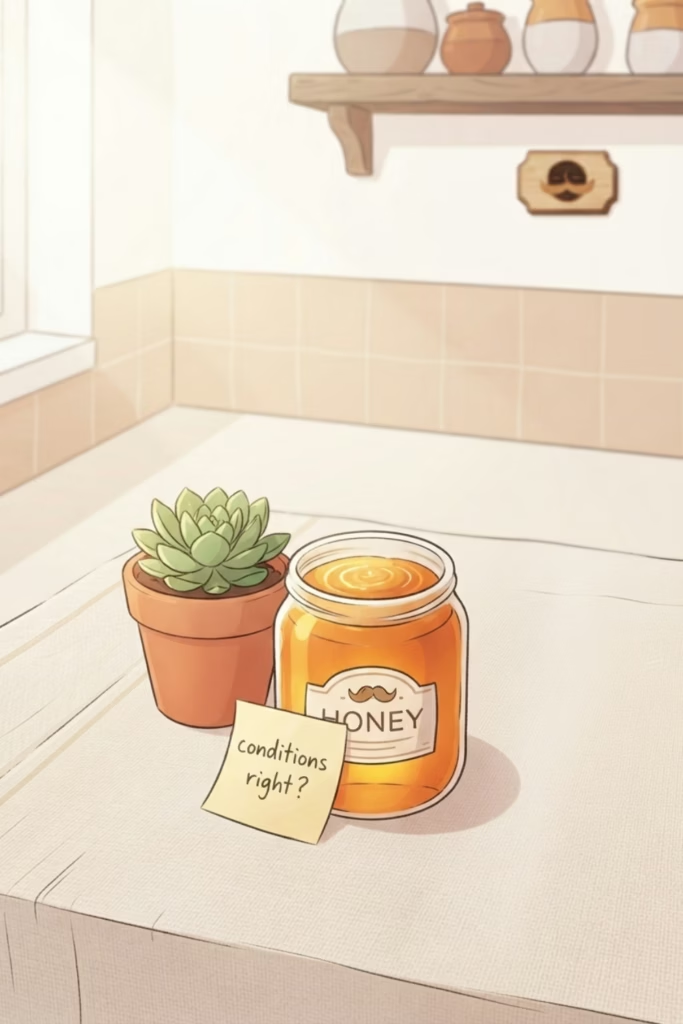
If you’re working on something that feels slow, a habit, a skill, a goal you’ve been chipping at, the question isn’t always “how do I speed this up?” Sometimes it’s “are the conditions right?” Protect the thing from the stuff that would contaminate it (distraction, impatience, taking shortcuts that let moisture in), and let the chemistry do its work.
Frequently Asked Questions
Why does honey never spoil?
Honey’s water content of about 17% and its water activity of around 0.6 make it too dry for most bacteria and molds to survive, since most microbes need a water activity of at least 0.75 to grow, per Compound Chem. Its average pH of around 4 adds another layer of antimicrobial protection. Bees also contribute glucose oxidase, which produces hydrogen peroxide and gluconic acid inside the honey, per Deep Green Permaculture. Together, those factors make honey one of the few foods that genuinely has no spoilage-driven expiration.
Does honey expire or go bad?
Properly sealed honey doesn’t have a true expiration date, “use by” stamps on jars refer to peak quality, not safety,per Food Network. Crystallization (that grainy texture you might find in an old jar) is normal and reversible. The only real risk is contamination from moisture, which can lead to fermentation or mold.
Can honey go moldy?
Yes, but only if moisture gets into the jar. Honey’s chemistry suppresses microbial growth as long as it stays dry and sealed, per Bee Inspired Goods. The fix is simple: use a dry spoon, keep the lid tight, and store it away from steam sources like the stove.
Is crystallized honey still good?
Crystallization is a natural process and has nothing to do with spoilage. Place the jar in warm (not boiling) water for a few minutes and it’ll return to a liquid state. The flavor and chemistry are intact.
Today’s concrete move: check the honey in your pantry. If it’s crystallized, warm it up and use it. If the lid’s been loose, tighten it. Small maintenance on something that’s already working, that’s the whole lesson, really.
Get The Enough List — free.
Ten minutes, five areas. A short guide for figuring out what enough looks like in money, health, work, people, and time — before you go sprinting at someone else's finish line. Yours when you subscribe.