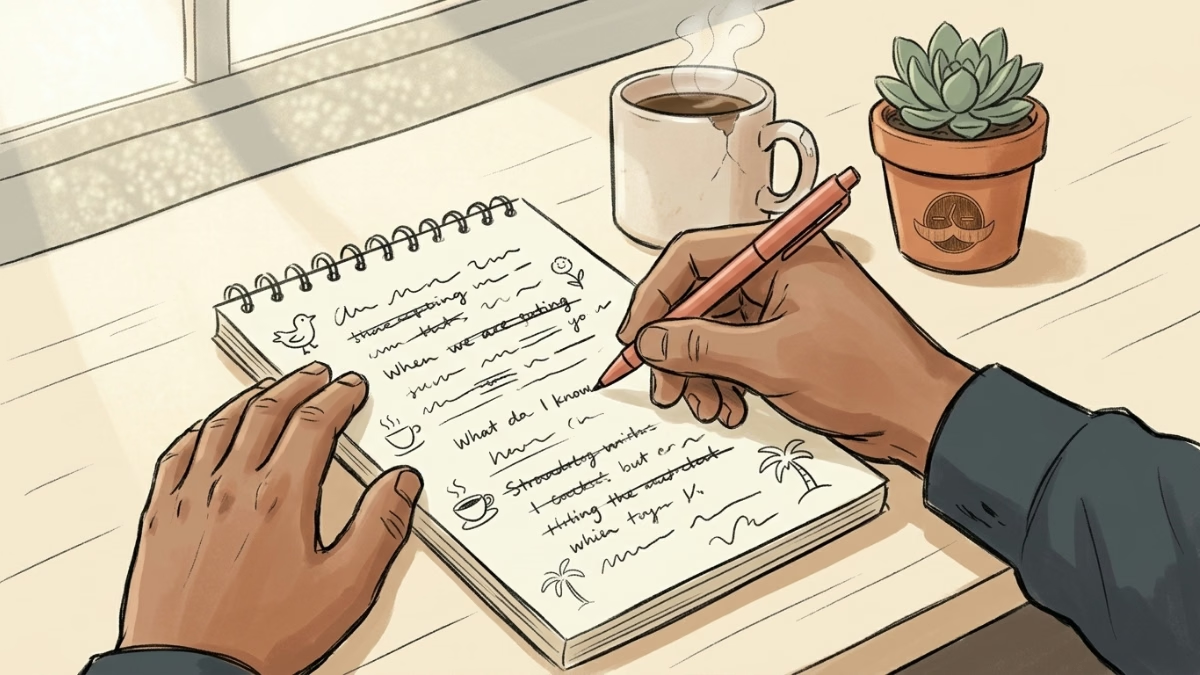
Week 0 of anything, a new job, a new habit, a new hobby, is supposed to be a mess. If it isn’t, you’re probably not trying anything hard enough to learn from.
That’s not a pep talk. It’s actually how learning works. Greater Good Magazine notes that failure contains “superior information” precisely because it violates your expectations, which makes it more diagnostically useful than success. Success just tells you that you did something right. A fumble tells you exactly where the gap is.
That’s the whole premise of learning from early failures: the sooner you fumble, the sooner you find out what actually needs fixing.
Key Takeaways
- Early mistakes are diagnostically more useful than early successes because they violate your expectations and force you to examine what went wrong, per Greater Good Magazine.
- The real trap after a mistake is identity fusion, turning one bad attempt into ‘I’m bad at this’, which shuts down learning faster than the mistake itself.
- A practical post-mistake review separates what was in your control from what was external before deciding what to change, per the U.S. Chamber of Commerce.
- Writing mistakes down in an error journal can reveal repeated patterns and weak spots that are invisible in the moment.
- Week 0 is supposed to be messy. Treating early fumbles as data points instead of verdicts is what separates people who improve from people who quit.
The Problem Isn’t the Mistake. It’s What You Tell Yourself About It.
Here’s the trap most people fall into: they take one bad attempt and turn it into a personality trait. “I’m just not a morning person.” “I’m not cut out for this.” “I’m bad at cooking.” (I have eaten my own cooking. The jury was right somtimes.)
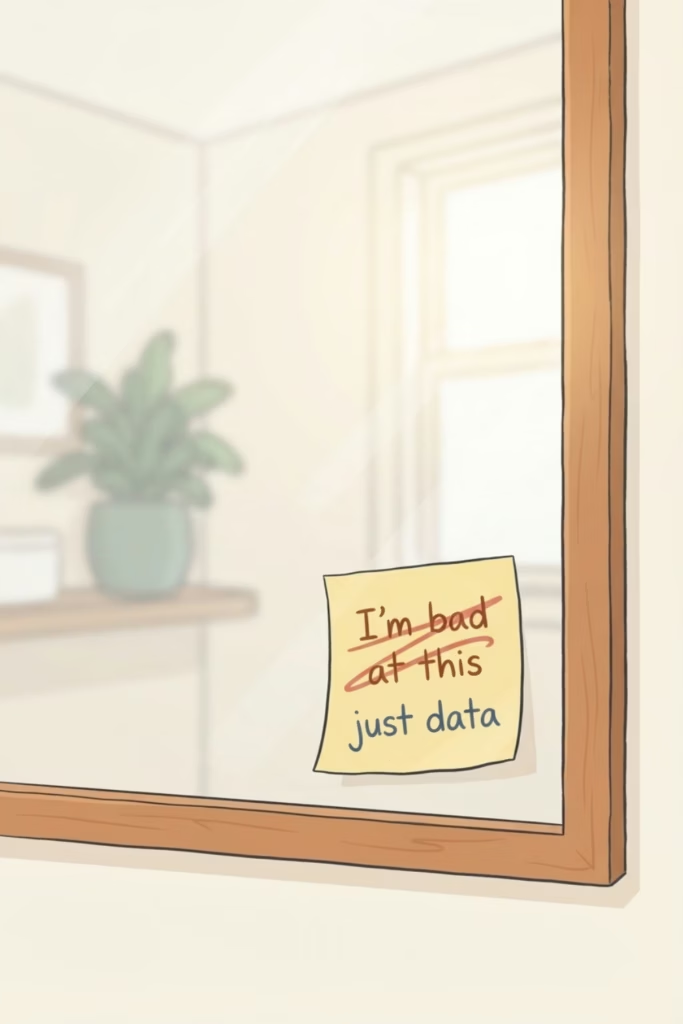
Researchers call this identity fusion, and it’s the thing that actually blocks learning, not the mistake itself. The mistake is just information. The story you tell about the mistake is what determines whether you use it or get buried by it.
Greater Good also recommends self-compassion after failure, which sounds soft until you realize that harsh self-criticism doesn’t make you improve faster. It mostly just makes you avoid trying again. Which is the opposite of what you need in Week 0.
A Simple Three-Question Review (Takes Five Minutes)
You don’t need a 90-minute debrief. You need three questions, and the U.S. Chamber of Commerce’s guide on learning from mistakes lays them out cleanly (I know, this is a weird crossover but hear me out):
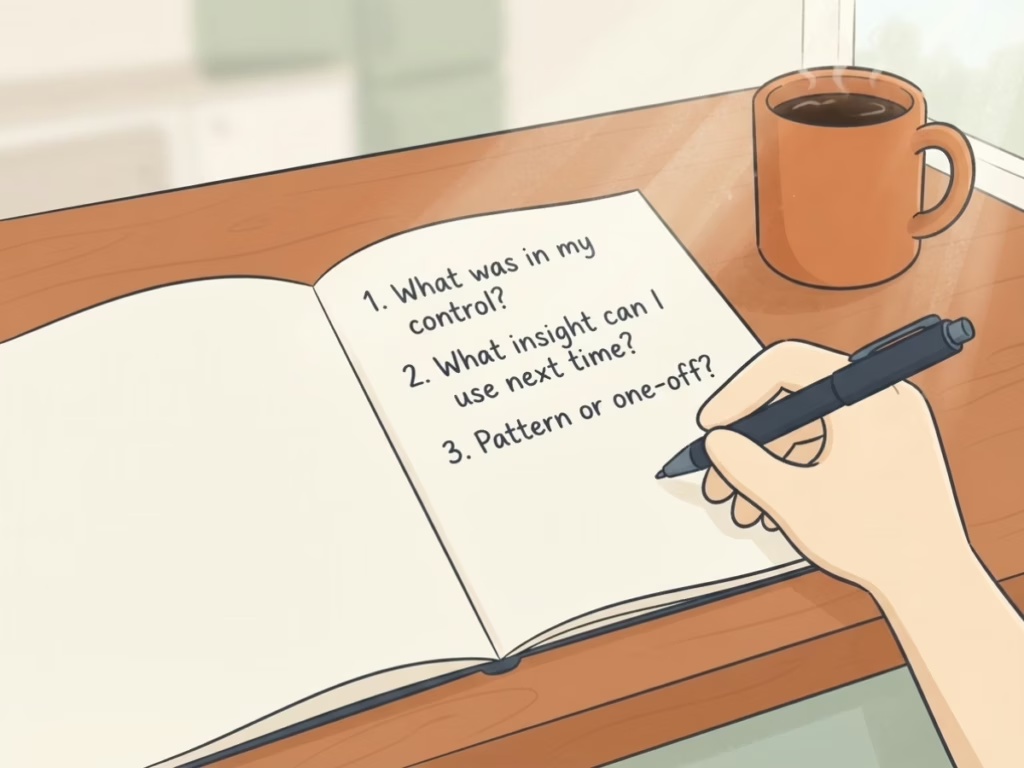
- What was in my control, and what wasn’t? (Sorting this prevents you from blaming yourself for weather and ignoring the part you actually own.)
- What insight can I use next time?
- Is this a pattern, or a one-off?
That last question matters more than it sounds. A one-off fumble is noise. A pattern is a signal. And you can’t see the pattern until you write it down, which is why keeping a rough error journal, even just a notes-app voice memo, is worth the two minutes it takes. You’re not writing a memoir. You’re looking for the thing that keeps showing up.
If you’re trying to figure out how to recover from early failure without losing momentum, this three-question check is the shortest path from “that went badly” to “here’s what I do next”.
If you want a framework for turning those answers into an actual plan, the SMART goals breakdown here is a good next stop.
Week 0 Is Where Learning From Early Failures Actually Happens
Somewhere along the way, we got the idea that starting something should look polished. It shouldn’t. Week 0 is where you find out what you don’t know yet, which is the most valuable thing you can find out.
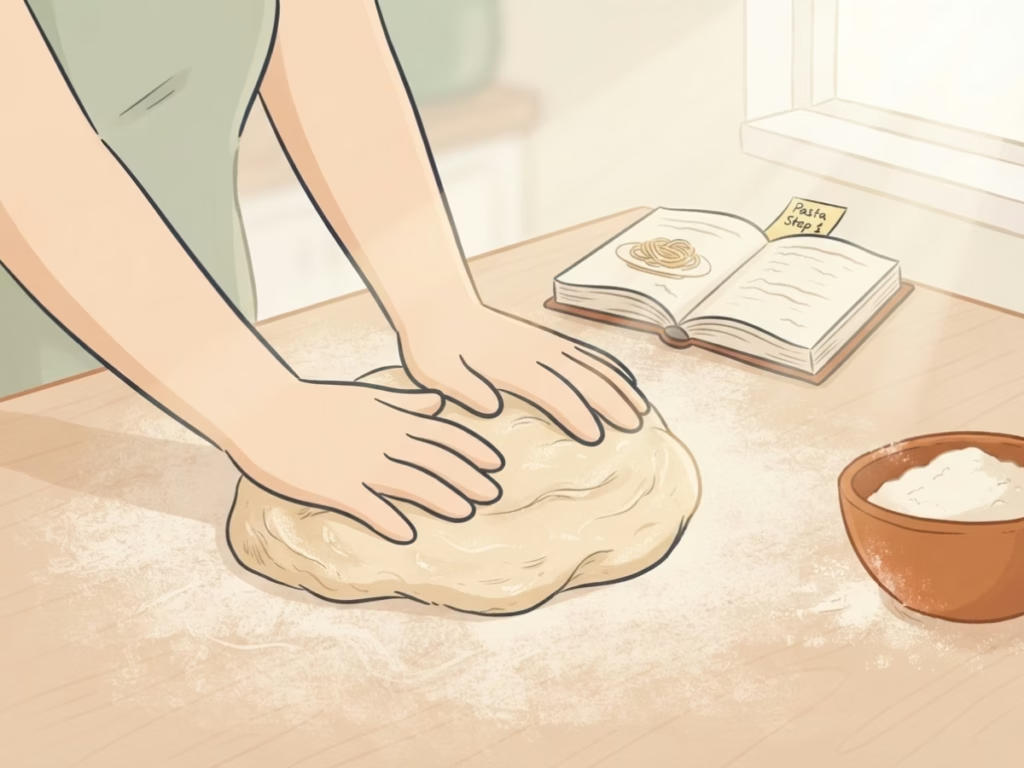
A PMC-published study on error processing found that mistakes trigger measurable learning-related activity in the brain, among school-age participants. The fumble is the lesson. You just have to stick around long enough to receive it.
The other thing worth knowing: the fumbles that feel the worst in Week 0 are usually the ones that teach you the most. Not because suffering is good for you, but because the bigger the gap between what you expected and what happened, the more feedback there is to be found.
And if you’re worried that your early stumbles mean you’re behind? You’re not behind. You’re in Week 0. Everyone starts there.
Frequently Asked Questions
Why are early mistakes more useful than later ones?
Early mistakes happen in lower-stakes situations, so the cost of getting it wrong is small and the feedback is immediate. Greater Good Magazine notes that failure contains “superior information” because it violates expectations in a way success doesn’t. Later mistakes can carry real consequences; Week 0 mistakes are basically free tuition. That’s what makes learning from early failures so efficient. The cost is low and the feedback is fast.
How do I stop a mistake from wrecking my confidence?
Separate the mistake from your identity. One bad attempt is data about a skill gap, not a verdict on your potential. Greater Good recommends self-compassion after failure, not as a feel-good exercise, but because harsh self-criticism is shown to reduce the likelihood you’ll try again.
What’s the fastest way to actually learn from a mistake?
Run a quick three-part review: what was in your control, what insight can you use next time, and is this a pattern or a one-off? The U.S. Chamber of Commerce recommends sorting internal issues from external ones before deciding what to change, otherwise you end up fixing the wrong thing.
Should I write my mistakes down?
If you want to spot patterns, yes. A simple notes-app log, what happened, what you’d do differently, is enough. The goal isn’t journaling for its own sake; it’s having a record you can scan for the thing that keeps showing up.
How long should Week 0 last?
As long as it takes to get your first real feedback loop going. There’s no fixed timeline. The point is to treat the early period as a learning phase rather than a performance phase, and to resist grading yourself before you’ve had enough reps to know what you’re actually working with.
One thing to do today: Write down the last mistake you made on something you’re trying to build or improve. Then answer just the first question: what part of it was actually in your control? That one answer is more useful than an hour of second-guessing.
Get The Enough List — free.
Ten minutes, five areas. A short guide for figuring out what enough looks like in money, health, work, people, and time — before you go sprinting at someone else's finish line. Yours when you subscribe.