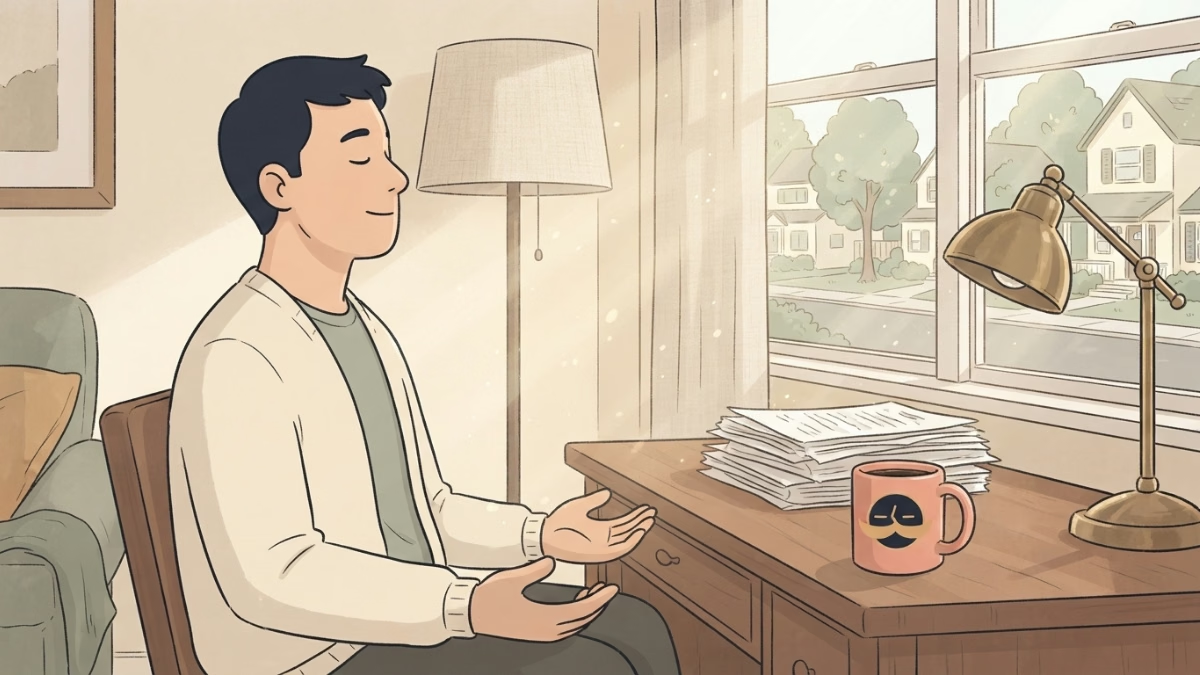
Your nervous system doesn’t care that you have a meeting in four minutes. Box breathing does. Here’s a simple box breathing exercise beginners can pick up in under a minute, no app, no equipment, no prior experience required.
It’s a four-step technique, inhale, hold, exhale, hold, and as little as 30 seconds of it can help you feel more relaxed and in control. That’s less time than it takes to find a parking spot, and considerably less dramatic than stress-eating a bag of mini kit-kats (not that any of us have done that).
Key Takeaways
- Box breathing follows a 4-4-4-4 pattern: inhale for 4 seconds, hold for 4, exhale for 4, hold for 4, per WebMD.
- As little as 30 seconds of deep breathing can help you feel more relaxed and in control, per WebMD.
- Beginners can start with a 2-count version and build toward the standard four-count rhythm, per Sleep.com.
- Experts suggest starting with around 20 seconds and working up to a minute or longer, per Peloton.
- Cleveland Clinic recommends practicing box breathing one or two times a day, morning or after a stressful stretch.
How the Simple Box Breathing Exercise Works
The pattern is simple: breathe in for four seconds, hold for four, breathe out for four, hold for four. That’s one round. Repeat at least three times, ideally for about four minutes or until calm returns.
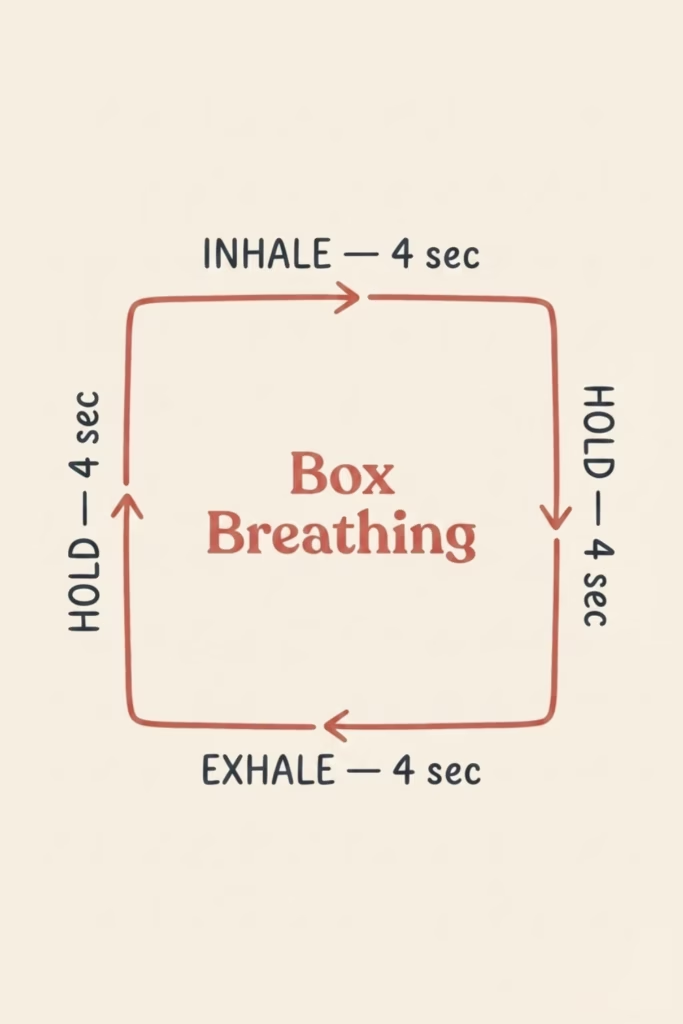
The rhythm is the whole point, equal timing on every phase, not a massive inhale that makes you dizzy.
Trinity Health Michigan recommends breathing in through the nose and out through the mouth, which gives you something to actually focus on instead of, say, replaying the awkward thing you said in 2017.
Before you start: sit down, back supported, feet on the floor. That’s the full equipment list.
If Four Seconds Feels Like Too Much
Good news, you don’t have to start there. Sleep.com suggests a 2-count version for beginners who find the standard rhythm hard to hold. Two seconds in, two seconds hold, two seconds out, two seconds hold. It feels almost too easy, which is exactly why it works when you’re already overwhelmed.
Some experts recommend starting with as little as 20 seconds and gradually building up to a minute or longer. Twenty seconds. You’ve spent longer than that deciding what to watch on Netflix before giving up and rewatching something you’ve already seen.
Once the 2-count feels natural, bump it to three. Then four. No rush.
When to Actually Use It
Cleveland Clinic suggests once or twice a day, first thing in the morning or after a stressful stretch.

That said, the real value is in the micro-reset: the two minutes before a hard conversation, the pause after a frustrating commute, the moment when your brain is running loud and you need it to quiet down for a second. That goes double if you’re a parent and the house is at full volume.
It pairs well with other low-effort resets, like a daily 20-minute walk or stepping away from the screen when summer heat is making your thinking foggy. None of these are dramatic interventions. That’s the point.
Frequently Asked Questions
How long does box breathing take to work?
WebMD notes that 30 seconds of deep breathing can help you feel more relaxed and in control. For a fuller reset, Medical News Today recommends continuing for about four minutes or until calm returns. Start small, and adjust based on how loud your head is that day.
What if I can’t hold my breath for four seconds?
Drop to a 2-count version. Sleep.com specifically recommends this for beginners who find the four-count rhythm hard to maintain. Two seconds per phase still gives your nervous system something rhythmic to anchor to, which is the whole mechanism.
How often should I practice box breathing?
Cleveland Clinic recommends one or two times a day, morning or after a stressful event are the two most useful slots. That said, it’s also a solid on-demand tool whenever you feel yourself tipping toward overwhelmed.
Is box breathing the same as deep breathing?
Not quite. Deep breathing usually just means taking bigger breaths. Box breathing is about equal timing across four phases, the rhythm is what makes it different, and what gives your brain something specific to track instead of whatever it was spinning on before.
Do I need to close my eyes?
No. Eyes open is fine, especially if you’re using it at your desk or in a waiting room. Closing your eyes can help you focus, but it’s optional, the technique works either way.
Today’s move: set a two-minute timer right now, sit up straight, and run three rounds of 2-2-2-2 box breathing. If it feels easy, try 4-4-4-4. That’s the whole thing. You’ve already read this far, you might as well try it before the next thing on your list pulls you back in.
Get The Enough List — free.
Ten minutes, five areas. A short guide for figuring out what enough looks like in money, health, work, people, and time — before you go sprinting at someone else's finish line. Yours when you subscribe.