

Willpower is a terrible strategy. Not because you’re lazy, because willpower runs out, and the to-do list doesn’t.
Here’s the thing nobody selling you a morning routine mentions: the research on how to actually beat procrastination doesn’t say “try harder.” It says pre-decide. Specifically, it says write an if-then plan, also called an implementation intention, that links a specific cue to a concrete behavior (the core move behind any if-then plan for goal setting). A meta-analysis of 94 studies found that implementation intentions improved goal attainment with a medium-to-large effect size (d = .65). That’s a significant result in psychology terms, and it didn’t come from people who woke up more motivated. It came from people who stopped leaving the decision until the moment it cost them.
The format is simple: If [specific situation], then I will [single concrete behavior]. The power is in the specificity, the obstacle-planning, and the fact that you’re doing the mental work now, not later when your brain is bargaining with itself.
Key Takeaways
- Implementation intentions improved goal attainment with a medium-to-large effect size (d = .65) across 94 studies, according to a major meta-analysis.
- The most effective if-then plans are boringly specific: the ‘if’ names an observable cue and the ‘then’ is a single concrete behavior, not a vague intention.
- Obstacle plans, ‘If X interrupts me, then I will do Y’, outperform success-only plans because they account for real life, not the ideal case.
- A 2026 randomized trial found that doing mental contrasting with implementation intentions daily reduced bedtime procrastination more than doing it once at the start of the week.
- Less bedtime procrastination was associated with increased positive affect and decreased negative affect in the same 2026 trial.
Why Willpower Is the Wrong Tool for This Job
Think of willpower like your phone’s battery at 6 PM. It started full. Then you made seventeen small decisions before noon, sat through two meetings that could’ve been emails, and now you’re staring at the thing you actually needed to do today and your brain is suggesting you check the score instead.
That’s not a character flaw. That’s just how decision fatigue works.
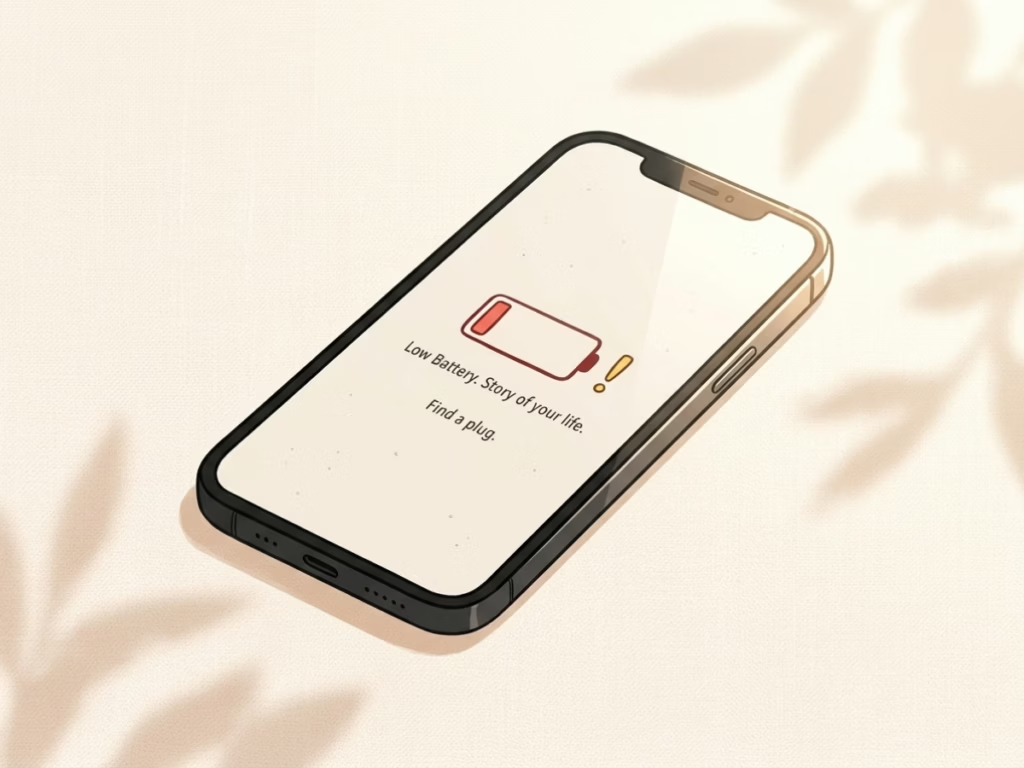
What if-then plans do is remove the decision entirely. When the cue happens, the behavior fires automatically, or at least, that’s the goal. You’ve essentially pre-loaded the instruction so your tired future self doesn’t have to negotiate. No internal debate. No waiting to feel like it. (Spoiler: you will almost never feel like it.)
The key insight, backed by research on procrastination planning, is that implementation intentions work best when they’re anchored to when, where, and how a goal-directed action will start, not just a vague resolve to do it “later today.” “Later today” is where good intentions go to retire.
The Anatomy of an If-Then Plan That Actually Works
Most people who try this write something like: “If I have free time, then I’ll work on the project.” That’s not a plan. That’s a wish with punctuation.
Current guidance on implementation intentions is clear on two things: the “if” must be extremely specific and observable, and the “then” must be a single concrete behavior. Not a vague intention. Not a multi-step goal. One thing.
Here’s the difference:
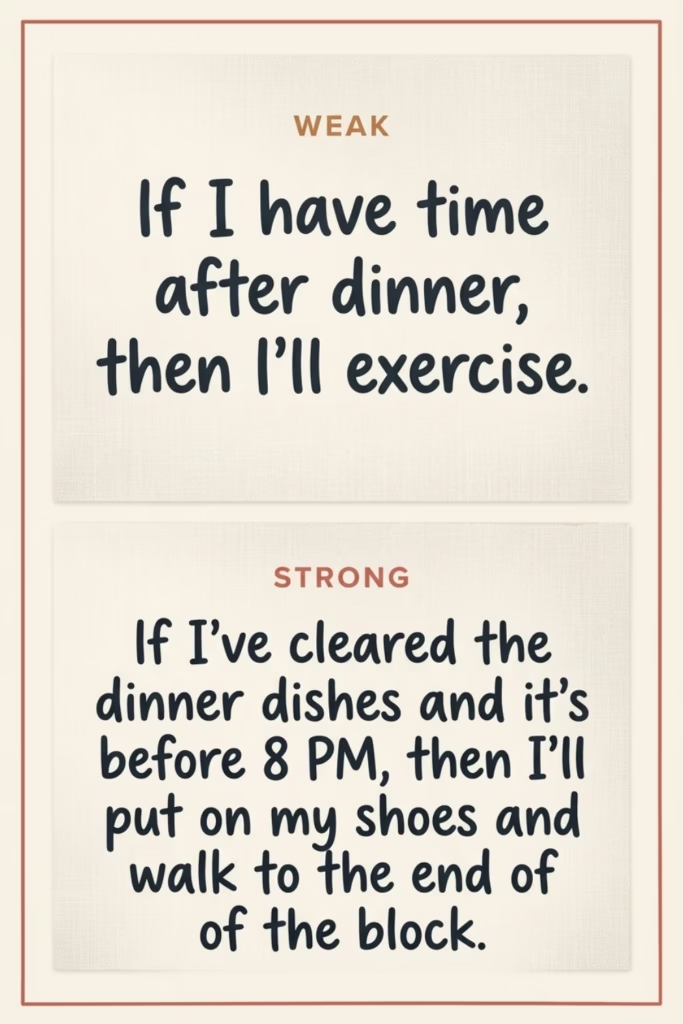
Weak: “If I have time after dinner, then I’ll exercise.”
Strong: “If I’ve cleared the dinner dishes and it’s before 8 PM, then I’ll put on my shoes and walk to the end of the block.”
Notice the second one names an observable trigger (“dishes cleared, before 8 PM”) and a behavior so small it’s almost embarrassing (“walk to the end of the block”). That’s the point. The goal is to get the behavior started, not to plan an epic transformation. Once you’re outside with your shoes on, the walk usually happens. The shoes are the hard part.
This is basically the same logic behind the two-minute rule, shrink the starting action until resistance can’t find purchase.
The Part Most People Skip: Obstacle Plans
Here’s where if-then plans get genuinely useful, and where most productivity content drops the ball.
Success plans, “If it’s 7 AM, then I’ll write for 30 minutes”, assume life will cooperate. Life will not cooperate. Life has a toddler, an unexpected meeting, a phone that starts buzzing, and a strong personal interest in seeing you scroll instead of do the thing.
The guidance on implementation intentions specifically recommends pre-planning obstacles with multiple if-then statements, so the plan covers likely derailments and not only the ideal case. In plain language: write a plan for when things go sideways, because they will.
This is what an obstacle plan looks like in the wild:
- If I sit down to work and my phone is within arm’s reach, then I’ll put it in the other room before I open my laptop.
- If someone interrupts me during my writing block, then I’ll write one sentence after they leave before I do anything else.
- If I miss my morning window entirely, then I’ll do 10 minutes at 9 PM with the TV off.
You’re not hoping for a perfect day. You’re building a system that survives an imperfect one, which is basically every day (if we’re being honest about what “a normal Tuesday” actually looks like).
How Specific Is Specific Enough?
Boringly specific. More specific than feels necessary. Then a little more.
“If I get home from work” is not specific enough. When exactly? The moment you walk in the door? After you’ve changed? Before or after you’ve opened the fridge for the ritual stare that yields nothing? Be exact, because your future self is not going to do interpretive work on your behalf. Future You is tired and looking for any excuse.
“If I walk through the front door and it’s before 6:30 PM, then I’ll change into gym clothes before I sit down” is a plan. It’s linked to a specific observable moment (through the door), a time constraint (before 6:30), and a behavior that’s small but directional (change clothes, don’t sit down yet). That’s something your brain can actually run on autopilot.
If you want a solid framework for building out the broader goal underneath these plans, the SMART goals breakdown is worth reading alongside this. The if-then plan is the tactical layer; SMART gives you the strategic skeleton to put it on.
The Bedtime Procrastination Problem (Yes, That’s a Real Thing)
Quick sidebar, because this one surprised me when I came across the research.
Bedtime procrastination, staying up later than you intended for no good reason, knowing you’ll regret it, doing it anyway (looking at you, “just one more episode”), is an actual studied phenomenon. And implementation intentions work on it too.
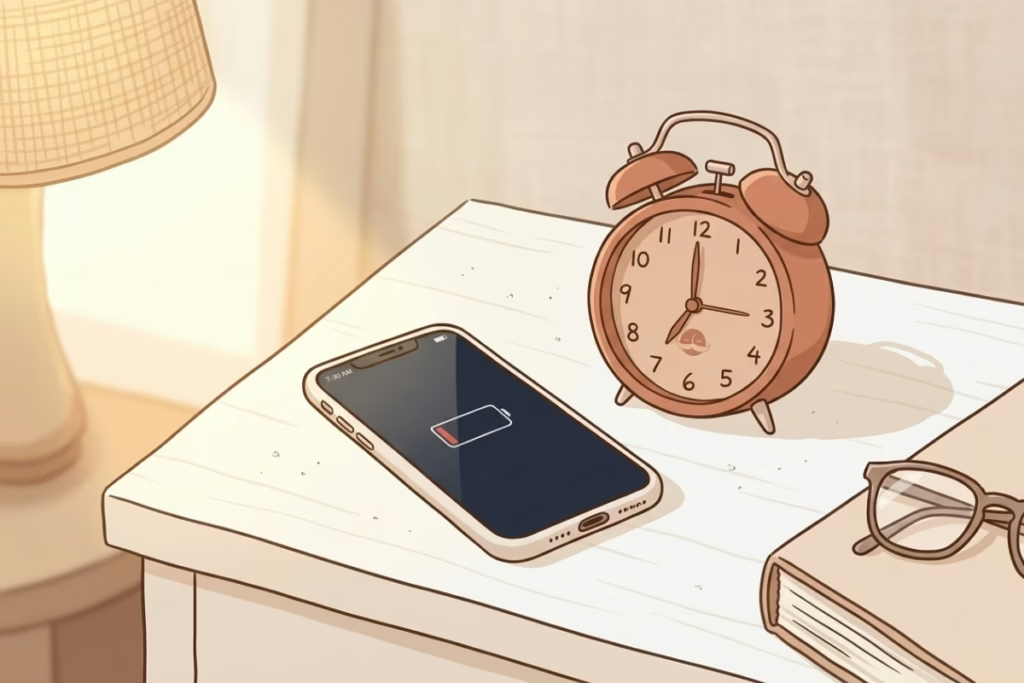
A 2024 thesis on bedtime procrastination found that an if-then intervention significantly reduced bedtime procrastination scores. More recently, a 2026 randomized trial found that doing daily mental contrasting with implementation intentions reduced bedtime procrastination more effectively than doing it just once at the start of the week. The same study found that less bedtime procrastination was associated with increased positive affect and decreased negative affect. Which is a very academic way of saying: going to bed on time makes you feel better. A revelation that should not require a randomized controlled trial, and yet.
The practical takeaway: “If it’s 10:30 PM and I’m still watching something, then I’ll turn the TV off and put my phone on the charger across the room” is a real if-then plan. It counts. You’re allowed to use this tool on the small stuff.
Building Your First If-Then Plan for Goal Setting
You don’t need seventeen of these. You need three, written well.
Pick one thing you’ve been procrastinating on, not the whole life overhaul, just one thing. Something specific, like the work email you’ve been avoiding, the workout that keeps sliding, or the errand you’ve “almost done” fourteen times. Then build:
- The trigger plan. If [observable cue], then I will [first small behavior].
- The obstacle plan. If [most likely derailment happens], then I will [minimum viable version of the behavior].
- The recovery plan. If I miss it entirely, then I will [smallest possible re-entry point].
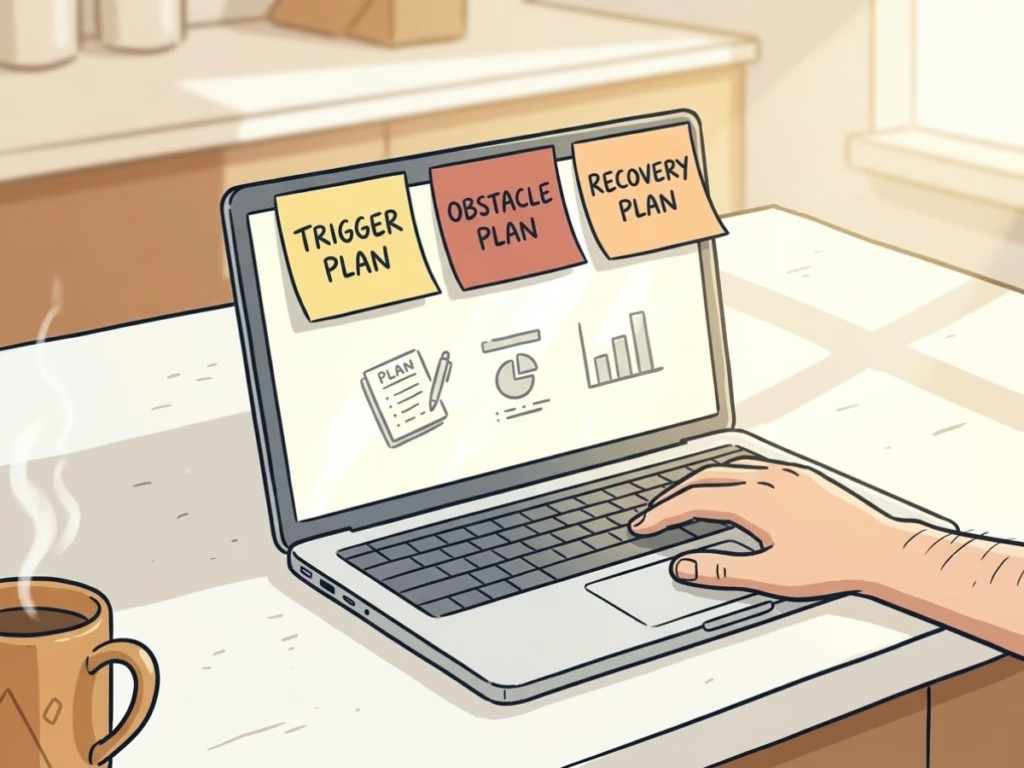
Three plans. One goal. Written down somewhere you’ll actually see them. (A sticky note on your laptop works fine. You don’t need an app for this. A sticky note is not going to send you push notifications at 11 PM, which gives it a significant advantage.)
If you find yourself with too many goals competing for these plans, the sanity check on How to Bachelor is genuinely useful for pruning before you plan.
The Bigger Point (And Why Willpower Gets Too Much Credit)
There’s a version of the productivity-advice world that insists you just need more discipline, better habits, an earlier alarm, and a cold shower. That world does not account for the fact that most people are already doing a lot, already tired, and already beating themselves up for not doing more.
If-then plans are different because they don’t ask you to be a different person. They ask you to do one small piece of planning work now so that the tired, distracted version of you later doesn’t have to make a hard call in the moment. The decision’s already been made. The moment arrives, the behavior fires. That’s it.
It’s not glamorous. It doesn’t make a good Instagram post. But it’s one of the most well-supported behavioral tools in the research, 94 studies, medium-to-large effect, and it works precisely because it’s boring and specific, not because it’s inspiring.
Progress that happens when you’re tired and uninspired is the only kind that counts at scale. Anyone can do the thing when they feel like it. The if-then plan handles the days you don’t.
Frequently Asked Questions
What is an if-then plan and how does it help with procrastination?
An if-then plan is a pre-committed statement in the format “If [situation X], then I will do [behavior Y].” It works by removing the moment of decision, the gap where procrastination lives, before fatigue or distraction can fill it. A meta-analysis of 94 studies found that these plans improved goal attainment with a medium-to-large effect size (d = .65). Think of it less like motivation and more like a software pre-load for your future self.
How specific does an if-then plan need to be?
Specific enough that a tired, distracted version of you can follow it without thinking. The “if” should name an observable, real-world cue (a time, a place, a completed prior action), and the “then” should be a single concrete behavior, not a goal, not a project, just the first move. Research on implementation intentions recommends this level of precision because vague plans leave too much interpretive work for the moment when you least want to do it.
What’s the difference between a success plan and an obstacle plan?
A success plan assumes things go smoothly: “If it’s 7 AM, then I’ll write.” An obstacle plan assumes something will go wrong and pre-decides what you’ll do instead: “If I miss the 7 AM window, then I’ll write for 10 minutes after dinner.” Guidance on implementation intentions specifically recommends writing multiple if-then plans to cover likely derailments, not just the ideal scenario. Obstacle plans are where the real durability comes from.
Can if-then plans help with bedtime procrastination?
Yes, and there’s actual research on this. A 2024 thesis found that an implementation-intentions intervention significantly reduced bedtime procrastination scores. A follow-up 2026 randomized trial found that practicing the approach daily was more effective than doing it once at the start of the week, and that reduced bedtime procrastination correlated with better mood overall. So yes, “If it’s 10:30 PM, then I close the laptop” is a legitimate if-then plan.
How many if-then plans should I write at once?
Three is a good working number for a single goal: one trigger plan, one obstacle plan, and one recovery plan for when you miss it entirely. More than that and you’re planning instead of doing, which is its own elegant form of procrastination. Pick one goal, write three tight plans, and see how the week goes before adding more.
The one thing to do today: Pick the task you’ve been avoiding longest. Write one if-then plan for it right now, trigger, obstacle, recovery. Put it somewhere you’ll see it tomorrow. Not in a notes app you’ll never open. Somewhere physical. Start there.
Get The Enough List — free.
Ten minutes, five areas. A short guide for figuring out what enough looks like in money, health, work, people, and time — before you go sprinting at someone else's finish line. Yours when you subscribe.

Thoughts?