
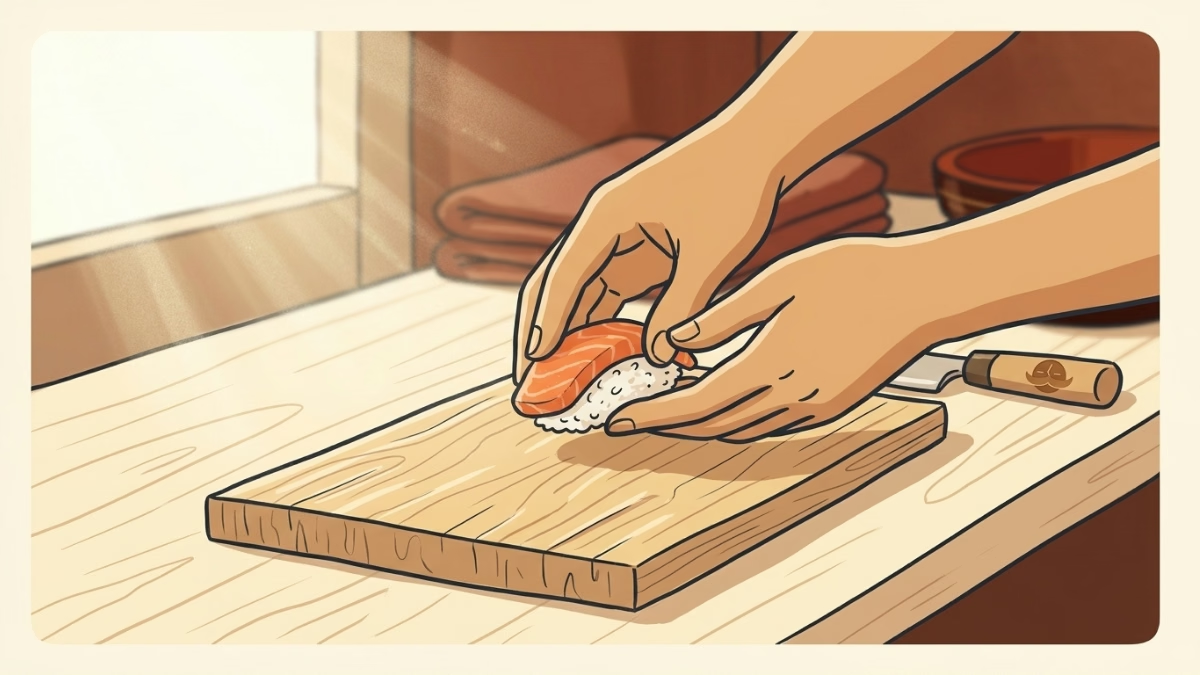
Jiro Ono has been making sushi since he was a child. He runs a ten-seat restaurant in a Tokyo subway station with no sign, no website, and three Michelin stars. His lesson for the rest of us isn’t “be a genius.” It’s simpler and more annoying than that: do the same thing every day and pay attention.
That’s the whole thing. One of the clearest lessons from Jiro Ono is captured in a single line he’s returned to throughout his life: “I do the same thing over and over, improving bit by bit”. Not “I chased perfection.” Not “I outworked everyone.” Just: repeat, notice, adjust.
Which is, if we’re honest, the last thing most of us want to hear. We’d rather there be a secret.
Key Takeaways
- Jiro Ono’s philosophy centers on iterative daily repetition, not one-time mastery, summarized in his own words: “I do the same thing over and over, improving bit by bit.”
- The shokunin mindset treats craft as an ongoing identity, not a destination to reach and stop at.
- Daily practice works because it’s boring, bounded, and repeatable, which makes it sustainable for anyone, not just sushi masters.
- Jiro’s approach explicitly rejects external validation as the goal; the work itself is the point.
- Analyzed failure is progress: experts across disciplines get there by testing, failing, and adjusting, not by getting it right the first time.
Lessons from Jiro Ono: the perfection trap and why he sidesteps it
Here’s what’s easy to miss about Jiro’s story: most coverage frames him as a perfectionist, and then uses that as inspiration to go harder. But that framing gets it backwards.
Jiro doesn’t obsess over a perfect final product he’s trying to reach. His focus is on the process, the same structured daily actions, done the same way, refined by attention over time. One writer describes his approach as “the art of never retiring”, not because he can’t stop, but because the identity isn’t “sushi chef who finished.” It’s just “sushi chef, still going.”
That’s the shokunin philosophy in one sentence. A shokunin isn’t someone who achieved mastery. It’s someone who committed to a craft as a way of living.
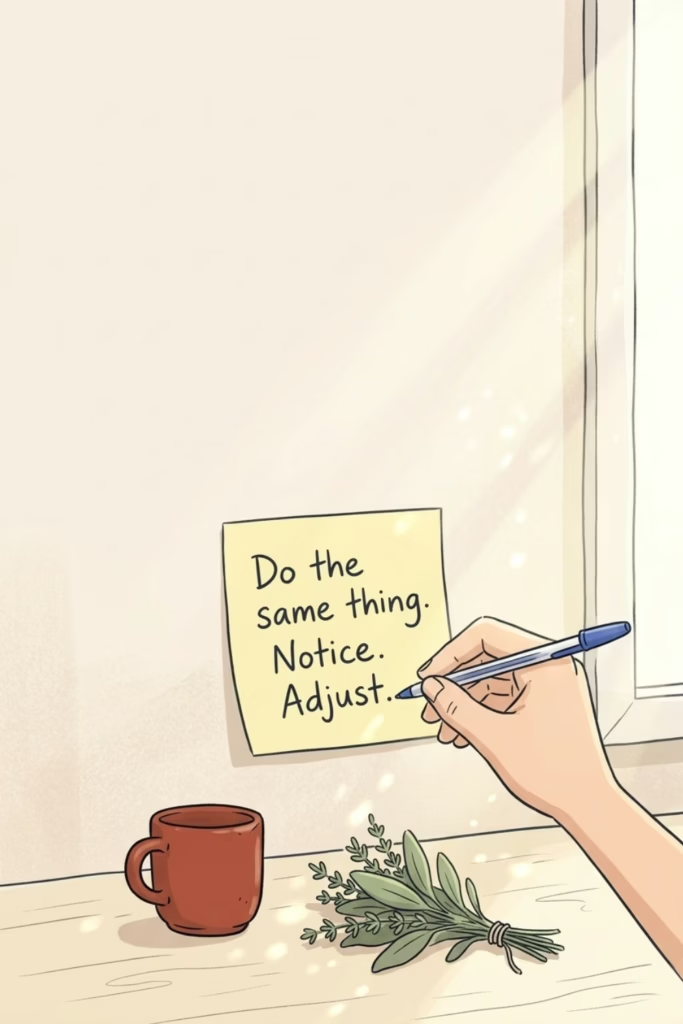
The difference matters because perfectionism has a finish line. And once you’ve decided the finish line exists, you spend most of your energy feeling behind it.
What this looks like
You don’t need to make sushi to use this. The principle is portable to anything you actually care about getting better at.
Pick one thing. Do it every day, or as close to every day as your life allows. Keep it small enough that you can actually do it. And then pay attention to what happens when you do. That’s it. (I know. Deeply unsatisfying. Keep reading.)
The reason this works is the same reason it’s boring. A practice that’s boring, bounded, and repeatable doesn’t depend on motivation. You don’t have to feel inspired to do the thing you do every Tuesday. You just do it on Tuesday, same as last Tuesday, slightly more informed than you were then.
That’s the craftsmanship mindset in practice: boring, bounded, repeatable. The quality came from robust systems and rigorous repetition, not from bursts of creative energy. Which sounds exactly like something you’d read on a corporate slide deck, and yet is also exactly true.
There’s a related thread in how Marcus Aurelius thought about daily effort, the idea that the work in front of you today is the only work you can actually do. Jiro, probably without ever reading Meditations on his subway commute, arrived at the same place.
The one thing you can take from this today
You’re not being asked to become the world’s greatest anything. You’re being asked to pick one small thing you want to get marginally better at and do it again tomorrow. That’s being a work in progress, and it’s the whole point.
Jiro wasn’t chasing a gold star. He was just making sushi. Again. A little better than yesterday.
You can do that. That’s really the main lesson from Jiro Ono: small, repeated reps, done with attention, compound into something real. Maybe not with sushi, unless you’ve already got a ten-seat restaurant in a subway station, in which case, respect
Frequently Asked Questions
What is Jiro Ono’s philosophy on mastery?
Jiro Ono’s approach centers on patient, daily repetition rather than a single dramatic leap to the top. He has described his method as “I do the same thing over and over, improving bit by bit,” which frames mastery as an ongoing practice rather than a destination. It’s less about genius and more about showing up with attention every single day.
What does “shokunin” mean and how does it apply here?
Shokunin is a Japanese term for a craftsperson who has committed to their work as a way of life, not just a job. The philosophy isn’t about perfection in the abstract, it’s about identity through craft. You are the thing you practice, and you keep practicing it.
Isn’t Jiro’s story about perfectionism, though?
It’s often framed that way, and the framing is a little misleading. Jiro’s focus is on the daily actions, not on a perfect endpoint. Coverage of his approach describes it as “the art of never retiring”, meaning the practice itself is the point, not some final version of himself he’s trying to get to. Perfectionism tends to paralyze; repetition with attention tends to improve.
How do I apply this if I don’t have hours every day to practice?
You don’t need hours. The point of Jiro’s model is that it’s bounded and consistent, not that it’s total. Pick something small enough to do every day, ten minutes of something you want to build, and do it at the same time if you can. The consistency matters more than the duration, especially early on.
Does this mean failure is fine?
More than fine. Failure tells you where the gap is, which is the only way you know where to pay attention next. Jiro’s six-decade career wasn’t six decades of getting it right. It was six decades of noticing what to fix. Analyzed and not repeated, failure is just data, and data is what you need.

Today’s action: Pick one skill, habit, or craft you want to get better at. Write down what “one small rep” of it looks like. Then do that rep today, and again tomorrow. Don’t aim for perfect. Aim for slightly more informed than you were yesterday. That’s the whole method.
Get The Enough List — free.
Ten minutes, five areas. A short guide for figuring out what enough looks like in money, health, work, people, and time — before you go sprinting at someone else's finish line. Yours when you subscribe.

Thoughts?