

Journaling doesn’t have to involve a leather-bound notebook, a scented candle, and a forty-minute feelings session. Three lines each morning is what simple journaling for men actually looks like: one specific gratitude, one intention, one honest sentence about how you feel right now. That’s the whole format. Everything else is optional.
If you’ve tried journaling before and quietly abandoned it (no judgment, that’s most of us), the problem probably wasn’t you. It was the blank page. Nobody wants to stare at an empty notebook at 7am wondering what their “authentic self” is up to.
Key Takeaways
- A minimalist journaling format of one gratitude, one intention, and one honest feeling takes under five minutes and builds the habit without the cringe factor.
- Specificity beats positivity in journaling, ‘the coffee was good and I finished the call’ is more useful than generic gratitude because it’s easier to repeat and believe.
- Starting with just one gratitude and one priority is a proven entry point for building a journaling habit without the pressure of filling a full page.
- Consistency matters more than quality in the early days, showing up and writing one line beats a perfect journal entry you never write.
The Format That Actually Sticks
This is a 5-minute journaling routine, not a therapy session, and it works because it’s short enough to actually do.
Here’s what simple journaling for men looks like in practice. Three lines, every morning, before you check your phone:
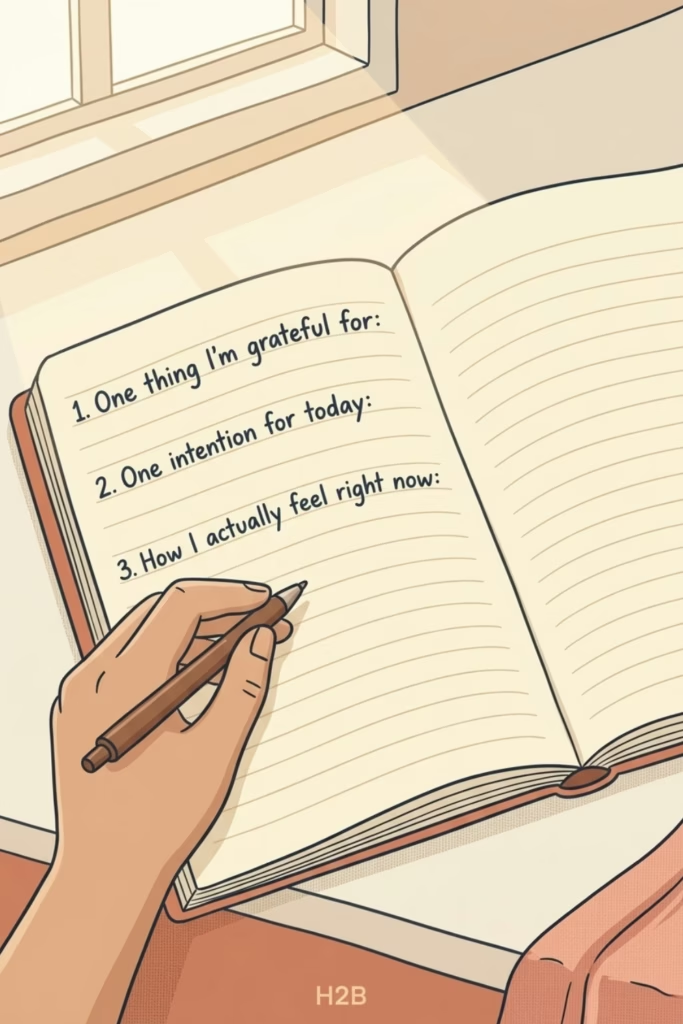
- One specific gratitude. Not “I’m grateful for my health.” That’s a fortune cookie. Try “the coffee tasted good” or “I slept through the night.” Specific items work better than vague ones, per Mindtalk because they’re easier to mean and easier to repeat.
- One intention. What’s the one thing that, if you get it done today, makes the day a win? Just one. (You can have a to-do list for the rest. This isn’t that.)
- One honest sentence about how you feel right now. Not how you think you should feel. How you actually feel. “Tired but okay” counts. “Dreading the 9am” counts. The point is contact with reality, not performance.
Set a timer for five minutes. When it goes off, stop. Done.
If even that feels like too much on a rough morning, Mindspace recommends starting with just one gratitude and one priority. That’s two lines. Two lines is doable.
Why Specificity Beats Positivity
The cringe version of journaling is generic positivity dressed up as self-improvement. “I am grateful for this beautiful day” is the journaling equivalent of a motivational poster in a dentist’s waiting room. It doesn’t stick because you don’t actually feel it.
Specific is different. “Finished the report before lunch” or “my kid laughed at something stupid I said”, those you can feel. And because you can feel them, they actually do the thing journaling is supposed to do: remind your brain that the day had something worth noting, even when it mostly didn’t.
This is also why the evening reflection prompt in the classic Five Minute Journal format asks “how could today have gone better” rather than just “what was great”. A little honest friction beats relentless positivity every time.
On Bad Days, Shrink It. Don’t Skip It
The habit only works if it survives the days you least want to do it. If you’re already fighting brain fog or running on four hours of sleep, a five-minute journal becomes a one-line journal. One line is fine. The goal in the early weeks is consistency, not quality. Show up first, polish later.

Think of it like the daily 20-minute walk. The days you least want to go are the days it matters most. And a five-minute walk still counts.
Frequently Asked Questions
Do men actually benefit from journaling, or is it just a wellness trend?
Journaling is a decision-making and clarity tool, not just an emotional outlet. A structured five-minute format, one gratitude, one intention, one reflection, gives you a daily snapshot of what matters and what’s getting in the way. That’s useful whether you’re into wellness or not.
What should I write if I genuinely have nothing to say?
Write that. “Nothing’s coming to me today, I just want to get to work” is a completely valid journal entry. The point is the habit of showing up, not the quality of the output. Consistency first, depth later.
Is a physical notebook better than an app?
Either works. There’s no strong case for one over the other. The format and the consistency matter more than the medium. Use whatever has less friction for you. If your phone is already in your hand, use your phone. If you’d rather not start the day on a screen, grab a cheap notebook.
How long before journaling actually feels useful?
Mindspace reports that within a week of consistent practice, journaling will start to feel like a habit. The first few days are awkward (like most things worth doing). Keep the format small and the commitment realistic, one line a day if that’s all you’ve got.
Can I do this at night instead of the morning?
Yes. The format is designed as morning journaling for busy men, but the evening version works just as well. The morning format (gratitude, intention, honest feeling) sets the day up. An evening version works just as well for reflection: three things that went okay, one thing you’d do differently. Pick whichever slot you’ll actually protect. The best journaling habit is the one that doesn’t disappear after day four.
Today’s move: grab whatever you’re writing on right now, set a five-minute timer, and write your three lines before you do anything else tomorrow morning. Don’t overthink the format. Specific, honest, brief. That’s the whole thing.
Get The Enough List — free.
Ten minutes, five areas. A short guide for figuring out what enough looks like in money, health, work, people, and time — before you go sprinting at someone else's finish line. Yours when you subscribe.

Thoughts?